
Shanghai Pudong Airport (PVG) is the main international gateway to eastern China, sitting about 30 km east of downtown Shanghai. Almost every long-haul flight from North America, Europe, and Australia lands here, and you have four solid ways to reach the city: maglev, metro, the new Airport Link Line, or a taxi.
That is the short version. The longer version matters, because Pudong is large and the "obvious" choice at the exit door is not always the smart one.
Here is the trap most first-timers fall into. You walk out of arrivals exhausted, see a taxi line, and hop in, paying triple the metro fare and crawling through evening traffic for an hour. Meanwhile the maglev train, the fastest commercial train on Earth, waits a five-minute walk away and gets you most of the way in eight minutes flat.
This guide walks you through the terminals, every route into town with real 2026 prices, and the visa-free entry rules that let many travelers skip the visa entirely. Read it before you land and your first hour in China will be smooth instead of stressful.
Key Takeaways
- The maglev covers PVG to Longyang Road in 8 minutes at up to 430 km/h; a single economy ticket is 50 RMB, or 40 RMB if you show a same-day boarding pass.
- Metro Line 2 is the cheapest ride downtown at roughly 7-8 RMB, but takes 60-70 minutes and needs a transfer at Guanglan Road.
- The Airport Link Line (opened December 2024) connects PVG to Hongqiao Airport in about 40 minutes for 26 RMB full fare.
- A taxi to central Shanghai runs 150-250 RMB plus tolls and takes 45-90 minutes depending on traffic.
- PVG has two main terminals plus two satellite halls (S1, S2); a free automated shuttle connects them, so leave buffer time on departure.
Getting to know PVG airport: terminals and layout
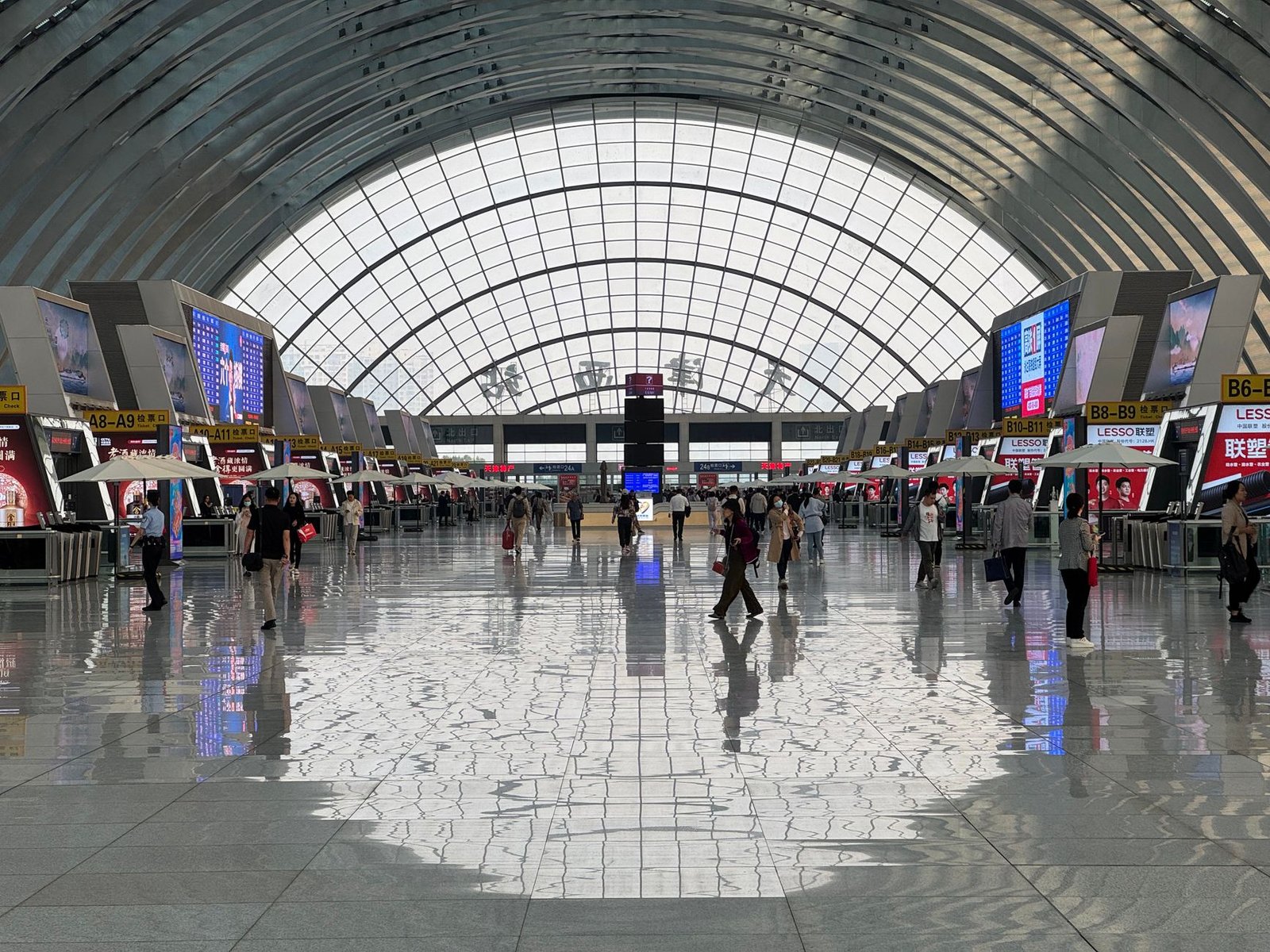
Pudong has two passenger terminals, Terminal 1 and Terminal 2, plus two satellite concourses called S1 and S2 that opened to add gate capacity. Terminal 1 pairs with satellite S1, and Terminal 2 pairs with S2.
Here is the part that catches people out. When you depart, you may check in at T1 or T2 but board at a satellite hall. A free, driverless underground people-mover, the APM train, links each terminal to its satellite in a few minutes. On arrival, though, you clear immigration and collect bags inside the main terminal, so incoming travelers rarely need it.
Which terminal you use depends on your airline. Most Chinese carriers and SkyTeam partners use T1; Star Alliance and many others use T2. Check your boarding pass, and if a friend is picking you up, tell them the terminal number, not just "Pudong."
Both terminals have the essentials after customs: ATMs, SIM card counters, currency exchange, and, importantly, self-service machines to buy metro and maglev tickets. Free Wi-Fi is available, though you will want a working data plan for maps and payment apps. Our internet, eSIM, and VPN guide explains how to get online the moment you land.
Pudong to city: comparing your four routes
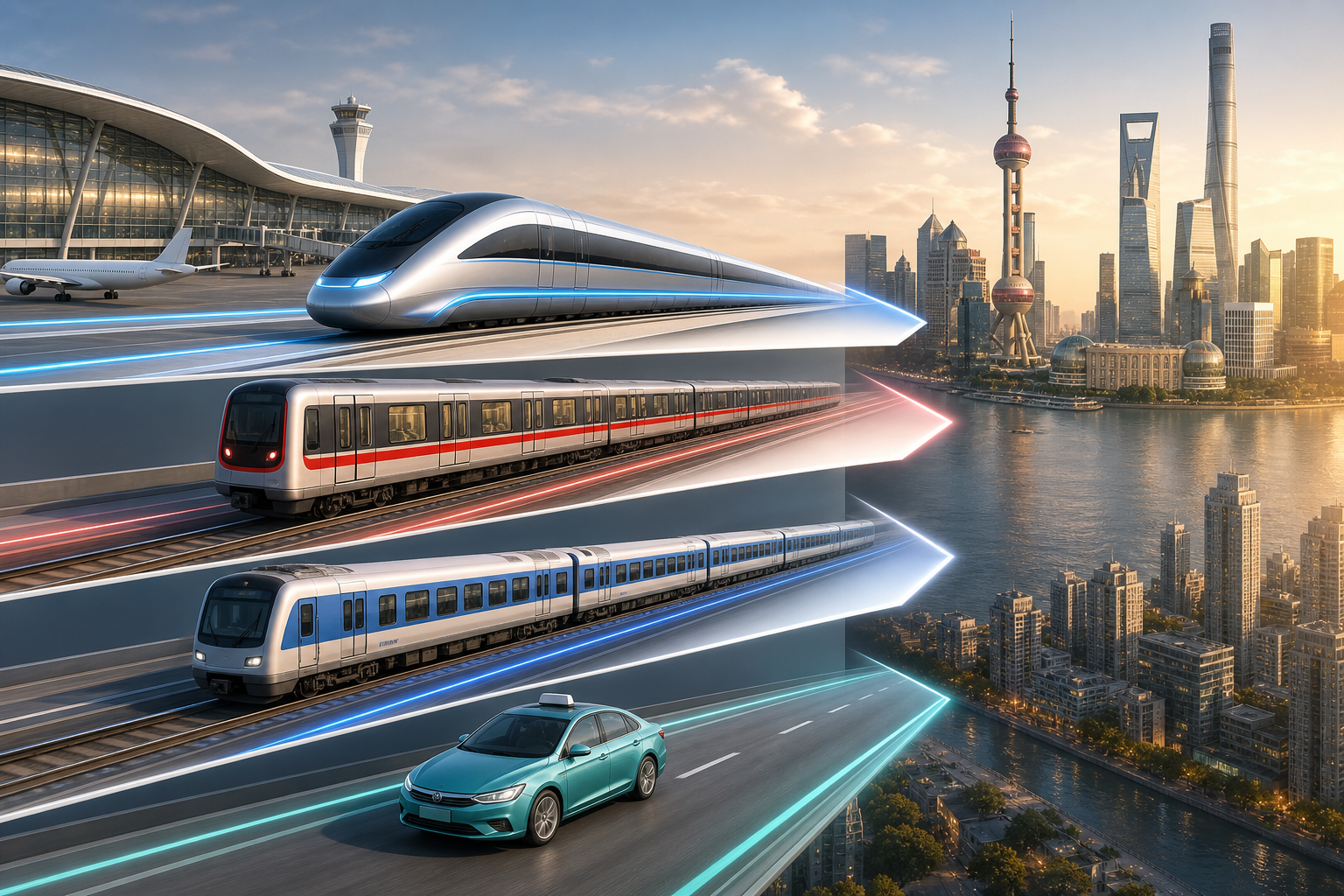
The best way from Pudong to city center depends on your budget, your luggage, and where your hotel sits. Here is every option side by side with current 2026 figures.
| Route | Time to downtown | Price (per person) | Best for |
|---|---|---|---|
| Maglev + metro transfer | ~8 min + transfer | 50 RMB (40 with boarding pass) | Speed lovers, light luggage |
| Metro Line 2 | 60-70 min | ~7-8 RMB | Budget travelers |
| Airport Link Line | ~40 min to Hongqiao | 26 RMB full fare | Connecting to Hongqiao or west Shanghai |
| Taxi / Didi | 45-90 min | 150-250 RMB (+ tolls) | Groups, late arrivals, heavy bags |
James, a first-time visitor from Manchester, landed at 9 p.m. with two large suitcases and a hotel near People’s Square. For him a taxi made sense: door to door, no transfers, split three ways with friends it cost about 70 RMB each.
Priya, arriving solo at midday with a backpack and a hotel near Longyang Road, rode the maglev, hit 430 km/h on the display, and was checking in eight minutes later for 40 RMB.
The maglev: the world’s fastest airport train
The Shanghai maglev is a genuine bucket-list ride, not just transport. It floats on magnets, produces no wheel noise, and tops out at 430 km/h during peak daytime runs, covering roughly 30 km in about 8 minutes.
The station sits a short, signed walk from the arrivals level of both terminals. Trains run roughly every 15-20 minutes from early morning to around 9-10 p.m.
Fares are straightforward. A single economy ticket is 50 RMB, or 40 RMB if you show a same-day flight boarding pass. A round trip is 80 RMB economy, and VIP seats at the front cost double. Buy tickets at the counter or machines with card, cash, or a mobile wallet.
One catch: the maglev ends at Longyang Road, not the city center. From there you connect to Metro Lines 2, 7, 16, or 18 to reach your final stop. So it is a "fast most of the way" option rather than a door-to-door one.
Metro Line 2 and the Airport Link Line
Metro Line 2 is the workhorse. It runs directly from PVG under the whole city, through Lujiazui (the skyscraper district), Nanjing East Road, People’s Square, and out to Hongqiao. A ride to People’s Square costs around 7-8 RMB and takes 60-70 minutes.
There is one quirk. The airport section of Line 2 is not always through-running, so you may need to change trains at Guanglan Road, a simple cross-platform walk to the opposite side. Follow the crowd and the signs; it is easier than it sounds.
The newer Airport Link Line (Suburban Railway) is a game-changer that older guides miss. Opened in late December 2024, it links Pudong and Hongqiao airports in about 40 minutes at 160 km/h, roughly twice metro speed. The full journey costs 26 RMB, with a starting fare of 4 RMB, and trains run every 15 minutes from 6 a.m.
Sofia connected from an international flight at PVG to a domestic high-speed train at Hongqiao. Instead of a long metro slog, she took the Airport Link Line and made her onward journey with time to spare. If you plan to travel on from Shanghai by rail, see how to book China high-speed train tickets before you go.
Taxis, ride-hailing, and paying for it all
Official taxi stands are on the arrivals level (ground floor) of both terminals. Always use the marked queue and insist on the meter; ignore anyone approaching you inside the hall offering a "cheap" ride.
A metered taxi to central Shanghai runs about 150-250 RMB plus 15-40 RMB in tolls and surcharges, taking 45-90 minutes depending on traffic. Ride-hailing through Didi is often a little cheaper, roughly 120-200 RMB, with dedicated pickup zones signed on the ground floor.
Here is the money problem to solve before you land. China runs on mobile payment, and even taxis increasingly prefer it. Set up Alipay or WeChat Pay with your foreign card in advance so you are not stuck. Our WeChat Pay setup guide for tourists and the wider paying in China hub cover the exact steps.
Carry a little cash as backup for the maglev counter or a stubborn machine. Most travelers rarely need it, but 200-300 RMB in your pocket removes a lot of first-day anxiety.
Visa-free entry and your first steps at PVG
Many travelers can now skip the visa entirely. China’s expanded visa-free transit policy lets eligible passport holders from dozens of countries enter through Pudong for a set number of hours as long as they hold an onward ticket to a third country. The window was extended in late 2024, so check the current rules for your nationality.
Full eligibility, allowed stay areas, and the country list change over time, so confirm the details on our visa-free entry and transit guide and the official National Immigration Administration site before you fly. This is a money-and-entry topic, so accuracy matters more than convenience.
On arrival, the order is simple: follow "Arrivals," clear immigration (a separate lane exists for visa-free transit), collect your bags, then pass customs. Grab a SIM or activate your eSIM, then head to your chosen transport. For where to rest that first night, browse Shanghai hotels near a metro stop to make the airport run painless.
Frequently asked questions
How do I get from Pudong Airport to downtown Shanghai fastest?
The maglev is fastest for distance: 8 minutes to Longyang Road at up to 430 km/h, then a short metro connection. Door to door, a taxi (45-60 minutes off-peak) can be simpler if your hotel is not near a metro line or you have heavy luggage.
How much is the maglev from Pudong Airport?
A single economy ticket costs 50 RMB, dropping to 40 RMB when you show a same-day flight boarding pass. Round trips are 80 RMB economy. VIP front-car seats cost double. Pay by card, cash, or mobile wallet at the station.
Which terminal will my flight use at PVG?
Check your boarding pass or booking. Most Chinese carriers and SkyTeam flights use Terminal 1; Star Alliance and many international carriers use Terminal 2. Some flights board from satellite halls S1 or S2, reached by a free internal APM train after security.
Can I enter Shanghai without a visa?
Often yes. China’s expanded visa-free transit policy admits eligible nationalities through Pudong for a limited stay with a confirmed onward ticket to a third country. Rules and country lists change, so verify your eligibility with official sources before booking.
Is the metro or a taxi better from PVG at night?
Metro Line 2 and the maglev stop running around 9-10 p.m. If you land late, take an official taxi or Didi from the ground-floor stands. Budget 150-250 RMB plus tolls, and have Alipay or WeChat Pay ready in case the driver prefers mobile payment.
How far is Pudong Airport from Hongqiao Airport?
About 60 km across the city. The fastest link is the new Airport Link Line, roughly 40 minutes for 26 RMB. Allow extra buffer time if you are connecting between an international arrival at PVG and a domestic flight or train at Hongqiao.
Before you go: your PVG arrival checklist
You now know Pudong better than most seasoned travelers. Do these five things before you fly and your landing will be effortless.
- Set up Alipay or WeChat Pay with your card so you can pay for transport and food on day one.
- Sort your eSIM or data plan so maps and translation work the moment you turn on your phone.
- Confirm your visa-free eligibility or visa well ahead of departure through official channels.
- Screenshot your hotel address in Chinese to show a taxi driver or type into a map app.
- Decide your route into town in advance: maglev for speed, metro for savings, taxi for door-to-door comfort.
Traveling deeper into China after Shanghai? The smartest move is booking your onward high-speed train before you arrive, so you skip station queues in Chinese. Get a free quote and book your China train tickets here and start your trip with everything sorted.
For more on moving around the country, see our trains and metro guide and the full flights and getting around hub. Official schedules and station details are also on the Shanghai Airport website.
Featured image: “Terminal 1 of Shanghai Pudong International Airport from Pudong International Airport Station (Shanghai Maglev).jpg” by そらみみ, via Wikimedia Commons, CC BY-SA 4.0.