
Explore Beijing’s Central Axis in sections. A palace-and-viewpoint day, a southern ritual-landscape day or a shorter northern walk will tell you more than trying to enter every monument in one day. Walls, separate reservations and security checks mean a straight line on a map is not a continuous visitor route.
This guide explains how the heritage ensemble fits together and how to build a manageable itinerary around the tickets you actually hold.
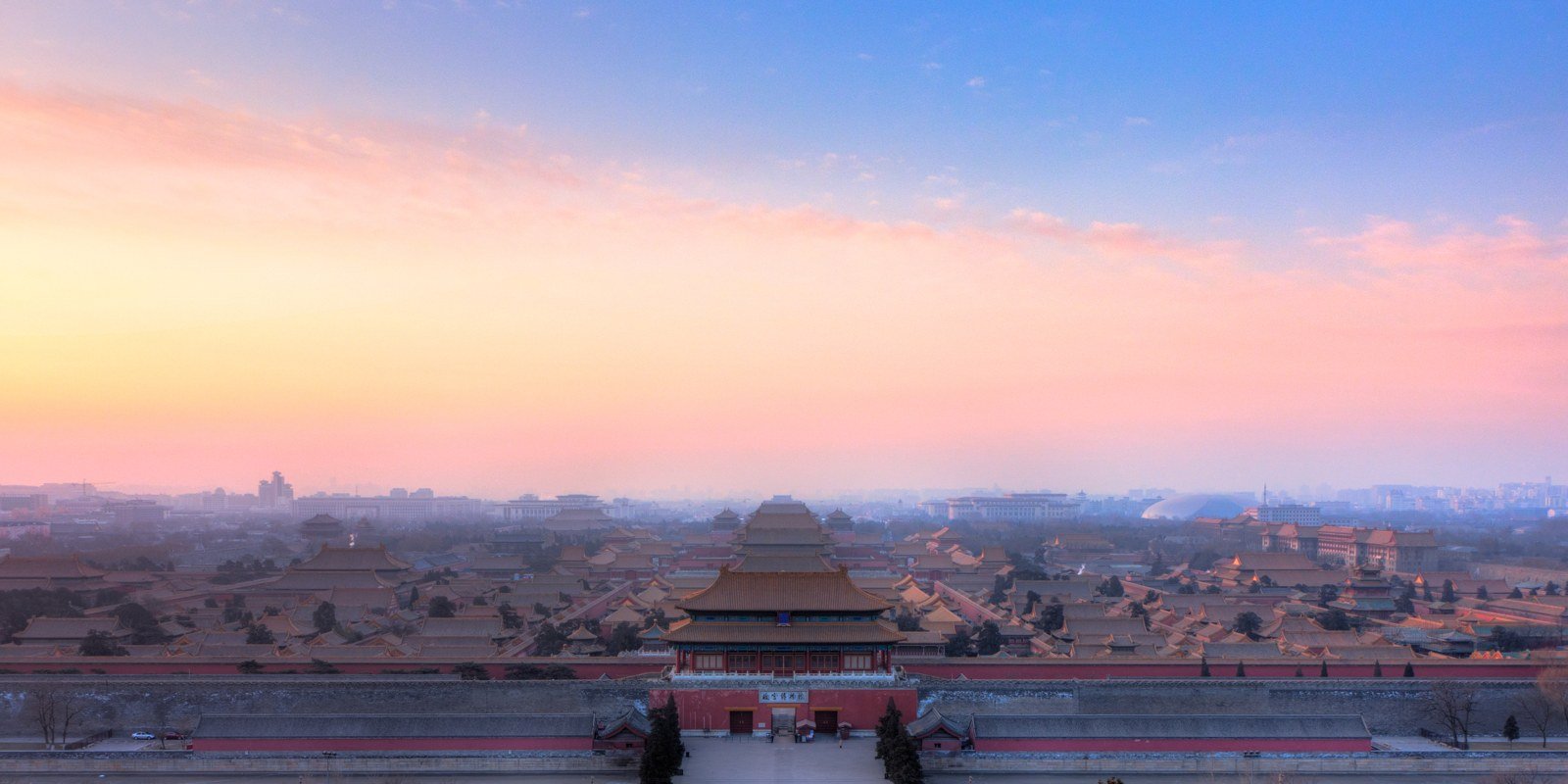
Looking south from Jingshan, 3 February 2012. The source is an HDR photograph. Photo: Pixelflake. Source · CC BY-SA 3.0. Resized and JPEG encoded; no additional crop. Image remains under the stated license.
The 15 heritage elements
The historic axis runs about 7.8 kilometres from the Bell and Drum Towers to Yongdingmen. The municipal conservation overview identifies 15 elements, including paired ritual sites to either side. Use this checklist to understand their relationship:
- Bell and Drum Towers.
- Wanning Bridge.
- Jingshan.
- Forbidden City.
- Duanmen Gate.
- Tiananmen Gate.
- Outer Jinshui Bridges.
- Tiananmen Square and its associated buildings.
- Zhengyangmen.
- Southern section road remains.
- Yongdingmen.
- Imperial Ancestral Temple, or Taimiao, east of the central line.
- Altar of Land and Grain, or Shejitan, to the west.
- Temple of Heaven, beside the southern axis to the east.
- Altar of Agriculture, or Xiannongtan, beside it to the west.
These are not 15 equivalent ticketed attractions. Some are bridges or road remains; others contain extensive grounds and multiple buildings. Check the precise site name when making reservations.
The property entered the UNESCO World Heritage List in 2024. Its significance lies in how imperial palaces, ritual places, city infrastructure and public spaces form an ordered whole. Look for their alignment and contrasts instead of treating every gate as another photo stop.
Two days that make the axis understandable
Day one: palace and northern view. Make a confirmed Forbidden City visit the main commitment. Use the Forbidden City guide to check its own booking and entrance arrangements. Afterward, if daylight, opening hours and energy permit, continue to Jingshan. The elevated view makes the palace’s central arrangement easier to recognise. It involves a climb, and visibility depends on the weather.
Do not automatically add the Bell and Drum Towers after a long palace visit. Give the northern section a separate session if that would otherwise mean rushing or missing last admission. Looking carefully at one part of the ensemble is more useful than reaching another locked entrance.
Day two: a southern ritual site and the gates. Choose the Temple of Heaven or the Altar of Agriculture as your substantial interior visit. Plan a separate Qianmen/Zhengyangmen session around the exact reservation you can obtain. The scale of Qianmen Street provides a useful contrast with ceremonial architecture.
Yongdingmen can be another southern stop if that landscape interests you. Keep it optional when your main visit has taken longer than expected. Sharing a heritage designation does not make all these sites a single short excursion.
A half-day alternative
Choose one smaller plan rather than trying to compress the full route:
- City view and northern context: Jingshan and a nearby northern walk, allowing time for the climb.
- Imperial ritual: Taimiao or Shejitan, with attention to its relationship to the palace area.
- Gates and commercial streets: a reserved Zhengyangmen visit, if available, followed by Qianmen. Without a tower reservation, build the session around permitted public areas.
These are editorial itinerary suggestions, not bundled products. There is no single admission ticket in this plan that unlocks the entire Central Axis.
Zhengyangmen: check which tower you booked
The city gate tower, 城楼, and arrow tower, 箭楼, are different structures. Beijing’s 27 July 2026 notice announced the city gate tower’s reopening; the arrow tower had opened in December 2024. The notice directs city gate tower reservations to the official 北京中轴线遗产保护中心 WeChat account and states that there are no same-day or on-site ticket sales.
Read the conditions for the building named on your reservation. Do not transfer one tower’s entrance or square-access rules to the other. Seeing a structure from a permitted outdoor area is also different from entering it.
Keep access checks separate
For each booked stop, save its Chinese name, date, session, identity document, entrance and last admission. A map route through controlled grounds may be unavailable without the relevant booking. Use the Tiananmen Square guide if the square is part of your plan, then follow the current official confirmation for your particular access.
Allow for screening and time between entrances. A nearby attraction ticket is not general permission to enter all surrounding buildings. Choose fewer interiors if walking or standing is difficult, and ask the individual venue about accessible routes before relying on a map’s distance estimate.
The strongest first Central Axis trip usually combines a few well-chosen interiors with enough time to observe the spaces between them. Keep the 15-element checklist as a way of reading Beijing; let reservations, daylight and your pace determine what you visit.