
Taimiao suits visitors who want to examine imperial halls and courtyards beside the Forbidden City without planning another palace-sized day. Allow roughly two hours as a starting point, then adjust for the open areas and your interest in architecture.
Search for 太庙/北京市劳动人民文化宫. Imperial Ancestral Temple and Working People’s Cultural Palace are names associated with this site. It is not a museum of industrial labour, and it is not an entrance to the Forbidden City.
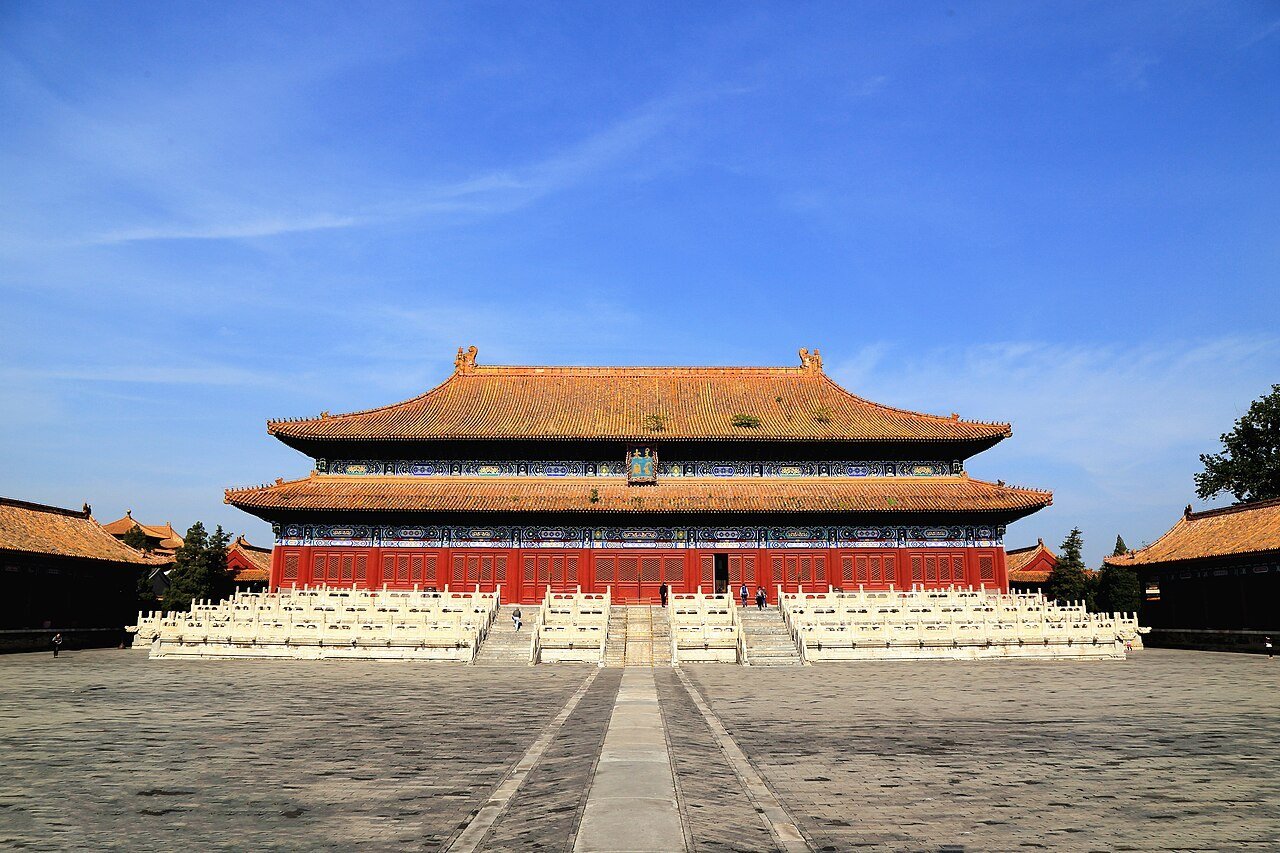
Taimiao’s ancestral worship hall, photographed on 24 October 2015. Photo: Legolas1024 (Kwangming Lee). Source · CC BY-SA 4.0. Resized and JPEG encoded; no additional crop. Image remains under the stated license.
What makes Taimiao worth visiting?
Taimiao served the ancestral rituals of the Ming and Qing imperial families. Its appeal is architectural: the sequence of courtyards, the breadth of the ancestral hall and the contrast between large ceremonial buildings and tree-lined grounds.
It also helps explain imperial Beijing’s layout. The temple stands east of the main ceremonial line, paired with the Altar of Land and Grain to the west. Both belong to the UNESCO-listed Beijing Central Axis. Seeing a ritual site beside the palace makes that planning idea more tangible than viewing the palace alone.
Choose Taimiao for this distinct setting. Do not expect the Forbidden City’s collections, guaranteed empty courtyards or access to every hall visible in older photographs. The Cultural Palace has continuing public uses, and events or conservation work can affect access.
Park admission and ancient-building admission
The official Beijing tourism listing distinguishes the park from the ancient-building area and Chinese Harmony Bells exhibition, 太庙·中华和钟展:
- Park: listed standard adult admission CNY2.
- Ancient-building/exhibition area: CNY15 from 1 April to 31 October, or CNY10 from 1 November to 31 March.
Budget for the park ticket and the relevant additional admission if the halls are your reason for coming. The CNY2 figure should not be read as an all-access temple ticket. Concessions have their own eligibility requirements; use the standard adult figures unless the venue confirms your documents qualify.
At the ticket point, show the Chinese exhibition name and confirm what is open that day before paying. Carry your passport. The sources reviewed do not establish a complete foreign-passport online booking process, so this guide does not promise that an untested app route will work.
Hours and the Monday distinction
The tourism listing gives these seasonal park hours:
- 1 April–31 October: 06:30–20:00, last admission 19:30.
- 1 November–31 March: 07:00–18:00, last admission 17:30.
The ancient-building area is listed as 09:00–17:00, closed Mondays except national statutory holidays. Ticket sales can finish earlier. The venue’s published ticket notice distinguishes sales cutoffs at the outer and ancient-building ticket points. Arrive comfortably before the final hour rather than treating closing time as the latest time to buy admission.
Check for a date-specific notice before travelling. An open park on Monday does not establish that the halls are open. An evening walk through the grounds is also a different experience from a daytime architectural visit.
A focused route through the site
Orient yourself at the entrance map and identify the open route toward the main ancestral hall. Follow that sequence first, then add smaller paths through the grounds if time permits. Look back along the approach as well as toward the buildings; the courtyards are part of the design.
Compare the roofline, red columns, raised platforms and thresholds. Read the available interpretation before deciding which smaller spaces to add. This is a better use of a short visit than repeatedly crossing the grounds to reproduce photographs taken in different seasons.
Respect barriers around historic fabric and follow exhibition photography rules. Ask before photographing people using the Cultural Palace or taking part in organised activities. If steps or prolonged standing are difficult, ask about the specific route you want: the sources checked do not verify continuous step-free access into every ancient building.
Pairing Taimiao with central Beijing
The nearby Forbidden City can already take the main part of a sightseeing day. Add Taimiao only if the hall hours and your energy support it. Otherwise, give it a separate morning or afternoon with a meal and a surrounding-district walk.
Save the full Chinese name and intended entrance in your map app. Controlled pedestrian routes and screening can change the convenient approach, so avoid building a tight schedule around a shortcut you have not verified.
If you also want to enter Tiananmen Square, check that separately. A Taimiao ticket is not a pass for the square, Tiananmen Gate or the palace. Confirm each stop’s own access rather than assuming proximity connects their reservations.
A palace-ticket fallback with its own purpose
Taimiao can be a good alternative when your interest is imperial architecture and the Central Axis. It is less suitable if your main aim is specifically the palace collection or entering the Forbidden City itself.
Make the choice deliberate: confirm that the ancient-building area will be open, buy the correct admission and give yourself time to look closely. Those decisions turn a convenient nearby name into a rewarding visit in its own right.