
Choose a China connectivity option by answering two questions: does the phone support the plan you intend to install, and do you need a mainland +86 phone number? A travel eSIM is often the simplest data option for a compatible, unlocked phone. A local carrier SIM or locally activated eSIM is more useful when a Chinese number matters. Home-carrier roaming is the easiest backup, but its cost and data allowance depend entirely on your carrier.
Do not buy on price alone. Network partner, activation location, tethering, voice/SMS support, refund terms and access to particular internet services can matter more than the headline data allowance.
The three options at a glance
| Option | Strongest reason to choose it | Main limitation to check |
|---|---|---|
| International travel eSIM | Install before travel and keep the physical SIM slot free | Device compatibility, data-only status and provider routing |
| Mainland carrier SIM or eSIM | Local number and domestic carrier service | In-person identity checks, device/model support and local network policies |
| Home-carrier roaming | Keep the existing number and avoid a new account | Daily cost, speed policy and roaming allowance |
A dual-SIM setup can provide resilience: keep the home line available for bank messages while using a second line for data. Confirm how the phone labels the default data line so it does not roam on the wrong SIM.

Travel eSIM: best for convenience, not a universal guarantee
Many travel eSIMs are data-only. They may not provide a Chinese number for voice calls or SMS verification. Check the product page for the exact country, validity period, network partner, hotspot policy, activation trigger and refund rule before paying.
Install the profile while you still have reliable home Wi-Fi, but follow the provider’s instruction on when to switch it on. Some plans start at installation; others start only when they first connect. Take screenshots of the QR code, APN instructions and support contact, then store them somewhere accessible offline.
Internet routing differs by provider and plan. A travel eSIM may behave differently from a local SIM, but no article can guarantee access to a particular website or app. Ask the provider what it supports, read recent service notices and comply with local laws. The detailed China eSIM guide can help compare plan features without replacing the provider’s current terms.
Local SIM or local eSIM: best when a Chinese number matters
China’s State Council guide says foreign nationals can bring a passport or Foreign Permanent Resident ID Card to service offices of China Telecom, China Mobile or China Unicom to apply for a SIM and activate service. Bring the original document and use an official carrier outlet. Do not hand identity documents to an unofficial street seller.
A local number can help with services that rely on mainland SMS. The trade-off is setup time and the network environment: a domestic carrier connection follows mainland network policies. Do not assume that apps available through international roaming will behave the same way.
Apple’s current support page illustrates why “eSIM supported” is not a complete answer. Mainland-carrier eSIM support depends on the exact iPhone model and market, and activation may require a carrier store and identity check. Other phone makers and carriers have their own rules. Check the device model—not only the product family—and confirm that it is carrier-unlocked.
The local SIM guide for tourists covers the store visit and questions to ask. Avoid relying on an old list of airport counters or package prices; opening hours and tourist bundles change.
Home roaming: simple and useful as a fallback
Home-carrier roaming keeps the existing number active and normally requires the least setup. It can be valuable for a short stop, banking messages or as a backup until another plan works.
Check four items in the carrier account before departure:
- whether mainland China is included in the pass;
- when a daily charge is triggered;
- the high-speed data allowance and reduced-speed policy;
- whether tethering and incoming SMS are covered.
Turn off data roaming on the home line if another SIM is supposed to carry data. A dual-SIM phone can silently use the wrong line when “mobile data switching” is enabled.
A decision rule that avoids overbuying
Choose a travel eSIM when the phone is compatible, data is the main need and the plan terms are clear. Choose a local carrier line when a Chinese number or longer-term domestic service matters and you can complete the identity process. Choose home roaming when convenience is worth the verified carrier charge or as a short backup.
For a longer or business-critical trip, combine two independent options rather than buying one unusually large plan. Test calls, data and the apps needed for the first day before leaving the airport or hotel Wi-Fi.
Setup checklist before departure
- Confirm the exact phone model, eSIM capability and carrier-unlocked status.
- Save the IMEI/EID only in a secure place; do not publish it or send it to an unknown seller.
- Install necessary provider apps from official stores.
- Download offline maps, hotel details and translation resources.
- Decide which SIM handles mobile data, calls and SMS.
- Keep the physical passport accessible if planning a local carrier purchase.
- Review the China internet and VPN decision guide without assuming any tool or route is guaranteed.
- Set up a payment backup using the Alipay guide for foreign visitors.
Frequently asked questions
Does a travel eSIM include a Chinese phone number?
Many are data-only, but products differ. Check whether voice, SMS and a +86 number are explicitly included before purchase.
Can I install a travel eSIM after arriving?
That depends on the device, market, provider and local availability. Installing before departure is safer because support pages and activation Wi-Fi are easier to access.
Does every eSIM provide the same internet access?
No. Routing, partner networks and filtering behaviour vary. A provider’s current written terms are stronger evidence than a general travel claim.
What document is needed for a local SIM?
Official guidance says foreign nationals can use a passport or Foreign Permanent Resident ID Card at carrier service offices. Bring the original document and verify the outlet.
Should I keep my home SIM active?
It can help with bank messages and recovery codes. Disable its data roaming unless you have confirmed the cost.
Sources and last-check notes
- China State Council: working and living guide, including SIM applications
- International Services Shanghai: mobile SIM card application guide
- Apple Support: using eSIM with iPhone in China mainland
Official and manufacturer guidance and linked public pages were checked on 30 August 2026. Reconfirm device support, activation location, carrier identity requirements, provider routing and plan terms before purchase.
Image credits
- Featured image: China Unicom store in Shenzhen. Image by Haxyatamngu Luuo, via Wikimedia Commons. — CC0 1.0.
- First inline image: Physical SIM card. Image by Tomasz Sienicki, via Wikimedia Commons. — CC BY 2.5 pl.
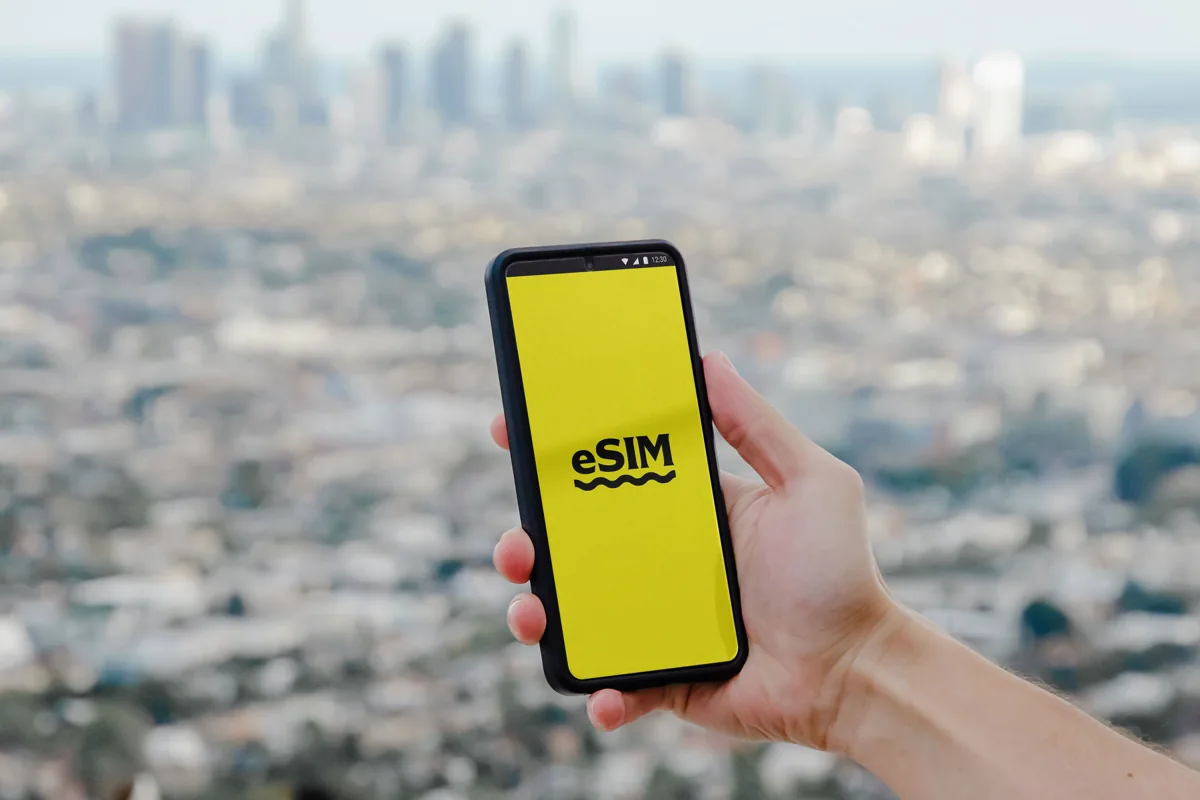
- Second inline image: Illustrative eSIM image by Jacob, cropped and resized, via Pexels. It does not prove provider routing or access in China. — Pexels License.