
You may not need a VPN in China at all. If you buy a foreign travel eSIM before you fly, your data roams through a server outside China and skips the block entirely, so Google, Instagram, and WhatsApp just work. A VPN only becomes essential when you rely on hotel or cafe Wi-Fi, or when your eSIM runs out and you fall back to a local SIM.
That is the part most guides get wrong. They tell you a VPN is mandatory, then sell you one. The real 2026 answer depends on how you get online.
Take Marco, a designer from Milan on his first trip to Shanghai. He panicked about VPNs for weeks, then landed with a travel eSIM and never opened one. His Google Maps loaded on the taxi ride from Pudong.
This guide covers exactly what is blocked, whether a VPN is legal, when you truly need one, and the setup steps that only work if you do them before you cross the border. Everything below reflects what actually works as of July 2026, not last year’s rules.
Key Takeaways
- A foreign travel eSIM roams through an overseas network and bypasses the Great Firewall with no VPN, no setup, and plans from around $2.
- Google, Gmail, Instagram, Facebook, WhatsApp, YouTube, and Google Maps are all blocked; WeChat and Alipay are not and you will use them daily.
- Personal VPN use is a legal gray area, but no foreign tourist has been penalized for it as of 2026.
- VPN websites are blocked inside China, so you must download and log in to your VPN before you arrive.
- ExpressVPN and Astrill are the two most reliable paid options in 2026; install two, because reliability shifts fast.
What Actually Gets Blocked in China

The blocked list is long and it hits the apps you use most. Knowing "which apps blocked" ahead of time saves you a stressful first night.
Google runs almost nothing here. That means Gmail, Google Maps, Google Drive, Google Docs, and Google Search all fail on a normal local connection. Social and messaging apps are hit hard too.
Here is what works and what does not on a standard Chinese network:
| App or service | Status in China | Traveler workaround |
|---|---|---|
| Google Search, Maps, Gmail, Drive | Blocked | eSIM roaming or VPN |
| Instagram, Facebook, YouTube | Blocked | eSIM roaming or VPN |
| WhatsApp, Telegram, Signal | Blocked | eSIM roaming or VPN |
| Slack, Discord, Notion, Dropbox | Blocked | eSIM roaming or VPN |
| Works | Install before or after arrival | |
| Alipay | Works | Set up for payments and taxis |
| Apple services, Bing, Microsoft 365 | Mostly work | No action needed |
| Booking.com, Trip.com, Airbnb | Work | Use normally |
Notice the pattern. Chinese "super apps" like WeChat and Alipay run fine and you will lean on them for messaging, payments, metro entry, and food. Our guide to using Alipay as a foreigner walks through setup in minutes.
Is a VPN Legal in China?
This is the question that makes people nervous, so let’s be precise. A VPN sits in a legal gray area in China, and that has not changed in 2026.
Only VPN services licensed by Chinese authorities are officially legal. The paid tools tourists use, like ExpressVPN or Astrill, are not licensed, so technically they fall outside the rules.
Here is the part that matters for you: as of 2026, no foreign tourist has been fined or punished for personal VPN use. Enforcement targets Chinese residents who publish or broadcast sensitive content, or people running a VPN as a business, not a visitor checking Gmail.
Border staff do not search phones for VPN apps, and hotel Wi-Fi does not report you for using one. The fear online is far bigger than the reality on the ground.
Sofia, a teacher from Lisbon, ran Astrill on hotel Wi-Fi across a two-week Beijing and Xi’an trip in early 2026 with zero issues. The practical risk for a tourist scrolling Instagram is very low.
Two sensible rules keep it that way. Use a VPN discreetly for personal browsing only, and never use it to post political content or run a commercial operation. Keep it boring and you keep it safe.
The eSIM Trick That Skips the VPN Entirely
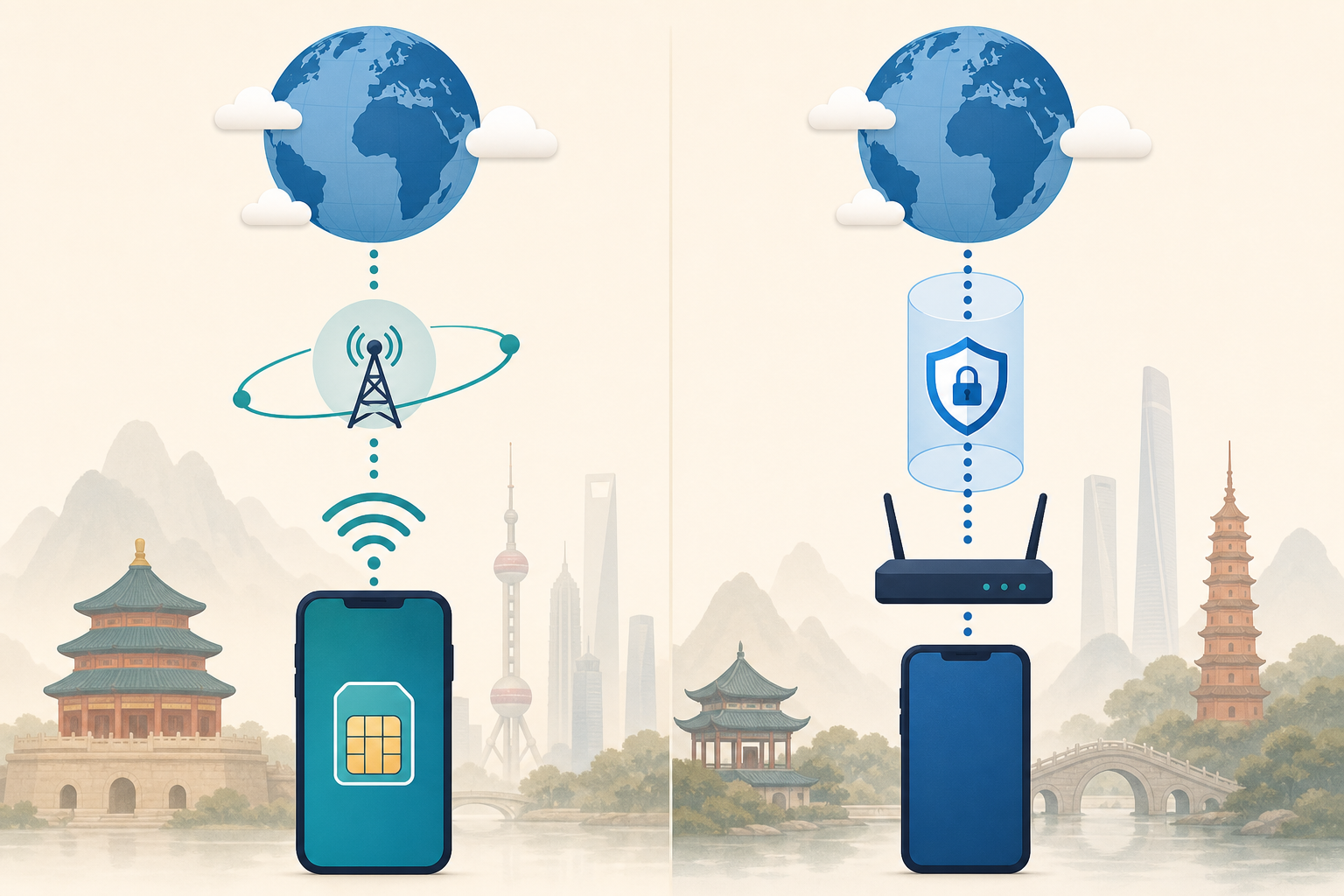
Here is the shortcut the VPN companies would rather you not hear about. A foreign travel eSIM routes your data through a network outside mainland China, so the Great Firewall never touches it.
That is a hardware-level bypass, not a software fight. Where a VPN has to disguise its traffic and can get blocked, roaming data simply arrives from abroad. Google Maps, WhatsApp, and Instagram behave exactly as they do at home.
Plans are cheap and start around $2 for a small data bucket, scaling up by the gigabyte. You install the eSIM by scanning a QR code, and it activates when you land.
One rule is non-negotiable: buy and install the eSIM before you enter China. Most eSIM provider websites are blocked once you arrive, so a QR code you did not scan in advance is useless.
Priya, a solo traveler from Bangalore, installed a 10GB eSIM the night before her Chengdu flight. She landed, toggled it on at the gate, and her home apps loaded before she reached baggage claim. No app, no login, no firewall.
For a real comparison, an eSIM beats a VPN for most short trips because there is nothing to troubleshoot. A VPN still wins if you want your data cheap on a local SIM, or you plan to work online for weeks. Many travelers carry both. Our connectivity hub breaks down eSIM versus local SIM in detail.
When You Actually Need a VPN
An eSIM covers most people, but a VPN still earns its place in a few real situations. Match your trip to the list below.
You likely need a VPN if any of these apply:
- You will spend long stretches on hotel, airport, or cafe Wi-Fi, which routes through the Chinese network and is blocked.
- You plan to buy a cheap local SIM card for weeks of data instead of an eSIM.
- You work remotely and need reliable, all-day access to Google Workspace, Slack, or your company tools.
- Your eSIM data runs out mid-trip and you have no easy way to top up.
You probably do not need a VPN if you are on a short trip, staying on eSIM roaming data, and mostly need maps, messaging, and social apps on the go.
Here is a quick decision table:
| Your setup | Blocked sites reachable? | VPN needed? |
|---|---|---|
| Foreign travel eSIM (roaming) | Yes, automatically | No |
| International roaming from home carrier | Yes, usually | No |
| Hotel or public Wi-Fi | No | Yes |
| Chinese local SIM card | No | Yes |
How to Set Up a VPN Before You Fly
If you decide you want a VPN, the single most important fact is timing. VPN websites and app-store listings are blocked inside China, so you cannot download or subscribe once you land.
Do all of this while still at home or connected to home Wi-Fi. Install the app, create your account, log in, and run a quick test connection so you know it works.
Reliability in China shifts fast, and a VPN that worked in spring can stumble in summer. That is why experienced travelers install two providers, not one.
For 2026, ExpressVPN ranks as the most reliable overall and starts around $3.49 per month on longer plans. Astrill is the long-time expat favorite for consistency, though it costs more at roughly $12.50 per month on its cheapest tier. LetsVPN is a budget short-trip option but keeps user logs, so treat it as a backup rather than your main tool.
Quick setup checklist before departure:
- Download and log in to two VPN apps on your phone and laptop.
- Turn on the provider’s stealth or obfuscation mode, which helps in China.
- Note your login details offline in case you get logged out.
- Test that a blocked site loads, so you trust it before you fly.
Sorting connectivity is one piece of arrival prep. If you are still working out entry rules, our visa and entry hub covers the visa-free options many travelers now qualify for.
Frequently Asked Questions
Do I need a VPN if I have a travel eSIM in China?
No, usually not. A foreign travel eSIM roams through a network outside China, so blocked apps like Google Maps, WhatsApp, and Instagram work automatically. Keep a VPN installed as a backup for hotel Wi-Fi, but most eSIM users never open it during a short trip.
Is it illegal to use a VPN in China as a tourist?
VPN use sits in a legal gray area, since only government-licensed services are officially approved. However, no foreign tourist has been penalized for personal VPN use as of 2026. Enforcement targets residents publishing sensitive content, not visitors checking email or social media.
Can I download a VPN after I arrive in China?
No, and this trips up many travelers. VPN websites and app-store pages are blocked inside China, so you cannot download or subscribe once you land. Install and log in to your chosen VPN, or install your eSIM, before you cross the border.
Does WeChat work in China without a VPN?
Yes. WeChat, Alipay, Bing, Apple services, and Chinese travel apps all work on a normal local connection with no VPN. You will use WeChat and Alipay constantly for messaging, payments, metro rides, and ordering food, so set both up early in your trip.
Which is better for tourists, a VPN or an eSIM?
For most short trips, an eSIM wins because it needs no troubleshooting and bypasses the firewall automatically. A VPN is better if you want cheap data on a local SIM or you work online for weeks. Carrying both gives you the safest coverage.
Will a free VPN work in China?
Rarely. Free VPNs lack the obfuscation technology needed to get past the Great Firewall and are usually blocked or painfully slow. They also carry privacy risks. Use a proven paid service or, simpler still, a travel eSIM that skips the problem entirely.
Before You Go: Your Connectivity Checklist
Getting online in China is easy once you prepare at home. Do these five things before you fly and you will land connected.
- Buy and install a foreign travel eSIM, scanning the QR code before departure.
- Download and log in to two VPN apps as a backup for Wi-Fi.
- Install WeChat and set up Alipay for payments and transport.
- Save offline maps and key addresses in case an app fails.
- Screenshot your hotel, visa, and booking details for quick access.
With connectivity sorted, the rest of your trip planning gets much simpler. If you are ready to lock in your route between cities, we handle the hardest part for you.
China’s high-speed rail is the best way to travel, and booking tickets as a foreigner can be confusing. Skip the stress and get a free quote on your China train tickets, and our team will sort your seats so you arrive rested and ready to explore.
Sources and further reading: China National Immigration Administration, U.S. Embassy in China traveler information, and the official 12306 China Railway ticketing site.