
Editorial update: 21 October 2026. Source-based review by Kevin Fan. This edition is research, not a first-hand journey, station inspection or payment test. Recheck live operator instructions before travelling.
If your ticket says PEK, go to Beijing Capital International Airport (北京首都国际机场), not Beijing Daxing (PKX / 北京大兴国际机场). Read the terminal from the current airline booking. Then choose the transfer that gets you to your actual hotel after immigration, baggage reclaim and customs.
This is an arrival and connection guide. It does not promise a fixed airport-to-hotel time, a universal taxi price or visa-free admission. RelaxInChina publishes information and does not issue tickets or manage reservations.
Before departure: save these four items offline
- The airport code PEK, flight number and terminal in the airline’s current booking.
- Your hotel’s Chinese name, exact branch and address, plus a contact number.
- The transport option that still operates after your likely arrival formalities, and a road-transfer fallback.
- The passport, entry permission and onward documents required for your own itinerary.
A flight’s scheduled landing time is not the time you will reach the train platform or taxi rank. Delays, document checks, baggage delivery and walking all come first.
Terminal checks: use the flight, not an airline-alliance rule
Terminal assignments can change. Recheck the airline’s flight status and the official Capital Airport information before travelling. An old table assigning an entire alliance to one terminal is not a reliable instruction for a specific flight.
If your booking contains more than one flight, compare the airport and terminal for each segment. A terminal change at PEK is different from a transfer between PEK and PKX. Do not assume the baggage has been checked through or that you can remain airside; ask the airline about the exact connection.
For a landside terminal transfer, follow the airport’s current transport and free-shuttle information. Check the current boarding point and operating period rather than treating a copied shuttle interval as guaranteed.
Choose a city transfer by the last mile
| Option | Useful when | Check before committing |
|---|---|---|
| Capital Airport Express plus city transport | You can manage bags and the onward hotel journey is convenient | Last train from your terminal, interchange, separate onward fare and final walk |
| Official metered taxi | A direct hotel arrival matters more than rail transfers | Marked taxi rank, correct address, meter, tolls and receipt |
| App-booked car | You have a working account, data and payment method | Pickup zone, vehicle details, quoted total and the correct terminal |
| Airport bus | An operating route has a stop useful for your destination | Current route, stops, departure period, luggage arrangements and final connection |
Capital Airport Express: what the fare does and does not cover
Beijing’s official subway fare guidance lists a CNY 25 single fare for the Capital Airport Express. The regular city subway is a separate fare system. Confirm the fare displayed for the ticket you buy; do not apply the airport price to the whole hotel journey.
Choose the city interchange from the current route map and your hotel’s location. Check the last departure from the terminal where you will actually board. A published time at a city station is not necessarily the final airport departure in the other direction.
A short rail ride is not an airport-to-hotel guarantee. Add the walk to the airport station, any waiting, the city transfer and the last walk. With children, large luggage or mobility needs, compare those stages with a direct road journey.
Late arrival, taxi and app-car decisions
If you cannot comfortably reach an operating rail service, use a confirmed road-transfer option. Follow airport signs to the official taxi rank. Show the driver the hotel’s Chinese address and branch; keep the receipt for a fare query or a lost item. Avoid accepting an unsolicited ride inside the terminal.
For an app-booked car, follow the pickup zone specified by the app and airport signs. Match the vehicle and registration before entering. A taxi queue and an app pickup point are not interchangeable. Recheck the fare shown, any waiting charges and the destination before confirming.
No single taxi or app-car price in this guide covers every hotel, traffic condition and departure time. If payment or data fails, ask a staffed airport service counter about available transport and payment options. Do not hand a stranger your phone’s payment code or account login.
Connections: a decision sequence instead of a minimum-time promise
- Same or separate bookings? Ask the airline what connection handling applies, including baggage and any rebooking support.
- Same airport? Read PEK or PKX on both bookings. A change of airport is a substantial landside journey, not a terminal shuttle.
- Can you leave the transit area? Confirm your entry eligibility before planning a hotel, city visit or airport change.
- What must happen again? Include baggage collection, road transfer, check-in, security and any exit formalities required for the onward flight.
- What if the inbound flight is late? Know whom to contact before making a separately paid onward commitment.
Use the Daxing airport guide when the next flight says PKX, and the Beijing airport-to-city guide for a wider route comparison.
Entry and visa-free transit: check the current policy
Do not infer entry permission from the airport code or a train ticket. Ordinary visa-free entry and visa-free transit are different arrangements. Check nationality, passport type, purpose, route, onward booking, permitted stay and travel area against the National Immigration Administration’s current transit explanation and your airline’s document checks.
Older summaries listing 55 eligible countries are out of date against NIA’s August 2026 explanation. This page deliberately does not reproduce a country list. Immigration authorities decide admission; a guide cannot approve it. Ask the relevant authority if the itinerary is unclear before buying a non-refundable connection.
Phone and payment tasks before leaving arrivals
Open your saved hotel details before depending on a network. Check whether your data plan is active and whether the home number can still receive any bank verification message. A connected phone does not guarantee that every foreign app is accessible.
Officially reported airport service counters provide assistance with matters such as mobile payments, SIM cards and transport information. Ask airport staff for the currently operating counter rather than relying on an old desk location. Read our connection decision guide and Alipay setup and backup checklist before the trip.
Common questions
Is PEK the same airport as PKX?
No. PEK is Capital; PKX is Daxing. Match the code on the current booking before choosing transport.
Can I use the rail ride time as my hotel arrival time?
No. It excludes arrival formalities, baggage, access to the station, any city transfer and the hotel walk.
Should I take a taxi or an app-booked car?
Compare your working payment and data options, baggage needs and current pickup instructions. Use the official taxi queue or the pickup process for the service you actually booked.
Can RelaxInChina book or change my journey?
No. Contact your airline or booking provider for issuance, changes, refunds and protected-connection questions.
Sources and limits
- Beijing Capital Airport: transport information
- Beijing government: subway and airport-line fares
- NIA: visa-free transit policies
- Official report on airport service counters
The fixed fare is attributed to the dated official fare page. Timetables, terminals, live quotations, entry decisions and individual service availability must be checked for your own journey. No named traveller stories or first-hand tests are claimed.
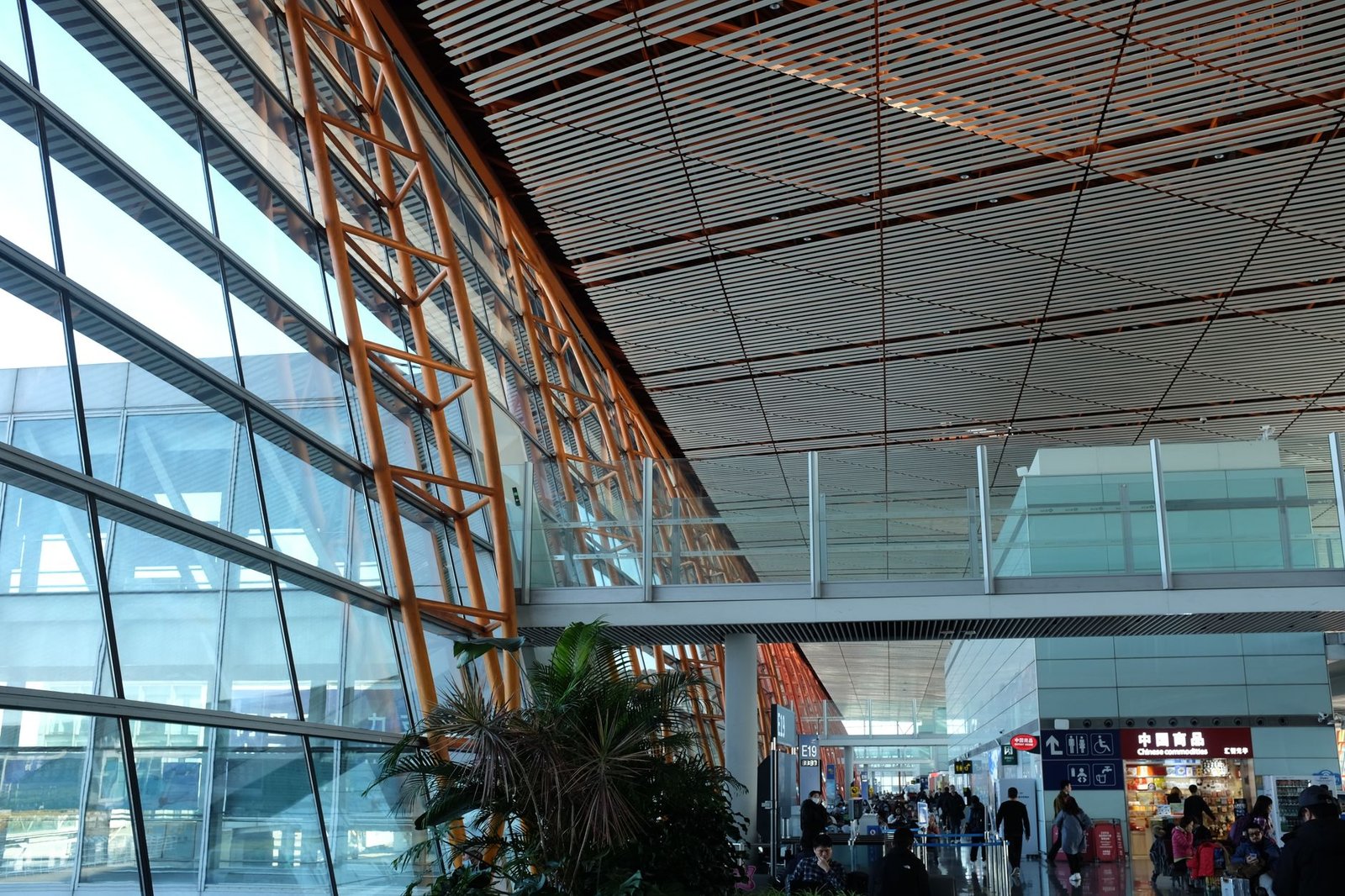
Featured image: “Beijing Capital International Airport Terminal 3 International Arrival 20240604.jpg” by 颐园居, via Wikimedia Commons, CC BY-SA 4.0.