
Yu Garden is a 400-year-old Ming Dynasty garden in central Shanghai, and entry costs 30-40 RMB (about 4-6 USD) depending on the season. You must bring your physical passport to buy a ticket and get in. That single rule trips up more first-time visitors than anything else.
Here is the part most guides bury: the “Yu Garden” everyone photographs on Instagram, the zigzag bridge over the lily pond and the wooden teahouse, is actually free. It sits outside the ticketed garden. The paid garden is the quiet, walled classical garden behind it, full of rockeries, dragon walls, and koi ponds.
So you can experience most of the area’s magic without paying a cent, then decide if the walled garden is worth an hour of your time. Meng, a solo traveler from Toronto, spent a full evening in the free bazaar and never realized the paid garden existed until she was on the metro home.
This guide sorts out the free bits from the paid bits, walks you through the passport-only booking system, and tells you exactly when to show up to dodge the tour-group crush.
Key Takeaways
- Tickets are 40 RMB in peak months (Apr-Jun, Sep-Nov) and 30 RMB the rest of the year; foreign students get half price.
- You cannot enter without your original passport. Photocopies, driver’s licenses, and photos on your phone are all rejected.
- The garden opens 9:00-16:30, with last entry at 16:00, and is closed Mondays except public holidays.
- The famous zigzag bridge, Huxinting Teahouse, and the whole bazaar are free and stay lively after dark.
- Take Metro Line 10 or 14 to Yuyuan Station; the garden is a 6-minute walk from the exit.
What “Yu Garden” actually means

The name gets used three ways, and mixing them up wastes time and money.
First, the Yuyuan Garden itself: a walled, ticketed classical garden built between 1559 and 1590 by Pan Yunduan, a Ming Dynasty official, as a retirement gift for his aging parents. “Yu” means “peace and health.” This is the part you pay to enter.
Second, the Yuyuan Bazaar (also called Yuyuan Old Street): a sprawling, free shopping and food district wrapped around the garden. This is where the crowds, lanterns, and dumpling shops are.
Third, the whole neighborhood, which locals just call “Yuyuan.” When a taxi driver or a sign says Yuyuan, they usually mean the general area, not the ticket gate.
The scene most travelers picture, the nine-turn zigzag bridge crossing a lotus pond to the Huxinting Teahouse, sits in the free zone. You do not need a ticket for it, and it looks its best lit up at night.
Yu Garden tickets and opening hours
Here are the current 2026 numbers. Prices change by season because peak months bring bigger crowds.
| Detail | Peak season (Apr-Jun, Sep-Nov) | Off-peak (Jul-Aug, Dec-Mar) |
|---|---|---|
| Adult ticket | 40 RMB | 30 RMB |
| Foreign student (with ID) | 20 RMB | 15 RMB |
| Seniors 60+ / ages 6-18 | Half price | Half price |
| Under age 6 or under 1.3m | Free | Free |
| Opening hours | 9:00-16:30 | 9:00-16:30 |
| Last entry | 16:00 | 16:00 |
| Closed | Mondays (except holidays) | Mondays (except holidays) |
One adult can bring up to three free children. The garden is small, so most people spend 60 to 90 minutes inside. Add another hour or two if you want to eat and wander the bazaar.
A quick reality check: the ticket is cheap, but the value is the atmosphere, not the size. If you have already seen the classical gardens of Suzhou, the walled garden here may feel modest. If this is your first classical Chinese garden, it is a lovely, compact introduction.
How to buy Yu Garden tickets as a foreigner
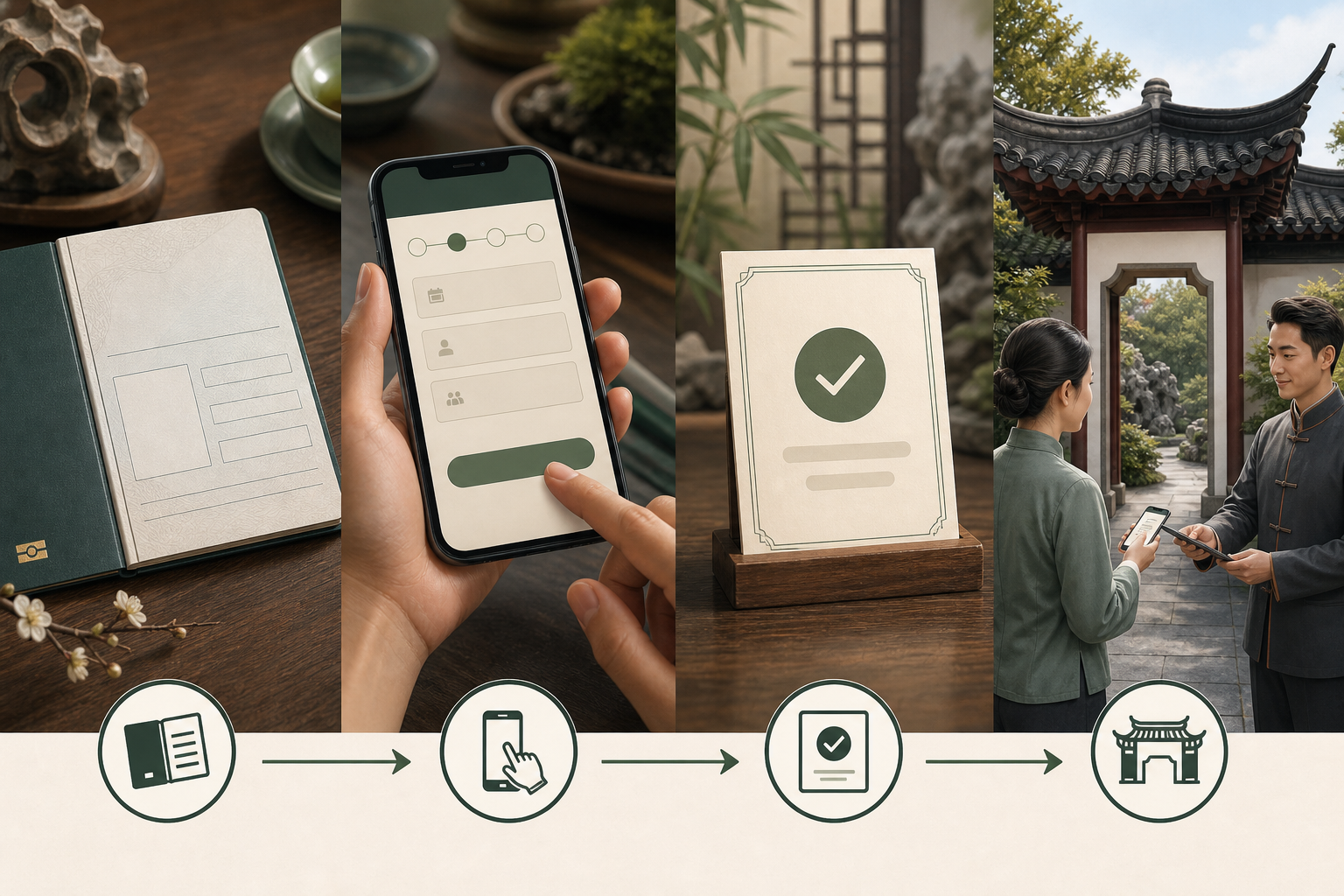
China runs a real-name ticketing system, which means every ticket is tied to a verified ID. For foreigners, your passport is the only ID that works. Bring the physical booklet, not a copy.
You have three ways to get in:
1. Buy at the on-site window. The simplest option for visitors. Walk up to the ticket office at the garden’s main entrance, show your passport, and pay. Cash and mobile payment both work, and lines are short outside peak weekends.
2. Book through the WeChat mini program. The official channel lets you reserve in advance using your passport number. The catch: the interface is mostly in Chinese with no reliable English version, and you need a working WeChat account linked to a payment method. Doable, but fiddly for a first-timer.
3. Book through a travel service. If the Chinese-only apps stress you out, a booking service handles the reservation and sends you a QR code. This is the low-friction route if you would rather not fight the mini program.
James, a retiree from Manchester, tried the WeChat route the night before, got stuck on the Chinese payment screen, and simply bought at the window the next morning in under two minutes. For a garden this cheap, the on-site window is usually the least stressful choice.
Make sure your Alipay or WeChat Pay is set up before you travel so on-site payment is smooth. Our guide to using Alipay in China as a foreigner walks through the setup in plain steps.
What to see inside the paid garden
The walled garden packs a lot into a small space. Focus on these five and you will not miss the highlights.
The Great Rockery is a 14-meter artificial mountain of yellowstone, the oldest and largest of its kind in the Yangtze region. Climb the winding path for a view over the whole garden.
The Exquisite Jade Rock is the garden’s celebrity: a 3.3-meter porous limestone boulder with 72 holes. Pour water in the top and it trickles out of every hole at once. Legend says it was headed to the emperor’s palace before it landed here.
The Cloud-Piercing Dragon Wall is a curved wall topped with a tiled dragon, its head rising as if bursting through the clouds. It is one of the most photographed features inside.
Sansui Hall, the first grand hall you reach, and the Ancient Opera Stage, famous for the acoustic dome above it, round out the classic circuit.
Best time to visit and how to beat the crowds
Yu Garden is one of Shanghai’s busiest sights, so timing matters more than at bigger attractions.
Arrive right at 9:00 when the paid garden opens, or come on a weekday. Tour groups swarm mid-morning to early afternoon, especially on weekends and Chinese public holidays. During Golden Week in early October, the bazaar can feel shoulder-to-shoulder.
The free bazaar flips the script at night. After dark, the lanterns switch on, the zigzag bridge glows, and the whole area becomes one of the best evening walks in Shanghai. The paid garden closes at 16:30, but the free zone stays lively well into the evening.
Sofia, a photographer from Madrid, did the paid garden at opening, spent the afternoon at the nearby Bund, then circled back to Yuyuan at 8 p.m. for the lit-up night shots. That split gives you the calm garden and the glowing bazaar without the midday mob.
Yuyuan pairs naturally with the Bund and Nanjing Road, both within walking distance. See our Shanghai attractions guide for a half-day route that links them.
Food, shopping, and one honest warning
The bazaar is a food destination in its own right. The star is Nanxiang Mantou Dian, the famous xiaolongbao (soup dumpling) shop. The dumplings are good, though prices run tourist-high, and weekend queues are long. The takeaway window moves faster than the sit-down floor.
The shopping is a mix of genuine local snacks, silk, tea, and plenty of mass-produced souvenirs. Haggle on souvenirs, and skip anything a street seller pushes on you.
One honest warning: if a tout approaches offering a “tea ceremony,” “art gallery,” or a too-friendly chat, keep walking. Do not make eye contact or even shake your head, because engaging can lead to pushy, uncomfortable situations and inflated bills. This is standard advice for tourist-heavy zones in any big city, and Yuyuan is no exception.
Yu Garden earned a spot on China’s UNESCO-linked heritage recognition for classical gardens, which is part of why it draws such crowds. It rewards a calm, unhurried visit far more than a rushed one.
Frequently asked questions
Do I need my passport to enter Yu Garden?
Yes. China’s real-name ticket system requires your original passport to buy a ticket and enter. Photocopies, phone photos, and other IDs like a driver’s license are not accepted. Bring the physical passport booklet with you every time.
Is Yu Garden free?
Partly. The famous zigzag bridge, Huxinting Teahouse, and the entire Yuyuan Bazaar are free to walk through. Only the walled classical garden charges admission, at 30-40 RMB depending on the season. Many visitors enjoy the free areas and skip the paid garden entirely.
How long do you need at Yu Garden?
Plan 60 to 90 minutes inside the paid garden, since it is compact. Add one to two hours to explore the free bazaar, eat dumplings, and reach the zigzag bridge. A relaxed half-day covers the garden, food, and photos comfortably.
How do I get to Yu Garden by metro?
Take Shanghai Metro Line 10 or Line 14 to Yuyuan Station. From there it is about a 6-minute walk to the garden and bazaar entrance. Follow the signs for Yuyuan; the area is well marked in both Chinese and English.
What is the difference between Yu Garden and Yuyuan Garden?
They are the same place. “Yu Garden” is the shortened English name, and “Yuyuan Garden” is the fuller transliteration of the Chinese name 豫园. Both refer to the Ming Dynasty classical garden in central Shanghai’s Old City.
Is Yu Garden worth visiting?
For a first classical Chinese garden, yes. It is atmospheric, historic, and central. If you have already seen the larger gardens of Suzhou, the walled garden may feel small, but the free bazaar and night lights make the whole area worth a stop regardless.
Before you go: your Yu Garden checklist
Do these five things and your visit runs smoothly:
- Pack your physical passport. No passport, no entry, no exceptions.
- Set up Alipay or WeChat Pay before you arrive so on-site payment is painless.
- Arrive at 9:00 or on a weekday to dodge the tour groups, then return after dark for the lit-up bazaar.
- Check the day: the paid garden closes Mondays except public holidays.
- Combine it with the Bund and Nanjing Road for an easy half-day; our Shanghai city guides map the route.
Most travelers reach Shanghai by high-speed train from Beijing, Hangzhou, or Suzhou, and Yuyuan Station is a short metro ride from both major railway stations. Sorting your rail tickets in advance saves hours of stress on arrival.
Let us handle the hard part. Get a free quote for your China train tickets and travel between cities with a confirmed seat and an English-speaking team behind you.
Sources and official information
- Yu Garden opening hours and tickets, TravelChinaGuide
- Shanghai Metro official network map
- China visa-free transit rules, National Immigration Administration
Featured image: “Shanghai – Yu Garden – 0035.jpg” by Stefan Fussan, via Wikimedia Commons, CC BY-SA 3.0.