
Xi’an is often reduced to a day trip to the Terracotta Army. That misses the city that made the museum meaningful: a walled urban core, Tang-era Buddhist landmarks, Muslim food traditions and archaeology tied to multiple capitals.
Three full days create the best first structure. Give the Terracotta Army its own day, use one day for the city wall and historic centre, and reserve the third for Tang-era Xi’an or a deeper museum and neighbourhood route. This page merges the useful material from two overlapping drafts into one canonical city guide.
Choose a base inside or near the city wall
The Bell Tower and South Gate areas are practical for a first visit because they connect the walled centre, metro and evening food areas. A base farther south can suit the Giant Wild Goose Pagoda and newer districts but adds travel to the wall and Muslim Quarter.
Confirm the hotel’s exact metro entrance, foreign-guest registration and room location. Xi’an’s broad roads and underground crossings can turn a short map distance into a longer walk with luggage.
The first decision is therefore not “best hotel” but which two city days should be easiest. If the wall, Bell Tower area and Muslim Quarter dominate, stay central. If Tang-themed museums and the pagoda dominate, compare a southern base.
Ride or walk the city wall early in the trip
The Ming city wall provides the clearest orientation to the historic core. From the top, the street grid, gates and relationship between the enclosed city and modern districts become visible.
Cycling the full circuit is optional. Bicycle availability, rental conditions, weather and wall access change, so confirm them through the current official channel. Walking one or two gate sections can be enough for travellers who dislike cycling or visit in heat.
Use the wall on day one if weather is suitable. That makes later movements inside the city easier to understand. Do not promise a fixed circuit time; crowds, stops, closures and individual pace matter.
Give the Terracotta Army one focused day
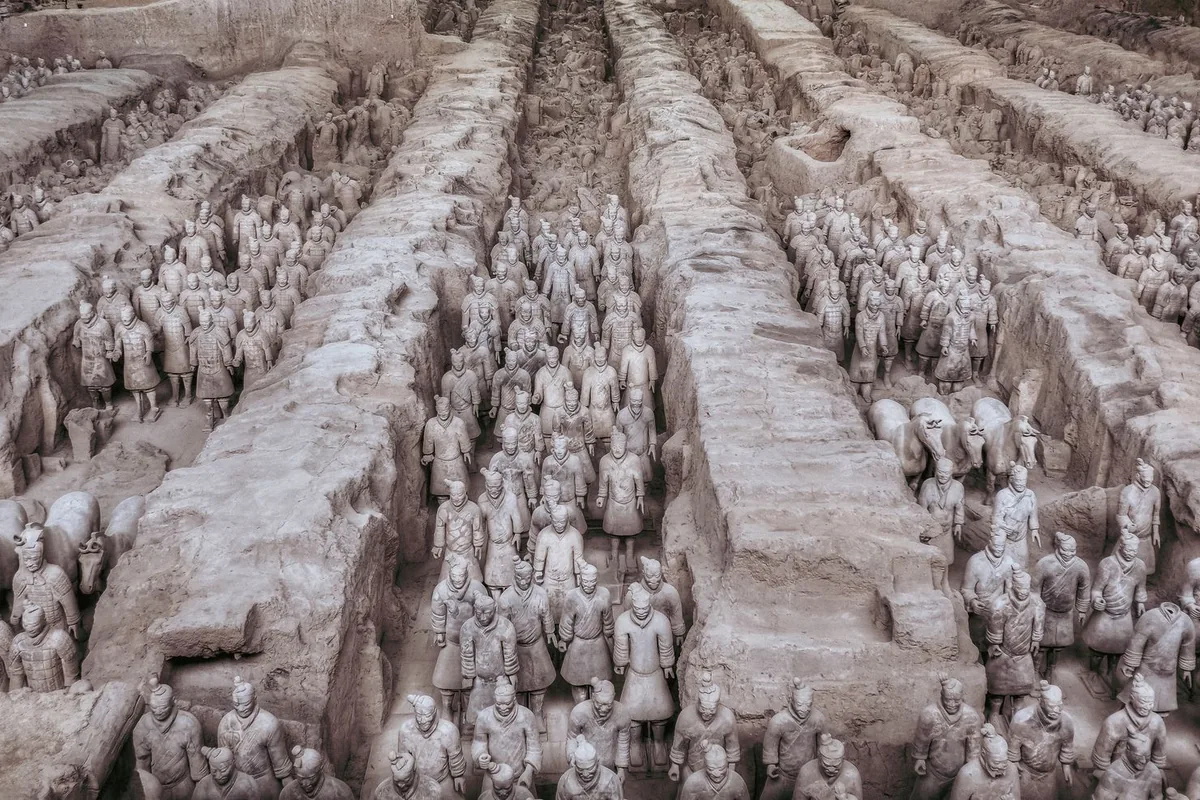
The Mausoleum of the First Qin Emperor and the terracotta warriors sit outside central Xi’an. The UNESCO World Heritage property represents a vast funerary complex, not only three indoor pits.
Use the Terracotta Army guide for current ticket, document and transport steps. At city-guide level, four rules protect the day:
- reserve through the current official route and enter the passport number exactly;
- leave enough time for the city-to-museum transfer in both directions;
- read the pits in sequence rather than spending all attention on the largest one;
- avoid attaching a tightly timed evening event to the expected return.
The Qin Shi Huang guide adds historical context and separates the emperor, mausoleum mound and excavated army. A reconstructed face, unexcavated chamber or promotional graphic should not be presented as direct archaeological evidence.
Use the third day for Tang-era Xi’an
The Giant Wild Goose Pagoda and surrounding southern city provide a different historical layer from the Qin mausoleum and Ming wall. The Giant Wild Goose Pagoda guide covers its current venue operation.
Pair the pagoda area with one museum, temple or public-space cluster whose booking is confirmed. Do not freeze fountain times, performance schedules or seasonal opening hours into a permanent plan. These change and can be cancelled for weather or events.

If Tang history is not the priority, use day three for Shaanxi history collections, neighbourhoods or a slower food route. The third day is where Xi’an becomes more than “wall plus warriors.”
Approach the Muslim Quarter as a neighbourhood network
The popular food street near the Drum Tower is only one visible part of Xi’an’s Muslim neighbourhoods. It can be crowded and commercial, especially at night, but that does not make the area’s food and religious history artificial.
Use the busiest street for orientation, then explore permitted public lanes without treating homes or mosques as entertainment. Dress and behave respectfully around active religious sites, follow photography rules and do not enter private courtyards.
Food quality varies by stall. Choose places with clear turnover and prices, confirm the unit for skewers or weight-based items and order a small amount before committing. The ordering food guide provides a language fallback.
Arrive by the correct station or airport route
Xi’an North is the principal high-speed rail station for many intercity services, but conventional trains may use another station. Search the exact service in the official system and match the full station name to the hotel.
The Beijing to Xi’an train guide explains that specific corridor. For other cities, use the China high-speed rail guide rather than copying a historic duration.
Xi’an airport connects to the metro network, but the airport-to-hotel journey can require transfers and substantial walking. Compare the current route, arrival time and luggage load. No fixed end-to-end duration is reliable for every terminal and hotel.
A practical three-day structure
Day one: wall and walled city
Walk or cycle a suitable wall section, then use the Bell and Drum Tower area and nearby streets for orientation. Keep the evening flexible.
Day two: Terracotta Army
Use the museum as the only distant anchor. Add historical reading or a calm dinner after returning, not another timed monument.
Day three: pagoda and Tang context
Choose the Giant Wild Goose Pagoda area plus one confirmed museum or southern-city cluster. If the weather or booking fails, substitute an indoor collection or deeper central-city day.
Four or five days allow more museums, a slower wall circuit, food exploration or a day trip. Two days force a choice between urban Xi’an and a hurried third layer.
Weather changes the wall and excavation day
Xi’an summers can be hot, winters cold and dry, and spring or autumn still variable. The wall is exposed, while the Terracotta Army includes large indoor halls plus outdoor transfers.
Check short-range conditions and place the wall on the better-weather day. Carry water within current venue rules, sun protection and layers. Air quality and dust episodes should be checked close to travel rather than predicted from a generic monthly label.
Keep live prices and schedules out of the route
Ticket prices, bicycle rental, venue release windows, airport metro schedules and performance times can change. The permanent city guide should tell readers what must be verified, not preserve a date-stamped table as evergreen truth.
Before travel, recheck:
- Terracotta Army and museum reservations;
- city wall access and bicycle operation;
- Giant Wild Goose Pagoda venue rules;
- the exact rail station or airport terminal;
- weather, closures and major holiday crowd controls.
Frequently asked questions
How many days does Xi’an need?
Three full days suit a first visit: wall and centre, Terracotta Army, then Tang-era or museum-focused Xi’an.
Can the Terracotta Army be a half-day?
The museum time may fit, but the city transfer and entry process make a protected full-day block safer.
Should I stay near the Bell Tower?
It is practical for the walled centre and evening food. A southern base may be better if the pagoda and newer districts dominate.
Is the Muslim Quarter only a tourist street?
No. The most visible street is commercial, but it sits within a living Muslim neighbourhood. Explore respectfully and distinguish public commerce from religious and residential space.
One Xi’an page, one clear route
The canonical Xi’an guide should connect three historical layers without duplicating every venue page. Use the city wall to orient, protect a full Terracotta Army day and let the third day reveal Tang-era or neighbourhood Xi’an.
That structure absorbs the useful planning material from both source drafts while removing repeated claims, invented experience and sales promises.
Sources and last-check notes
- Xi’an Municipal Government English portal
- UNESCO World Heritage Centre: Mausoleum of the First Qin Emperor
Sources were checked on 31 August 2026. Recheck tickets, identity documents, city-wall and bicycle access, museum closures, fountain or performance schedules, station names, airport transit, weather and crowd controls for the actual dates.
Image credits
- Featured image: Xi'an city wall. Photo by Felix Andrews, cropped and resized, via Wikimedia Commons. — CC BY-SA 3.0.
- First inline image: Terracotta Army excavation pit. Photo by TonyNojmanSK on Pexels. — Pexels License.
- Second inline image: Giant Wild Goose Pagoda. Photo by 源義信, cropped and resized, via Wikimedia Commons. — CC BY-SA 4.0.