
Give Taiyuan two days if you want both a substantial museum visit and Jinci without putting them between rushed train connections. It can be a useful Shanxi arrival base, but the city and Datong are separate stays. Do not assume that a provincial label makes every well-known Shanxi heritage site a convenient Taiyuan day trip.
Choose your hotel around the visits you actually plan. A convenient central base, a specific station and the Jinci area serve different priorities; compare their door-to-door journeys before committing.
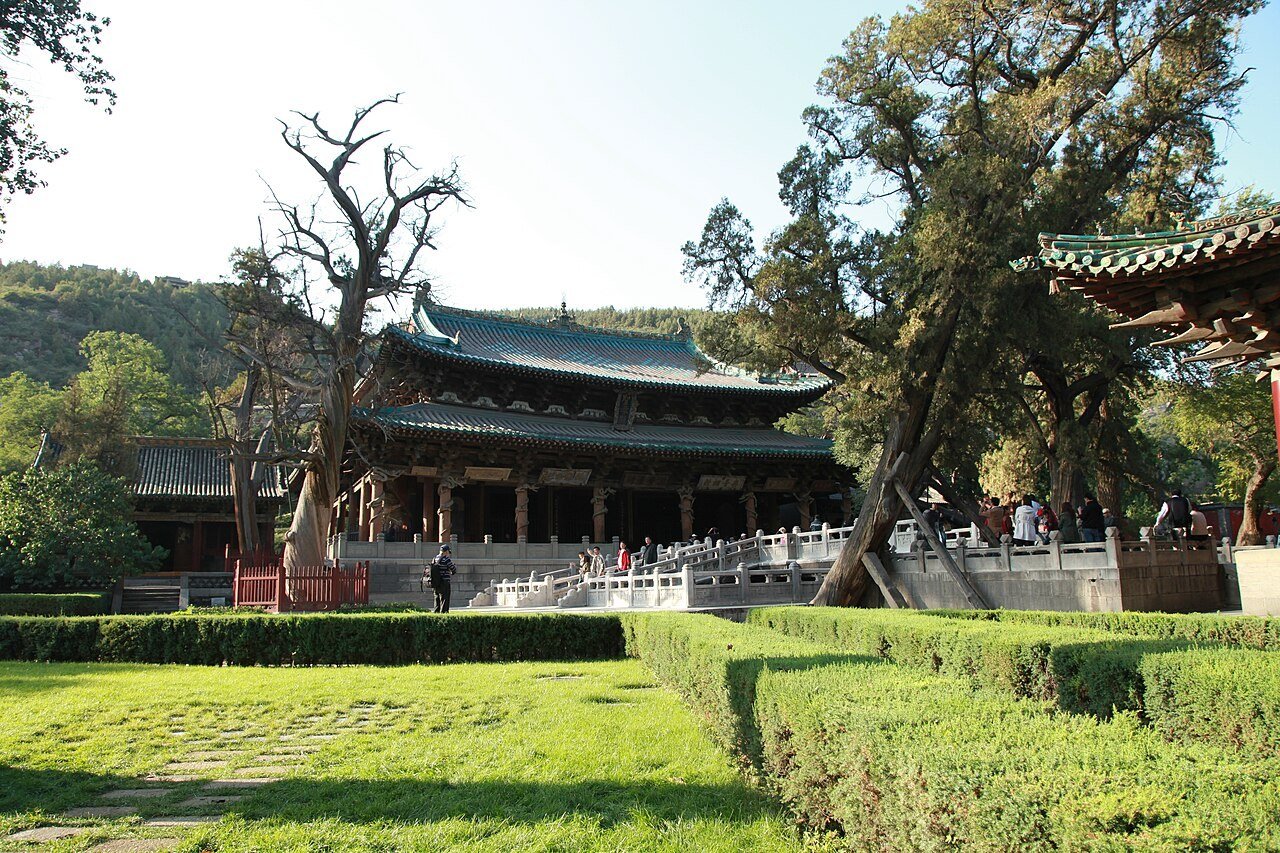
Jinci’s Hall of the Holy Mother, photographed on 19 September 2011. Archival view. Photo: Duan Xuanwang. Source · CC BY-SA 3.0. Resized and JPEG encoded; no additional crop. Image remains under the stated license.
City museum or Jinci first?
For the city session, consider 山西博物院, Shanxi Museum. Confirm its current visitor arrangements and the exhibitions you want before building the day around it. Museum booking rules, exceptional opening days and foreign-document handling need to be read from the venue’s current instructions, not copied from pandemic-era notices.
Jinci, 晋祠, is a separate excursion. The Ministry of Culture and Tourism’s account discusses its historic architecture and preservation work. Approach it as a heritage visit with time for buildings and interpretation, rather than as a quick photograph of a single shrine.
Make sure the ticket or map pin identifies the historic museum area you intend to visit. A surrounding park, a roadside drop-off and the entrance to a paid historic complex are not interchangeable destinations. Check the actual visitor entrance and return arrangements before leaving your hotel.
A flexible two-day itinerary
Day one: city and museum. After leaving luggage, use your confirmed museum session as the main commitment. Choose a few themes rather than trying to read every gallery label. Leave time afterward for a meal and a city walk that fits the remaining daylight.
If arrival is late or the museum is closed, reverse the order of the two days if that is practical, or keep the first afternoon local. Do not buy a substitute tour solely because it promises access that the official venue has not confirmed.
Day two: Jinci. Start with the confirmed entrance, admission and opening window. Give the historic site a substantial session, then return with a buffer before any onward journey. Avoid adding another distant site merely because it appears nearby on a provincial sightseeing map.
These are editorial day divisions, not a fixed tour timetable. Transport, temporary closures and the time you spend looking at buildings may change the route. If only one day is available, choose the museum or Jinci as the primary visit and keep the other optional.
Where to stay
For a two-day cultural trip, compare a city hotel’s access to both planned sessions. Ask about the exact entrance, vehicle drop-off, stairs and lift access if relevant. A property’s “Taiyuan” address is not a useful distance estimate on its own.
Station proximity becomes more valuable with an unusually early departure, but check which station your ticket actually uses. Packing and moving hotels may consume more time than one additional local transfer. Save the hotel’s full Chinese name and address offline.
At meals, choose from current menus and prices rather than relying on a list of supposed essentials. Ask about portions and ingredients you cannot eat. This guide does not present any restaurant or hotel as personally tested.
Trains and a separate Datong stay
Search the exact travel date and station through Railway 12306. Taiyuan and Taiyuan South are different stations. Include the local transfer, document check and boarding cutoff in your plan rather than comparing only train running times.
If Yungang and Datong’s central temples matter, give them a separate base. The Datong guide explains why the grottoes and regional excursions need their own time. An ambitious list of Shanxi attractions is not a workable transport plan.
A crucial transit-policy boundary
The NIA’s current 240-hour transit table lists Taiyuan Wusu as a designated entry port and limits the Shanxi stay area to Taiyuan and Datong. Do not read this as permission to travel throughout Shanxi under that policy. Pingyao or another city requires checking the entry permission you actually hold, even if it is commonly paired with Taiyuan in ordinary tourism itineraries.
Nationality, the onward third-country or region journey and individual entry permission are separate conditions. Check them before purchasing non-refundable transport; being able to enter Taiyuan is not a general approval for every route in the province.