
A useful two-week China itinerary needs fewer stops than most maps suggest. This route uses four bases: Beijing, Xi’an, Chengdu and Shanghai. It keeps the country’s classic historical arc, adds a slower food-and-panda block in Chengdu, and finishes with several nights in Shanghai rather than inserting another airport for a fifth city.
The route is designed for 14 calendar days including arrival and departure. It is a framework, not a promise that a particular train, flight, attraction ticket or entry policy will be available on your dates.
First gate: confirm that your entry status covers 14 days
Do not assume China’s 240-hour visa-free transit policy covers this itinerary. The National Immigration Administration describes that scheme as a stay of no more than 10 days for eligible nationals transiting to a third country or region through designated ports and permitted areas. A 14-day route is longer.
The NIA also publishes a separate list of countries covered by unilateral visa exemption, with ordinary-passport holders on the current list allowed stays of up to 30 days for specified purposes. Nationality coverage and policy duration can change. Travellers outside a current exemption may need an appropriate visa.
Check the NIA and the Chinese embassy or consulate responsible for the passport and place of application. Also confirm the airline’s document requirements before payment. This page cannot determine individual eligibility or guarantee admission.
The route at a glance
| Days | Base | Core plan | Next transfer |
|---|---|---|---|
| 1-4 | Beijing | Arrival, imperial centre, Great Wall, Temple of Heaven and Summer Palace | Train to Xi’an |
| 5-6 | Xi’an | City wall and historic centre, Terracotta Warriors day | Train to Chengdu |
| 7-9 | Chengdu | Panda base, city neighbourhoods, one flexible day | Flight or train to Shanghai |
| 10-14 | Shanghai | Bund, museums, neighbourhoods, optional Suzhou day trip, departure | International departure |
Four bases mean only three intercity moves. Each city gets at least one day that is not shared with a long transfer.
.jpeg)
Days 1-4: Beijing without compressing the Great Wall
Day 1 — arrival and reset. Keep the first day close to the hotel. Save its Chinese address, set up payment and data backups, and avoid a timed attraction after a long-haul arrival.
Day 2 — Forbidden City and Jingshan. Anchor this day to a confirmed Palace Museum reservation. The museum normally closes Mondays outside stated holiday exceptions and does not sell same-day tickets. Follow the current official entrance and passport instructions.
Day 3 — Great Wall. Give Mutianyu or another chosen section a full day. Recheck wind, weather, opening and lift notices. Do not put a fixed evening flight after the wall.
Day 4 — Temple of Heaven and Summer Palace. Use the morning and afternoon for two large outdoor complexes, adjusting the order to reservations and weather. Keep a museum fallback if the forecast turns.
Days 5-6: Xi’an as a two-night historical block
Day 5 — rail to Xi’an and the city centre. Search the actual Beijing-Xi’an services on official 12306. Choose a departure that still leaves a relaxed evening rather than forcing a timed afternoon attraction. The Beijing-to-Xi’an train guide explains station and passport logistics.
Day 6 — Terracotta Warriors and one city sight. Treat the museum complex as the main commitment and use the remainder of the day for the city wall, Bell and Drum Tower area or food streets. Confirm official ticketing and transport arrangements for the date; do not rely on an old reseller schedule.
Two nights is the minimum that keeps Xi’an from becoming a station-and-bus transfer. Add a third if archaeology and museums are a main interest.
Days 7-9: Chengdu as the pace change
Day 7 — train to Chengdu. Keep the evening local: a neighbourhood walk, teahouse or dinner near the hotel.
Day 8 — giant pandas and Chengdu. Use the Chengdu Research Base’s official channels for current reservation, entrance and opening information. Animal activity and crowd patterns vary, so do not promise a sighting or a fixed “best minute.” Pair the visit with one city area rather than another long excursion.
Day 9 — the flexible day. Choose a museum-and-food day, a slower city plan or one confirmed excursion. This buffer absorbs fatigue or a transport disruption earlier in the route. It is also the first day to cut if the total trip is only 12 or 13 days.
Days 10-14: finish in Shanghai, not in transit
Day 10 — Chengdu to Shanghai. Compare the live rail and flight options for the exact date. Rail avoids an airport but occupies much more of the day; a flight adds airport transfers and disruption risk. Choose on total door-to-door time, not only the advertised journey.
Day 11 — Bund, museum and riverfront. Cluster the day rather than crossing the city repeatedly. Museum reservations and closure days should be checked at the venue.
Day 12 — neighbourhood Shanghai. Build a walking day around one or two adjacent areas. Leave space for cafes, galleries or an indoor substitute if it rains.
Day 13 — Suzhou or another Shanghai day. A Suzhou rail day works if gardens are a priority and tickets align. Otherwise, keep the day in Shanghai for Pudong, West Bund, another museum or a slower final day.
Day 14 — departure. Protect the international flight with a realistic airport transfer. Do not place a distant water town or intercity return on departure day.
The Shanghai city guide helps cluster the final days by neighbourhood and arrival point.
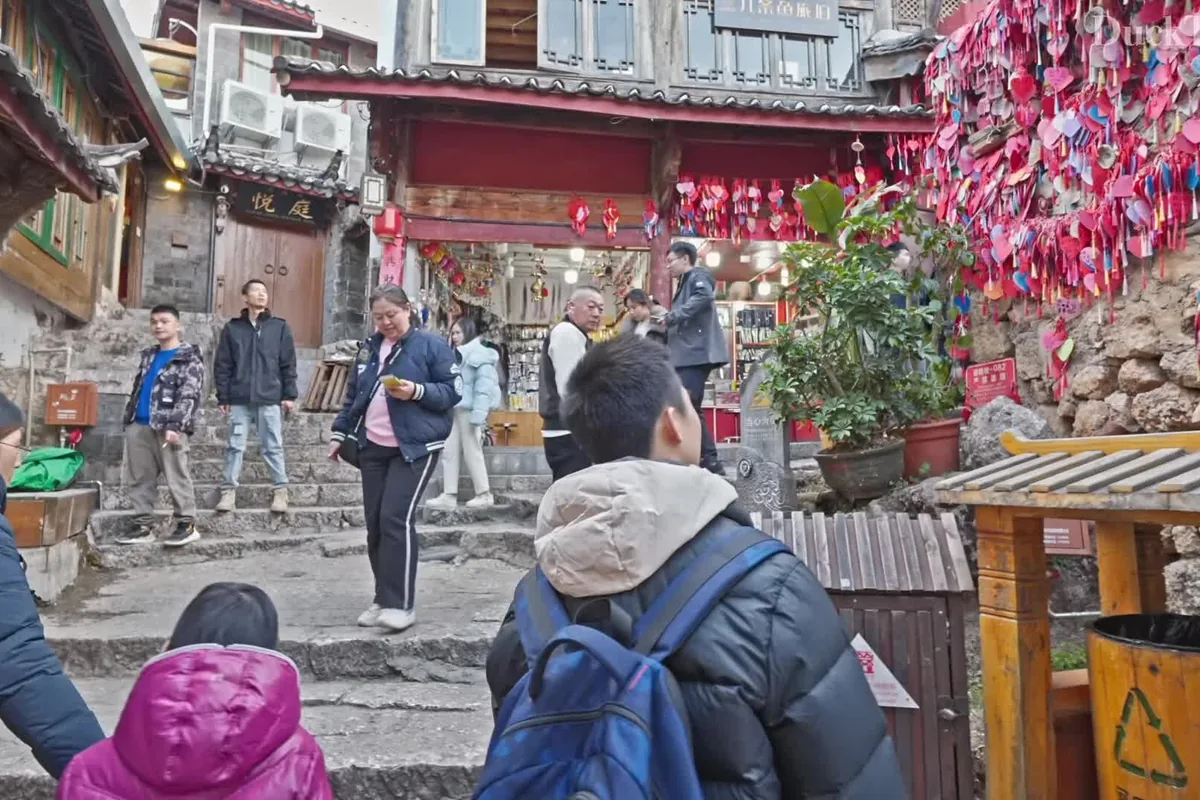
If four bases are not your route
The structure can be adapted without adding a fifth stop:
- Nature over Chengdu: replace Chengdu with Guilin and Yangshuo, then recheck the best connection to Shanghai.
- Yunnan over Xi’an and Chengdu: use a larger southwest block around Kunming, Dali or Lijiang, but remove two northern stops rather than stacking everything.
- More history, less distance: keep Beijing, Xi’an and Shanghai and add nights to each.
- Ten days only: use the published first-time China itinerary for 10 days instead of squeezing this route.
Every added base consumes check-out, station or airport security, local transfer and check-in time. Count the whole transfer day.
Booking order
- Entry route and international open-jaw ticket. Confirm the document rules before non-refundable bookings.
- Fixed attraction dates. Palace Museum and other real-name attractions should shape the city order.
- Intercity trains and flights. Use the actual travel date and official provider rules.
- Hotels near useful transport. Record the Chinese address and confirm document acceptance.
- Flexible local days. Leave at least one block that can move for weather or fatigue.
China Railway states that 12306 is an official channel, uses real-name ticketing and accepts eligible foreign passports on its English site. Names and document numbers must match. Presale windows, service hours, fares and refund rules can change, so follow the current 12306 prompts.
Cost and pace without fake precision
A single “two-week China budget” is misleading. The total depends on season, hotel standard, solo versus shared rooms, domestic flight timing and attraction choices. Build the budget from live quotes for these blocks:
- 13 hotel nights;
- three intercity transfers;
- airport and station transfers;
- timed attractions and optional lifts;
- food and local transport;
- insurance and a contingency amount.
Keep at least one unstructured half-day. A route that has no recovery margin is vulnerable to one late train, heavy-rain afternoon or tired morning.
Frequently asked questions
Can the 240-hour transit policy cover this 14-day route?
No. The NIA describes the policy as a stay of no more than 10 days for eligible transit passengers. A 14-day itinerary needs a separate current entry basis, such as a qualifying unilateral exemption or appropriate visa.
Should Chengdu be replaced with Guilin?
Choose Chengdu for a slower city-and-panda block; choose Guilin/Yangshuo for karst landscapes. Do not try to include both without cutting another base.
Is four cities too many in two weeks?
Four bases with three transfers is a workable ceiling for many first trips. Travellers who prefer museums or slower days may enjoy three bases more.
Is it better to fly into Beijing and out of Shanghai?
An open-jaw ticket avoids backtracking when pricing and schedules are reasonable. Compare the total international fare and airport logistics before committing.
Sources and review date
- NIA visa-free transit policies
- NIA unilateral visa-exemption country list
- China Railway 12306 English FAQ
- Palace Museum official visit page
- Chengdu Research Base of Giant Panda Breeding
Entry, rail and attraction sources were checked on 31 August 2026. Recheck individual eligibility, timetables, ticket inventory and operating notices before booking.
Image credits
- Featured image: The Great Wall near Beijing. Image by Pablo Vaz, via Wikimedia Commons. — CC BY 3.0.
- First inline image: Historic buildings along the Bund. Image by Francisco Anzola, via Wikimedia Commons. — CC BY 3.0.
- Second inline image: Lijiang in Yunnan, shown as a route alternative. Video still by DuckTravel, via Wikimedia Commons. — CC BY-SA 4.0.