
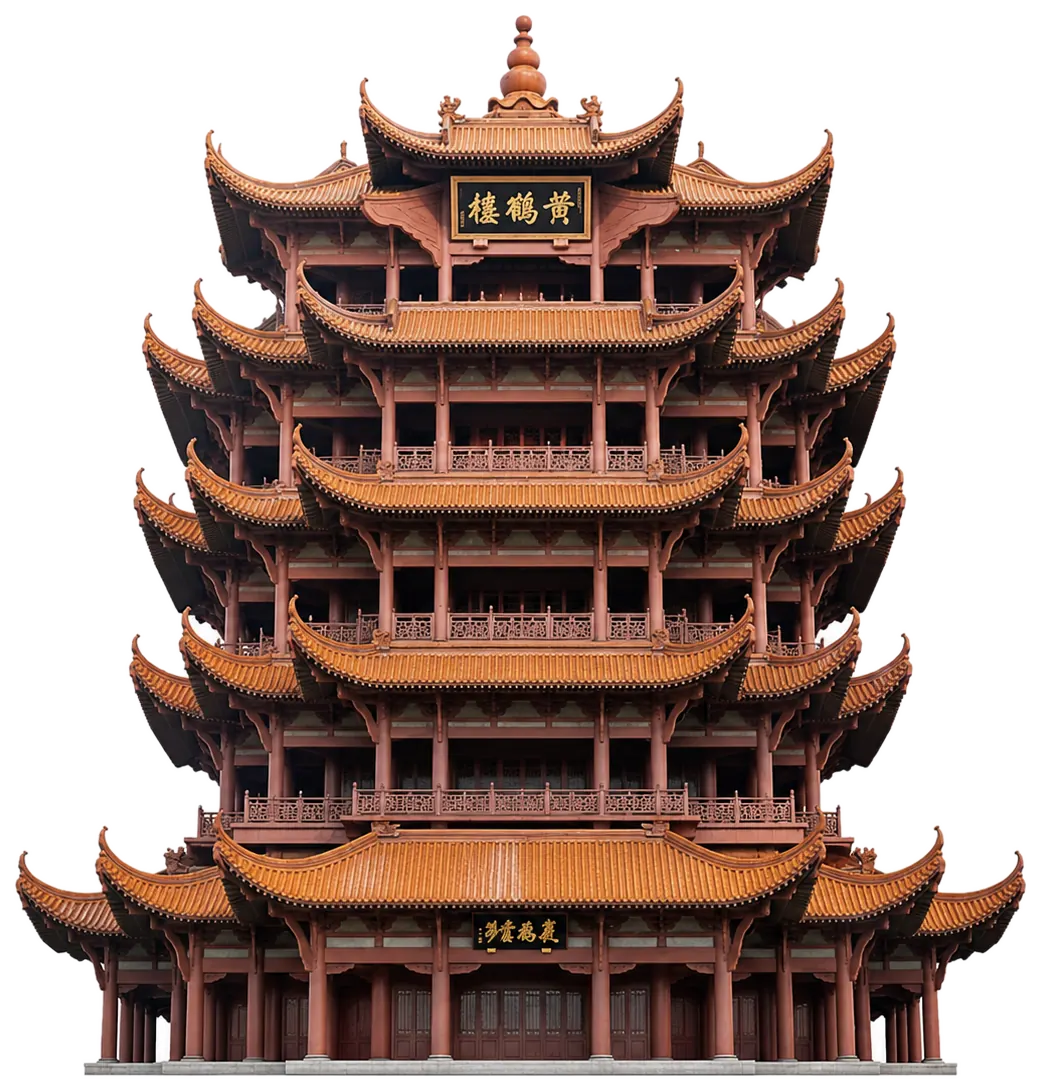
- Desktop model / Mobile model: Sac-Y, China Heritage 3D (MIT); illustrative educational model, exact production method not disclosed; display-only, not a measured survey. · MIT · Source · Mixed methods · Illustrative / display only
- Poster image: Sac-Y, China Heritage 3D (MIT); repository poster render; display-only, source image provenance not documented. · MIT · Source · Mixed methods · Illustrative / display only
Yellow Crane Tower Virtual Tour: multi-angle gallery
-
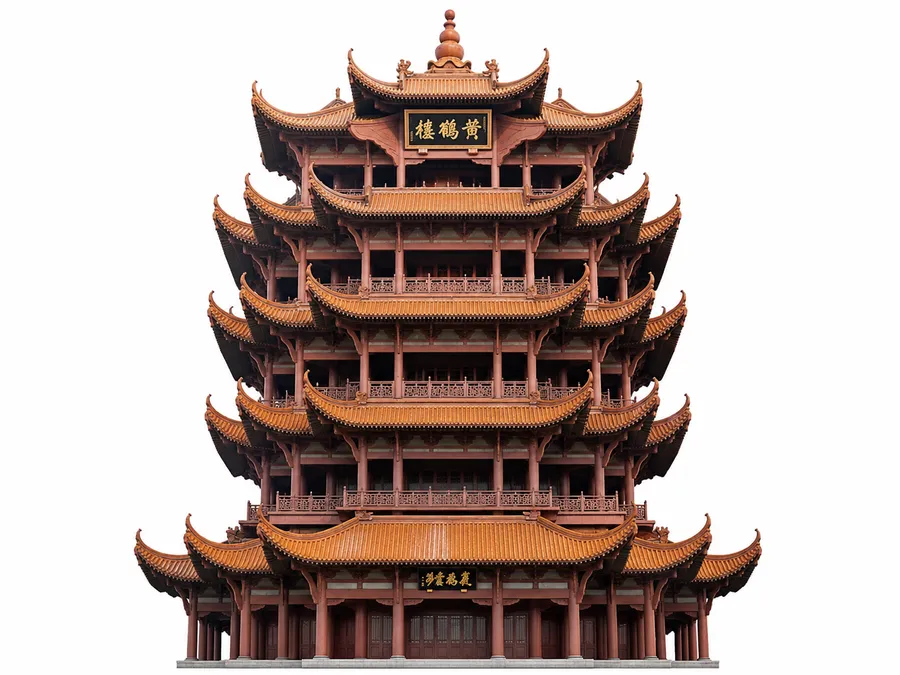
Yellow Crane Tower — Sac-Y MIT front view -
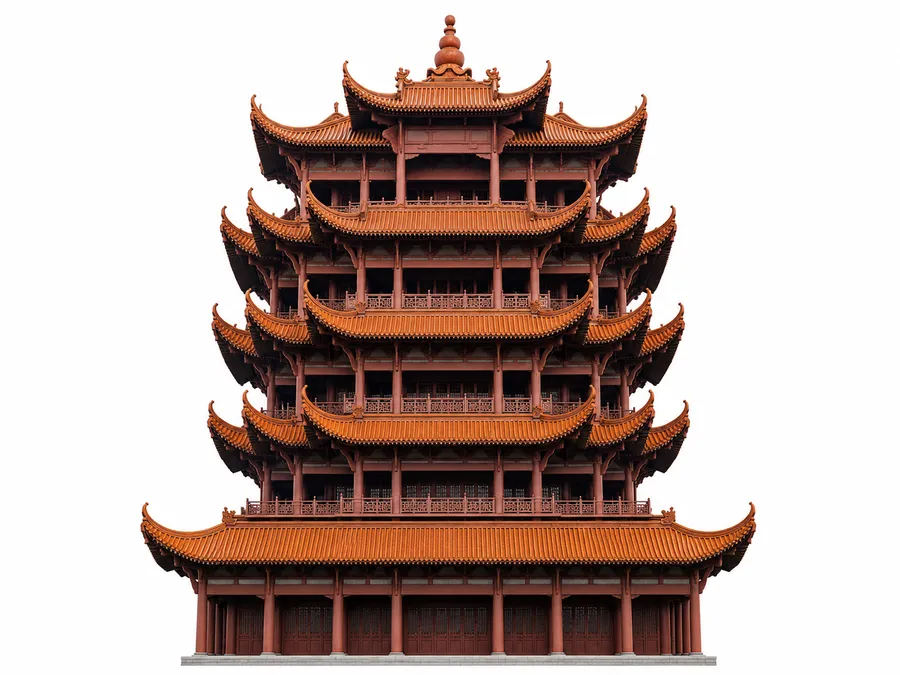
Yellow Crane Tower — Sac-Y MIT back view
Image credits and accuracy
- Image 1 — Yellow Crane Tower — Sac-Y MIT front view: Sac-Y, China Heritage 3D (MIT); repository multi-angle front view; display-only, source image provenance not documented. MIT Source Accuracy: Mixed methods · Illustrative / display only
- Image 2 — Yellow Crane Tower — Sac-Y MIT back view: Sac-Y, China Heritage 3D (MIT); repository multi-angle back view; display-only, source image provenance not documented. MIT Source Accuracy: Mixed methods · Illustrative / display only
This Yellow Crane Tower virtual tour introduces Wuhan’s best-known historic tower as both architecture and cultural memory. Rotate around the five-storey pavilion, study its layered eaves and set it against Snake Hill, the Yangtze River and the city below. The key fact to remember is that the building visible today is a twentieth-century reconstruction of a landmark whose history is traditionally traced to the Three Kingdoms period.
What stands on Snake Hill today?
Yellow Crane Tower rises on Snake Hill in Wuchang District, Wuhan. The current structure is 51.4 metres high, with five visible storeys, interlocking eaves and yellow glazed tiles. Its elevated position creates a strong visual relationship with the Yangtze River, the Wuhan Yangtze River Bridge and the three historic urban areas associated with modern Wuhan.
It is essential to read the date correctly. Construction of the present tower began in 1981 and was completed in 1985. Its design was based on the Tongzhi-era tower of the Qing dynasty. It is therefore inaccurate to describe the current fabric as an untouched building from 223; the modern structure represents a much older and repeatedly renewed tradition.
One landmark, many reconstructions
Official Hubei accounts say a tower was first built here in 223 as a military watchtower during the Three Kingdoms period. It later became a destination for viewing, gathering and literary expression. War and fire destroyed successive versions, and the tower was rebuilt many times in forms that reflected different eras.
The last Qing-era tower was built in 1868 and burned down in 1884. Nearly a century passed before work began on the current reconstruction. This sequence is central to a responsible interpretation: distinguish the traditional founding date, the vanished historical towers and the building completed in 1985.
How to explore the 3D view
Use the model to compare three kinds of evidence:
- Silhouette: rotate around the tower to follow the repeated roofs, upward-curving corners and narrowing mass.
- Structure: move from the broad base toward the upper level and observe how columns, balconies and eaves organise each elevation.
- Setting: pull back to understand why a high point above the Yangtze became useful for defence, sightseeing and poetic imagination.
A digital model should be treated as an educational interpretation, not a scan of every historical phase. Check the asset notes to learn which version is represented, what evidence informed it and where details may have been simplified.
Poetry, river and city
Tang-dynasty poet Cui Hao helped make Yellow Crane Tower famous through his poem of the same name. Generations of writers and artists continued to associate the site with departure, distance, the passing of time and views across the river. This literary reputation is one reason the tower carries meaning beyond its physical structure.
It is also commonly grouped with Yueyang Tower in Hunan and the Pavilion of Prince Teng in Jiangxi as the “Three Famous Towers South of the Yangtze.” In the model, the building’s strong symmetry is easy to see; in the wider landscape, its importance comes from how that form addresses river, hill and city.
Frequently asked questions
Is the present Yellow Crane Tower 1,800 years old?
No. The site’s tower tradition is traced to 223, but the current building was constructed from 1981 to 1985.
Why is Yellow Crane Tower famous?
Its reputation combines a long history of reconstruction, prominent views over the Yangtze, distinctive architecture and the poetry associated with Cui Hao and later writers.
Is the current structure an original Qing building?
No. Its design draws on a Qing-dynasty model, but the structure standing today is the modern reconstruction completed in 1985.
Can a virtual tour show every historical version?
No. A single model normally represents one documented or interpreted phase. Historical images and asset notes are needed to compare earlier versions responsibly.