
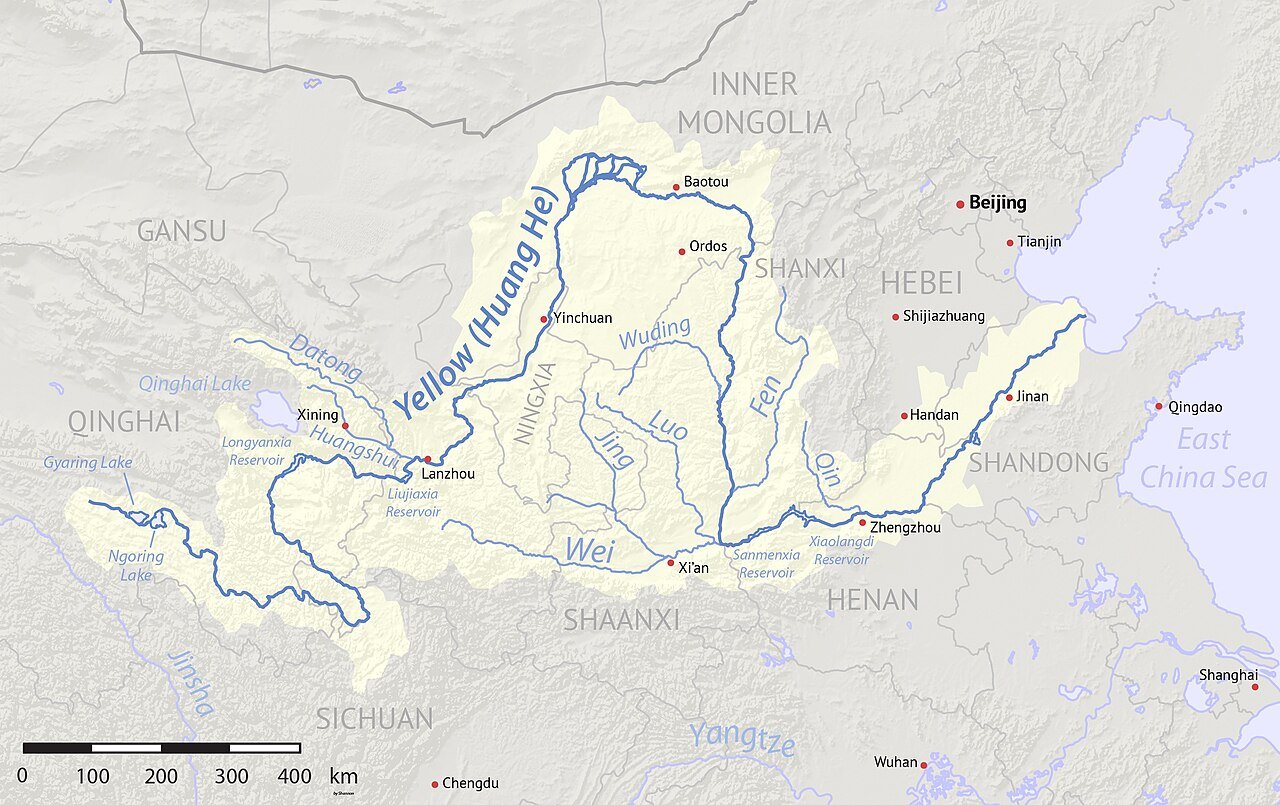
The best places to see the Yellow River in China are Hukou Waterfall (its most dramatic drop), Lanzhou (the only major city the river runs straight through), Zhengzhou (easiest to reach from Beijing or Xi’an), and Shapotou in Ningxia, where the river meets desert dunes. The Yellow River, or Huanghe, is China’s second-longest river and the birthplace of Chinese civilization.
You do not need to "do" the whole river. It runs 5,464 km across nine provinces, so nobody sees all of it. What you want is one or two spots that fit your route and show the river at its best.
This guide picks the four viewing points foreign travelers actually reach without a car, using high-speed trains and public buses. You will get 2026 ticket prices, opening hours, and honest travel times, plus a warning about the one mistake most first-timers make: assuming the "yellow" water is dirty. It is not. The color comes from fine loess soil the river carries down from the plateau, and it has looked that way for thousands of years.
Key Takeaways
- Hukou Waterfall is the single most dramatic Yellow River sight; the standard ticket is 100 RMB plus a mandatory 40 RMB shuttle bus.
- Lanzhou is the most convenient stop: the river runs through the city center, and a sheepskin raft ride costs 80–100 RMB.
- Zhengzhou’s Yellow River Scenic Area is the cheapest major spot at 48 RMB and easiest to reach from Beijing or Xi’an by high-speed train.
- Shapotou (Zhongwei, Ningxia) is where the Yellow River meets the Tengger Desert; it is a 5A-rated site and 52 minutes by train from Yinchuan.
- Spring (March–May) and autumn (September–November) offer the best weather and water levels; summer floods make the waterfall roar loudest.
Where to see the Yellow River: four best spots compared

Each viewing point shows a different face of the same river. Hukou is raw power. Lanzhou is city life on the water. Zhengzhou is history and easy access. Shapotou is the strange, beautiful sight of a muddy river beside golden sand dunes.
Pick based on where you already plan to be. If you are doing Xi’an, add Hukou. If you are heading toward the Silk Road, Lanzhou and Shapotou fall on the way.
| Viewing point | City / province | 2026 adult ticket | Best reached from | What makes it special |
|---|---|---|---|---|
| Hukou Waterfall | Yichuan, Shaanxi / Jixian, Shanxi | 100 RMB + 40 RMB shuttle | Xi’an (train + bus) | Widest yellow waterfall on Earth |
| Lanzhou riverfront | Lanzhou, Gansu | Free (raft 80–100 RMB) | Anywhere on the Silk Road line | River runs through the city center |
| Yellow River Scenic Area | Zhengzhou, Henan | 48 RMB | Beijing, Xi’an (high-speed rail) | Giant Yan-Huang emperor statue |
| Shapotou | Zhongwei, Ningxia | ~120 RMB | Yinchuan (52 min by train) | River meets the Tengger Desert |
Tom, a first-time visitor from Manchester, built his whole trip around one line: Xi’an to Lanzhou to Zhongwei. He saw the river three ways in five days without ever renting a car. That is the smart way to do it.
Hukou Waterfall: the most powerful Huanghe sight
Hukou Waterfall is the reason many people travel to see the Yellow River at all. The wide river suddenly squeezes into a 30-meter gap and drops into a gorge, throwing up a roaring curtain of yellow spray. The name means "spout of a kettle," and it fits.
The standard 2026 ticket is 100 RMB per person. A shuttle bus inside the scenic area is mandatory and costs 40 RMB round trip, so budget 140 RMB total. Opening hours shift by season: roughly 7:30–18:00 in spring and autumn, 7:00–18:30 in summer, and 8:30–17:00 in winter.
One thing that confuses visitors: there are two entrances on opposite banks. The Shaanxi side sits in Yichuan County, and the Shanxi side in Jixian County. They are separate scenic areas, each needing its own ticket. Most Xi’an tours use the Shaanxi side.
Getting there takes effort. From Xi’an, take a high-speed train to Yan’an (about 2 hours, second class around 95.5 RMB), then a bus onward to Hukou (about 3 hours, 40 RMB). Leave early; this is a long day and hard to do as a round trip without staying overnight nearby.
Visit in summer to see the fullest, loudest flow, or in autumn for gentler weather and clear light.
Lanzhou: the easiest place to see the Yellow River
Lanzhou is the only major Chinese city the Yellow River runs straight through, which makes it the least stressful spot on this list. You do not chase the river here. You walk out of your hotel and it is right there.
Start at Zhongshan Bridge, nicknamed the "First Bridge on the Yellow River." Built between 1907 and 1909 and stretching 250 meters, it was the first permanent bridge across the whole river. Walking it at dusk, with the water below and the city lights coming on, is free and unforgettable.
For a hands-on experience, take a sheepskin raft (yangpifa) ride for 80–100 RMB. These rafts are an ancient design: inflated whole sheepskins lashed to a wooden frame. Locals used them to cross the river for centuries before the bridge existed.
A short walk away sits the Waterwheel Expo Park, with 12 traditional wooden waterwheels, and the Yellow River Mother statue, a beloved sculpture of a mother and child that symbolizes the river as the source of the Chinese people.
Lanzhou is a natural hub for the Silk Road. Fast trains connect it to Xi’an, Xining, and Zhangye, so it slots neatly into a longer western itinerary. Compare high-speed train routes and travel times before you lock in dates.
Zhengzhou Yellow River Scenic Area: the easy day trip
If your time in China centers on Beijing, Xi’an, or the eastern cities, Zhengzhou is your simplest Yellow River fix. It sits on the main high-speed rail spine, so you can reach it from Beijing in under three hours and from Xi’an in about two.
The Yellow River Scenic Area (Huanghe Fengjingqu) is the cheapest major spot on this list at 48 RMB for adults, with half price for students and free entry for children under 1.4 meters and seniors over 60. A hop-on sightseeing bus inside the park costs 30 RMB, and a 4D flood-simulation theater adds another 30 RMB.
The headline sight is the Statue of Emperors Yan and Huang, a 106-meter-high carving of the two legendary founders of Chinese civilization, cut into a hillside facing the river. It is genuinely huge, and standing beneath it gives you a sense of how central this river is to Chinese identity.
To get there, take bus 16 directly from Zhengzhou Railway Station (2 RMB, about 90 minutes), or ride the Zhengzhou–Jiaozuo intercity railway to the Yellow River Scenic Area station, where a free shuttle usually waits. A taxi from downtown runs 30–40 RMB and takes about 40 minutes.
Priya, a nervous solo traveler from Toronto, chose Zhengzhou precisely because it needed no overnight stay. She left her Xi’an hotel after breakfast, saw the giant statue, and was back for dinner.
Shapotou: where the Yellow River meets the desert
Shapotou is the surprise of the group. Here the muddy Yellow River curves past the towering dunes of the Tengger Desert, so you can slide down warm sand in the morning and watch the river below in the same afternoon. It is one of China’s first 5A-rated scenic areas, the top national ranking.
The site sits 16 km west of Zhongwei city in Ningxia. Adult admission is roughly 120 RMB, and it opens daily from about 8:00 to 18:00. Inside, you can ride camels, try sand-sliding, or take a traditional sheepskin raft on the river itself.
Getting there is easy by Chinese standards. High-speed trains from Yinchuan reach Zhongwei in as little as 52 minutes, with dozens of departures a day and fares starting near 20 RMB. From Zhongwei station, a short taxi or bus reaches the gate.
Serious river-history fans can add the Bingling Temple Grottoes upstream near Lanzhou, a cliff of Buddhist carvings begun in 420 CE and inscribed on the UNESCO World Heritage list in 2014 as part of the Silk Roads. Reaching it involves a boat across a reservoir, so plan a full day.
Practical tips before you go
The Yellow River flows through dry, dusty regions, so pack lip balm, sunscreen, and a light scarf against wind-blown loess. Water levels swing hard by season: summer brings floods and the biggest waterfall flow, while spring and autumn give calmer, clearer conditions.
Bring cash in small notes for local buses and raft rides, but set up a mobile payment app first, since most tickets and taxis expect it. Our guide to using Alipay as a foreigner walks through linking a foreign card.
Distances between the good spots are large, so trains do the heavy lifting. Booking early gets you the seats and times you want, especially around the October holiday.
| If you are based in | See this Yellow River spot | Rough travel time |
|---|---|---|
| Xi’an | Hukou Waterfall | Half to full day each way |
| Beijing | Zhengzhou Scenic Area | Under 3 hours by fast train |
| Anywhere on the Silk Road | Lanzhou riverfront | In the city, no transfer |
| Yinchuan | Shapotou | Under 1 hour by fast train |
Most nationalities can now enter mainland China visa-free for up to 30 days, or use the extended transit scheme, which makes a short Yellow River add-on far simpler than it was a few years ago. Check the details on our visa and entry hub and the 240-hour visa-free transit rules before you fly.
Frequently asked questions
Where is the best place to see the Yellow River in China?
Hukou Waterfall is the most dramatic single sight, best reached from Xi’an. For convenience, Lanzhou wins, since the river runs through the city center and needs no day trip. Zhengzhou is easiest from Beijing, and Shapotou offers the unique desert-meets-river view in Ningxia.
Why is the Yellow River yellow?
The color comes from huge amounts of fine loess soil the river picks up as it crosses the Loess Plateau. This silt is natural, not pollution, and gives the river its name and its historic role in building the fertile plains of northern China. The water has looked yellow for millennia.
How much does it cost to visit Hukou Waterfall in 2026?
The standard adult ticket is 100 RMB, plus a mandatory shuttle bus fee of 40 RMB round trip, for a total of about 140 RMB. Prices and free-entry promotions change seasonally, so confirm on the official scenic area site before you travel to avoid surprises.
Can I see the Yellow River without renting a car?
Yes. Every spot in this guide is reachable by high-speed train plus a public bus or short taxi. Lanzhou needs no transfer at all, Zhengzhou has a direct city bus, and Shapotou is under an hour by train from Yinchuan. A car is helpful but never required.
What is the best time of year to visit the Yellow River?
Spring (March–May) and autumn (September–November) bring the most comfortable weather and clear light. Summer delivers the fullest, most powerful waterfall flow but also heat and crowds. Winter is cold and quiet, though Hukou can freeze into striking ice formations.
Is the Yellow River water safe to touch?
Touching it on a raft ride or at the shore is fine, and millions do so every year. It is muddy rather than dirty in the industrial sense. As with any river, do not drink it untreated, and wash your hands afterward, especially before eating.
Before you go: your Yellow River action list
- Pick one or two viewing points that match your existing route, not all four.
- Book high-speed train seats early, especially for Xi’an–Hukou and around national holidays.
- Set up a mobile payment app and carry small cash for buses and rafts.
- Confirm current ticket prices and opening hours on the official scenic area websites.
- Pack sun protection and a scarf for wind and dust.
The Yellow River rewards travelers who plan around the trains rather than fighting them. Lock in your rail legs first, and the rest of the trip falls into place.
Ready to build your route? Get a free train ticket quote and let us handle the bookings between Xi’an, Lanzhou, Zhengzhou, and beyond, so you spend your time at the river instead of in a queue.
External references:
- Hukou Waterfall Tourist Area, China Daily (official government feature)
- Bingling Temple Grottoes and the Silk Roads, UNESCO World Heritage Centre
- Yinchuan to Zhongwei high-speed train schedules, China Railway 12306
Featured image: “Hukou Waterfall.jpg” by Leruswing, via Wikimedia Commons, CC BY-SA 3.0.