
China train classes come down to four choices on fast trains: Second Class, First Class, Business Class, and Premium First. On overnight trains you add sleepers: hard sleeper, soft sleeper, and newer high-speed sleeper berths. Second Class is what most visitors book, and it is comfortable, clean, and cheap.
Here is the part nobody tells nervous first-timers. A Second Class seat on a Chinese bullet train is roughly as roomy as economy-plus on a plane, with a wide tray table, a plug, and a smooth 350 km/h ride. You almost never need to pay more.
This guide compares every class with real 2026 prices, shows you the seat layouts, decodes the strange A-B-C-D-F seat letters, and tells you exactly which class to book for short hops, long hauls, and overnight trips. No fluff, no upselling.
Key Takeaways
- Second Class (二等座) is the default: a 3+2 layout, power outlets, and about ¥553–673 Beijing to Shanghai in 2026. Most foreigners never need more.
- First Class (2+2 layout) costs roughly 60–70% more; Business Class lie-flat pods cost 2–3x Second Class.
- Overnight? Soft sleeper (4 berths, lockable door) beats hard sleeper (6 open berths) for foreigners; expect ¥300–1,000.
- Seats are lettered A, B, C, D, F — there is no E. A and F are always windows.
- Your passport IS your ticket. Scan it at the gate; no paper needed.
China train classes explained: the four seat types on fast trains
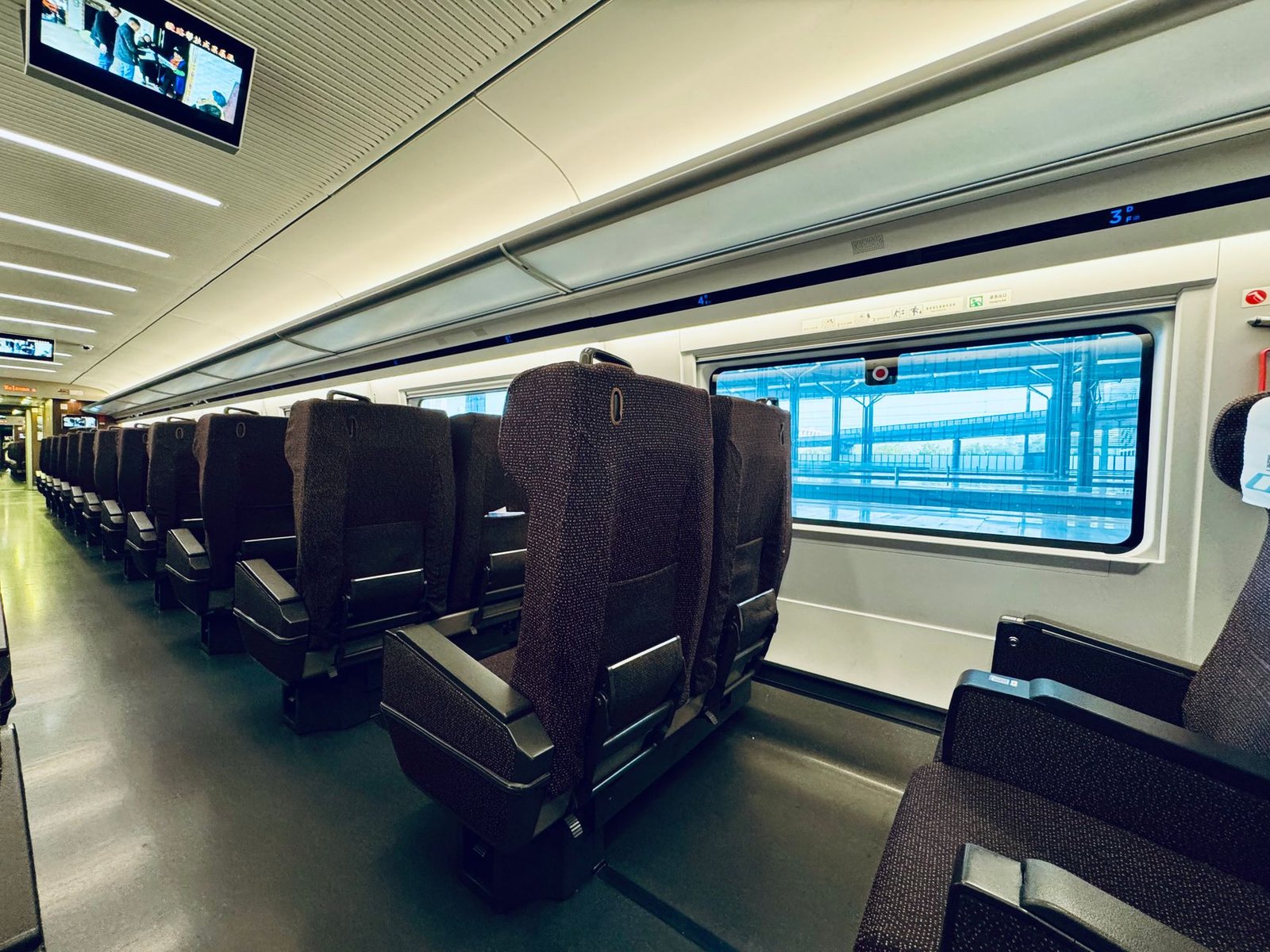
Fast trains in China are lettered by speed. G trains are the fastest (up to 350 km/h), D trains run 200–250 km/h, and C trains are short intercity hops. All of them use the same four seat classes, so once you learn these you can read any ticket.
Second Class (二等座) is the standard seat. It uses a 3+2 layout, so five seats fit across the aisle. Each seat has a reclining back, a fold-down tray, and a power outlet. This is what the vast majority of Chinese travelers and tourists book.
First Class (一等座) drops to a 2+2 layout, giving you a wider seat, more legroom, a footrest, and a quieter cabin. On some trains an attendant hands out bottled water and a small snack. It costs roughly 60–70% more than Second Class.
Business Class (商务座) is a true lie-flat pod, closer to an airline suite than a train seat. The leather seat reclines flat to about 180–190 cm, with a privacy divider, a reading light, and a free snack pack. Prices run 2–3 times Second Class.
Premium First / VIP (特等座) is rare. You will mostly see it on flagship Fuxing trains on the Beijing–Shanghai line, often near the front with driver’s-eye views. Think of it as First Class with a slight upgrade.
Anna, a first-time visitor from Chicago, booked Second Class from Shanghai to Hangzhou and spent the 45-minute ride wondering why she had almost paid triple for Business. On a trip that short, she was right to save the money.
Second vs first vs business: which class is worth it?
The honest answer depends on how long you sit and how much you value quiet. Short trip, take Second Class. Long trip where you want to work or sleep sitting up, First Class earns its price. A once-in-a-trip splurge, Business Class is genuinely lovely.
Here is a real comparison on China’s busiest route, Beijing to Shanghai (about 4.5 hours, roughly 1,300 km), using 2026 fares. Note that some Beijing–Shanghai fares rose about 20% in 2026, though discounts are common.
| Class | Layout | Beijing–Shanghai price (2026) | Best for |
|---|---|---|---|
| Second Class (二等座) | 3+2 | ~¥553–673 | Almost everyone; trips under 5–6 hrs |
| First Class (一等座) | 2+2 | ~¥900–1,100 | Long rides, working, extra quiet |
| Business Class (商务座) | 1+2 lie-flat | ~¥1,700–2,000 | A treat; overnight-length day trips |
| Premium First (特等座) | 2+2 (front) | Varies, near First Class | Views, when Business is sold out |
A useful rule: under two hours, Second Class every time. Two to five hours, Second Class unless you are tall or want to work, in which case First Class is a small, worthwhile upgrade. Over five hours or for a bucket-list ride, Business Class is the one splurge that feels earned.
Marco, a 6’3" traveler from Milan, paid the First Class difference on the 5.5-hour Beijing to Xi’an run purely for legroom. He called it the best ¥400 he spent in China.
China sleeper trains: hard sleeper, soft sleeper, and high-speed berths
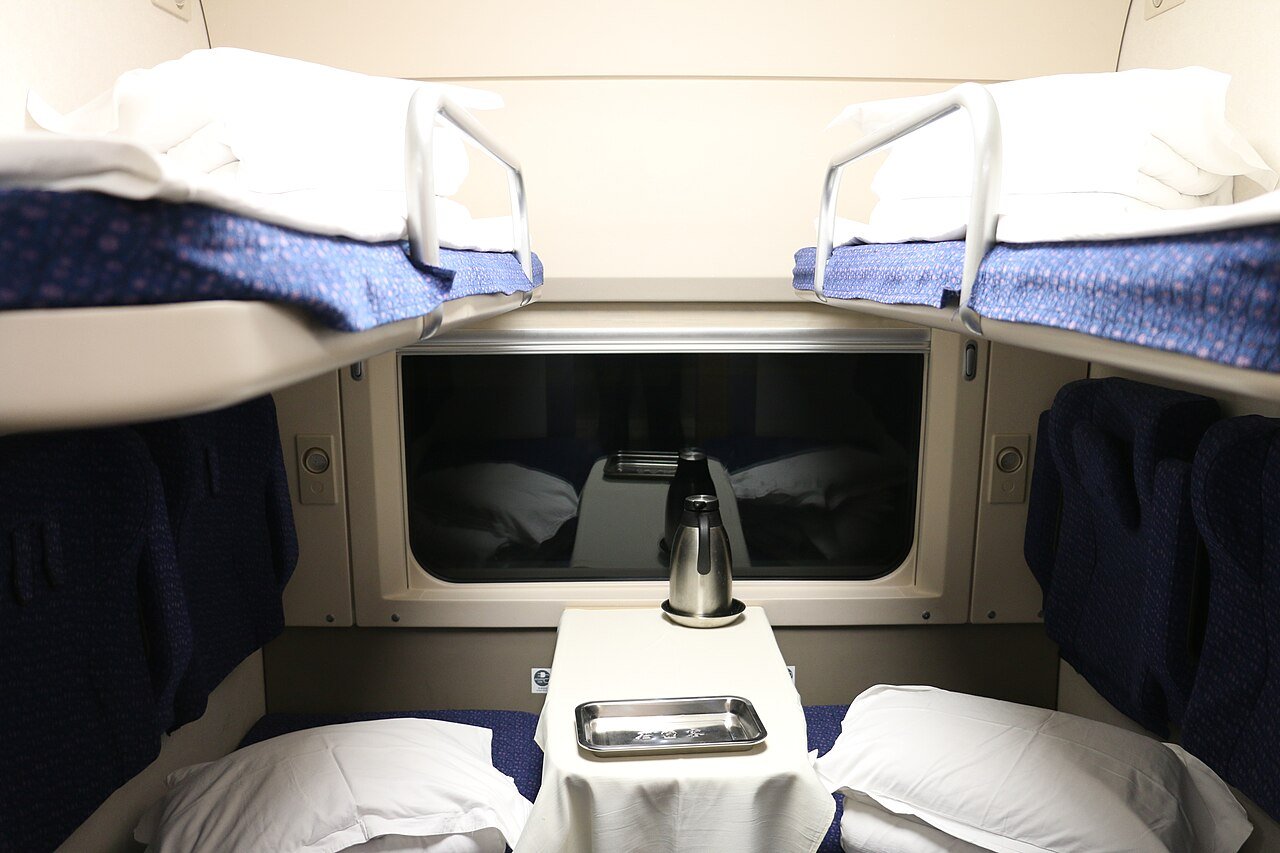
Overnight trains save you a hotel night and a lot of distance. There are two families: slower classic trains (Z, T, K) with traditional sleepers, and newer high-speed sleeper trains (D-category Fuxing) that run overnight at speed.
On classic overnight trains you choose between three sleeper types. Hard sleeper (硬卧) is an open bay with six berths stacked three high and no door. Soft sleeper (软卧) is an enclosed four-berth cabin with a sliding door that locks from inside. Deluxe soft sleeper (高级软卧) is a private two-berth room, sometimes with its own washroom, on a handful of premium routes.
For most foreigners, soft sleeper is the sweet spot. You get a lockable door, a quieter cabin, and a lower berth you do not have to climb into. Hard sleeper is cheaper and perfectly safe, but the open layout and top bunks feel exposed if you are new to it.
| Sleeper type | Berths per cabin | Door? | Rough 2026 price |
|---|---|---|---|
| Hard sleeper (硬卧) | 6 (3 tiers, open) | No | ¥200–600 |
| Soft sleeper (软卧) | 4 (2 tiers, enclosed) | Yes, locks | ¥300–1,000 |
| Deluxe soft sleeper (高级软卧) | 2 (private) | Yes, locks | ¥1,000+ |
Newer high-speed sleeper trains add their own tiers. Second Class soft sleeper (the cheapest high-speed berth) puts six berths in a semi-open compartment with USB ports and reading lamps. First Class sleeper cabins hold four berths behind a lockable door, much like a classic soft sleeper but faster. On the Hong Kong to Beijing overnight Fuxing, a soft sleeper runs around US$186, a superior seat about US$146, and a Second Class seat about US$135.
If you take a sleeper, book a lower berth (下铺). Upper berths (上铺) are cheaper but cramped, with less headroom and a climb in the dark.
How to read your seat number (the mystery of the missing E)
Chinese train seat numbers pair a row number with a letter, exactly like a plane. The one thing that confuses everyone: the letters run A, B, C, D, F. There is no E.
That is deliberate. The system borrows airline lettering so that A and F always mean window seats. In Second Class (3+2), A-B-C sit together with A at the window and C on the aisle, while D-F sit across the aisle with F at the window and D on the aisle. B is the middle seat you want to avoid.
In First Class (2+2), only A, C, D, and F exist. A and F are windows; C and D are aisles. So on any class, remember one thing: A or F for a window, C or D for the aisle.
When you book on an app like Trip.com or the official 12306 platform, you can often pick your seat from a map. Ask for A or F if you want scenery, D or F if you are booking two together and want a window-plus-aisle pair with no stranger between you.
Booking and boarding as a foreigner: your passport is your ticket
You do not need a paper ticket in China anymore. Your passport is your ticket. Book online with your passport number, then at the station scan your passport at the automatic gate to enter the platform. That is it.
A few things save real stress at the gate. Book a day or two ahead for popular routes, especially around Chinese holidays when trains sell out fast. If the app shows only standing tickets (无座), the seat cars are full, and you will stand or perch in the aisle for the same price as Second Class.
Arrive 40–60 minutes early your first time. Big stations like Beijing South or Shanghai Hongqiao are airport-sized, with security screening and long walks to your gate. Your ticket, or the app, lists your carriage number (车厢) and seat (座) so you can line up at the right spot on the platform.
If you booked through an agent rather than 12306 directly, double-check whether you need to collect a paper ticket from a station window using your passport. Most e-tickets no longer require this, but a few discounted or agent bookings still do.
Priya, visiting from London, worried for a week about "picking up" her tickets. At Guangzhou South she simply tapped her passport on the gate reader and walked through in ten seconds.
Frequently asked questions
Is Second Class on Chinese high-speed trains comfortable enough?
Yes. Second Class has a 3+2 layout with reclining seats, a tray table, and a power outlet at every seat. Space is similar to premium economy on a plane. For nearly all trips under five hours, it is all you need, and it is what most locals book too.
What is the difference between First Class and Business Class in China?
First Class is a wider 2+2 seat with a footrest and more legroom. Business Class is a private lie-flat pod that reclines nearly flat, with a divider and free snacks. Business Class typically costs two to three times a Second Class fare; First Class costs about 60–70% more.
Which sleeper class should a foreigner book on an overnight train?
Book a soft sleeper with a lower berth. Soft sleeper cabins have four berths behind a lockable door, so you get privacy and quiet. Hard sleepers are cheaper but open, with six berths in three tiers. Lower berths cost a little more and spare you the climb.
Why is there no E seat on Chinese trains?
The letters copy the airline system, which skips E so that A and F always mean window seats. On Chinese trains, seats run A, B, C, D, F. A and F are windows, C and D are aisles, and B is the middle seat in Second Class.
Do I need to print a paper ticket, or is my passport enough?
Your passport is your ticket on almost all routes. Book online with your passport number and scan the passport at the station gate. A few agent or discounted bookings still require collecting a paper ticket from a window, so check your booking confirmation.
How far ahead should I book China train tickets?
For most routes, one to three days ahead is fine. Around major holidays like Spring Festival, National Day, and Labour Day, popular trains sell out weeks early, so book as soon as your dates are fixed. Tickets typically go on sale up to 15 days before departure.
Before you go: book the right class the first time
You now know more about China train classes than most first-time visitors ever learn. Keep it simple on the ground.
- Default to Second Class. Upgrade to First Class only for long rides or extra legroom.
- Save Business Class for one memorable long trip, not every hop.
- Overnight? Book a soft sleeper, lower berth.
- Want a window? Ask for seat A or F. Aisle? C or D.
- Bring your passport; it is your ticket at the gate.
- Arrive 40–60 minutes early at big stations your first time.
Sorting out fares, seat maps, and sold-out holiday trains in a foreign app can eat an evening. Skip the guesswork: get a free China train ticket quote and let our team book the right class for you, passport details and all. Before you travel, it also helps to read our step-by-step walkthrough on how to book China high-speed train tickets, sort your Alipay setup so you can pay for snacks and taxis, and browse more trains and metro guides to plan your routes with confidence.
For official schedules, live fares, and berth availability, the national platform is China Railway 12306. For entry rules that let many travelers visit train-hopping cities visa-free, check the National Immigration Administration of China before you fly.
Featured image: “Fuxinghao High-Speed Train Interior.jpg” by Shihu7, via Wikimedia Commons, CC BY-SA 4.0.