
Stay one night in Jianshui if you want time for its old-town streets and courtyard architecture without turning the visit into a long return journey from Kunming. Two days let you separate arrival, a substantial heritage visit and a slower walk. A short stop can work, but choose one main interior rather than expecting to enter every named attraction.
Search for 建水古城 when locating the historic centre. Then check the hotel’s actual entrance and the transfer from your booked station; the county name alone does not establish that a room is inside the walkable old-town area.
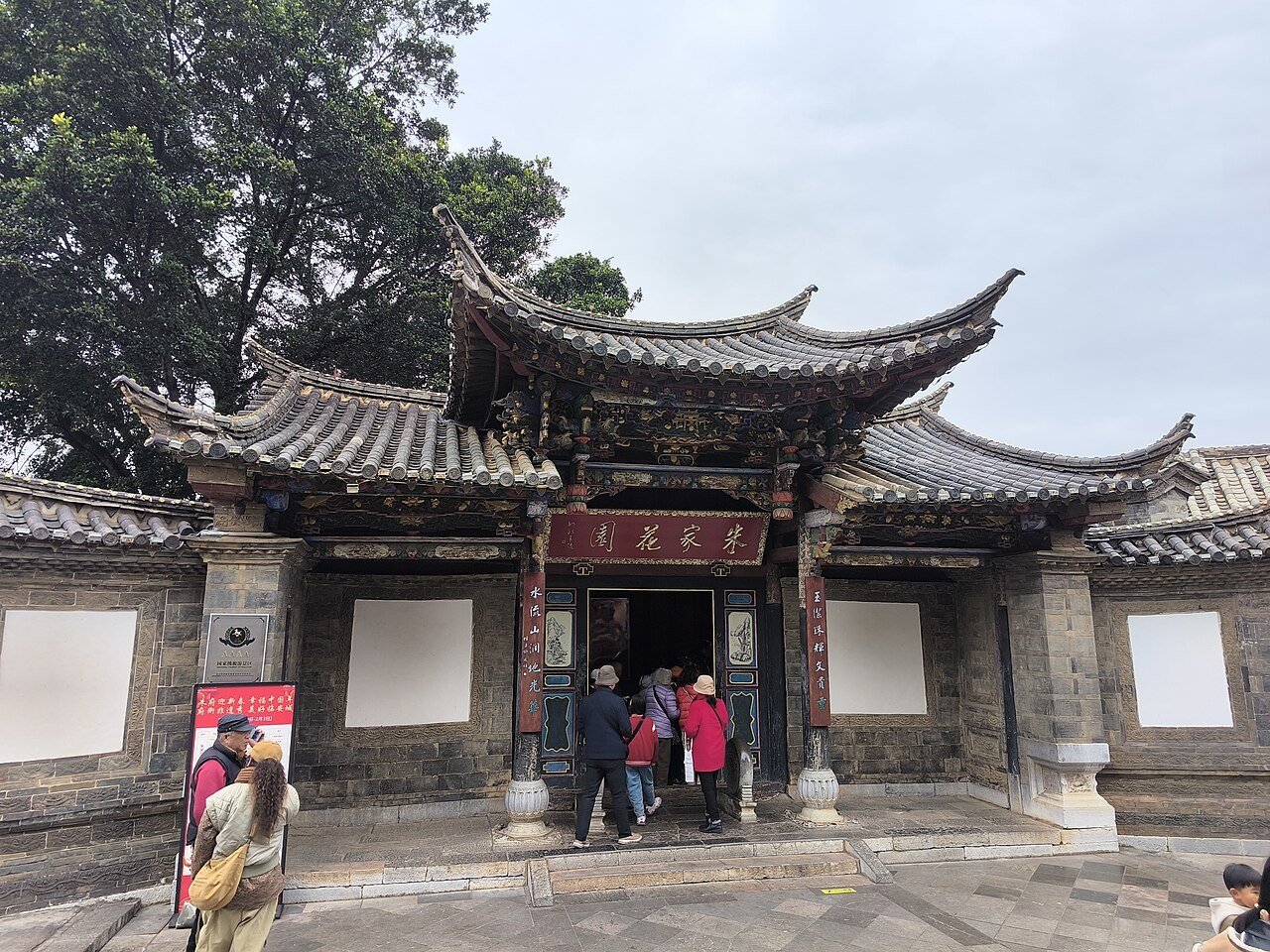
Zhu Family Garden entrance, photographed on 7 February 2025. Photo: 源義信. Source · CC BY 4.0. Resized and JPEG encoded; no additional crop. Image remains under the stated license.
Why the courtyards deserve time
Zhu Family Garden, 朱家花园, is a useful anchor. The Honghe culture and tourism authority’s description places it on Hanlin Street in the old town and identifies it as a late-Qing residential and ancestral complex. Its connected courtyards offer a different kind of visit from looking at a large gate from the street.
Begin with the site map and the sequence of public rooms. Notice how entrances, thresholds and courts organise movement through the residence. Not every room will necessarily be open, so use the interpretation and barriers on the day instead of following an old photo itinerary into a restricted area.
Jianshui’s Confucian Temple, 建水文庙, is another possible substantial visit. Treat it as a separate venue with its own ticket and visitor notice. If both matter to you, put them in different sessions rather than rushing one before closing. A neighbourhood walk can fill the remaining time without another reservation dependency.
A two-day plan
First afternoon: arrive, leave bags and get your bearings in the old town. Choose Zhu Family Garden if its current last-admission time leaves enough room for a proper visit. Otherwise, save it for the morning and walk the surrounding streets instead. An arrival delay should change the order, not force a hurried interior visit.
Evening: have dinner near your base and return to a street you enjoyed earlier. Keep the hotel’s Chinese name available offline. An old-town location is convenient only if you can find the correct doorway after dark.
Second morning: visit your main outstanding heritage site, then leave space for a meal and collecting luggage. If you have a second full day, consider another confirmed visit rather than extending the route automatically to every attraction elsewhere in the county.
These are suggested sessions, not claims about current opening hours or a combined admission product. Check each venue’s date-specific notice before buying transport around it.
Where to stay and what to ask
For a short cultural visit, a hotel within practical walking reach of the old town can simplify the day. Ask about vehicle drop-off, stairs, lift access and the route with luggage. An atmospheric courtyard property may suit your priorities, but photographs alone do not answer those questions.
If an early departure makes the station area attractive, compare the actual transfer you would otherwise need. Avoid moving hotels just to save a journey unless the departure time makes the extra packing worthwhile.
At meals, use the menu to decide what and how much to order. Ask whether prices cover a portion, a bowl or a set. Explain dietary restrictions through ingredients rather than relying on a translated dish name. No restaurant in this guide is presented as personally tested.
Reaching Jianshui and continuing through Yunnan
Use Railway 12306 to check your date, exact stations and passenger-document details. Build the journey from hotel to hotel, including local transfers. A train’s running time is not the full travel commitment.
The Kunming guide helps with an arrival base, while the Yunnan guide helps compare regions. Do not bolt distant parts of the province onto a short Jianshui stay simply because they appear on the same provincial map.
Jianshui is in Honghe, one of the permitted Yunnan areas shown in the NIA’s current 240-hour transit table. That is a stay-area distinction, not a statement that any local station is a designated international entry port. Check your passport, onward route and individual entry permission before relying on the policy.