
Chinese hot pot is a way of eating rather than one fixed dish: a heated pot sits at the table, diners choose a broth and ingredients, and food is cooked during the meal. The first-timer decisions are manageable once they are separated into four parts — regional style, broth, ingredients and safe handling.
Quick answer: how to order your first hot pot
Use this sequence:
- choose a regional style or broth;
- decide whether the table needs one broth or a divided pot;
- order across a few ingredient groups rather than repeating one type;
- choose a dipping-sauce base;
- identify which utensils handle raw food and which are personal;
- ask the venue about cooking, allergens or unfamiliar ingredients instead of guessing.
This is enough to enjoy the format without memorising restaurant-specific prices, cooking times or menu codes.
Choose the style before choosing ingredients
China has many hot-pot traditions. A national report on professional standards for hot-pot cooks highlighted the range from spicy Chongqing pots to mushroom hot pot in Kunming. For a visitor, the style predicts more about the meal than a list of “must-order” ingredients.
| Style | Broth and emphasis | Useful first decision |
|---|---|---|
| Chongqing or Sichuan | Red, spicy broth associated with chilli, Sichuan pepper and often beef tallow | Ask about the lowest available heat level and whether the base contains animal fat |
| Beijing copper-pot mutton | Clear, lightly seasoned pot centred on sliced mutton | Choose it when you want a non-red broth and a sesame-paste sauce tradition |
| Chaoshan beef hot pot | Light beef-bone broth with beef offered by cut | Ask the venue to explain the cuts rather than choosing by translated name alone |
| Yunnan mushroom hot pot | Mushroom-focused broth, often with chicken stock | Confirm the stock and let the venue direct the cooking of unfamiliar mushrooms |
The Beijing tourism authority describes traditional copper-pot hot pot as a clear-water or light-broth style with sliced mutton and sesame-based sauce. A Guangdong government page about a Chaoshan beef-hot-pot standard identifies beef-bone broth as the base. These are regional patterns, not promises about every restaurant.
The Beijing destination guides can help place copper-pot mutton in a city itinerary. For southern dining context, use the Cantonese food guide.
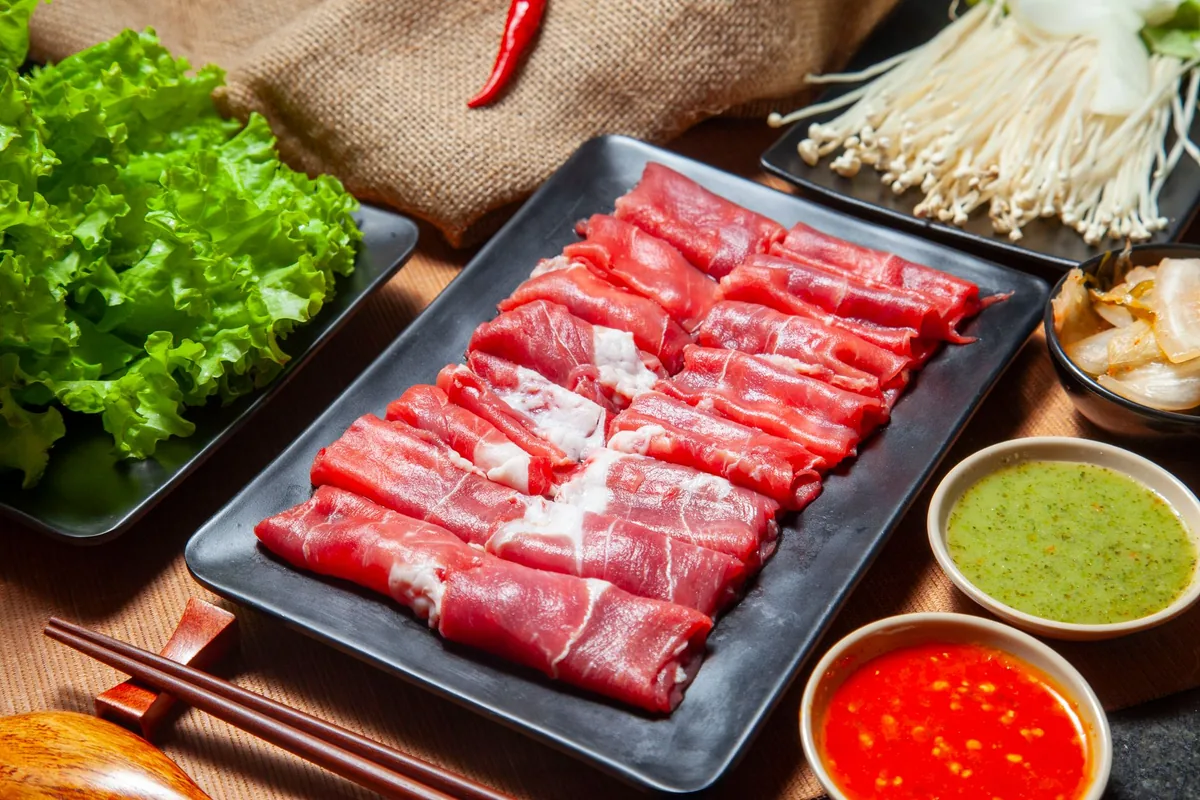
Split pot or nine-grid pot?
A divided 鸳鸯锅 (yuānyāng guō) usually places contrasting broths in one vessel, often a spicy side and a clear side. It is useful when the table has different heat preferences. Before ordering, check whether both sides meet any dietary restriction; a clear-looking broth is not automatically vegetarian.
A 九宫格 (jiǔgōnggé) pot is divided into nine sections. The dividers do not necessarily mean nine flavours. Treat it as one style of hot-pot vessel and follow the restaurant’s explanation of how it is used. The old draft’s section-by-section heat and cooking-time instructions were removed because they are not safe universal guidance.
If the menu offers a single pot, a split pot and a nine-grid pot, choose by the group’s broth preferences and the venue’s current product — not by which one looks most dramatic in a photograph.
Read the menu in layers
Hot-pot menus can feel long because the meal is assembled from components. Read them in this order:
Pot base
Look for 锅底 (guōdǐ), the pot base or broth section. Confirm the heat level, whether the base contains beef tallow or another animal stock, and whether a divided pot costs or serves differently. “Mushroom,” “tomato” or “clear” describes flavour or appearance; it does not by itself confirm a vegetarian recipe.
Proteins and prepared items
These may include sliced beef or mutton, seafood, meatballs, fish balls, tofu products and regional offal cuts. Order only ingredients the group recognises or is willing to ask about. A translated name may omit the animal part, filling or seasoning.
Vegetables, mushrooms, tofu and noodles
Leafy greens, mushrooms, root vegetables, tofu and noodles balance a meat-heavy order and add different textures. Portion sizes vary, so ask how much a plate serves before duplicating an ingredient.
Condiments and extras
Check whether the dipping-sauce station, pot base, tea or other extras appear as separate line items. Charging structures vary by venue; this page does not publish a universal fee or price range.
For general restaurant phrases and payment steps, use the food-ordering guide when it is public rather than turning this hot-pot page into a full restaurant manual. The food and dining hub collects the site’s current cuisine guides.
Build a sauce that matches the regional style
For Sichuan or Chongqing hot pot, a common base is sesame oil with minced garlic. Other additions depend on the restaurant and the diner. For Beijing copper-pot mutton, sesame paste is a common base, often accompanied by other savoury condiments.
Start with the regional base offered by the venue, taste it, and add deliberately. A large mixture of every condiment can hide the broth and makes it harder to identify an ingredient if you have a dietary concern.
Do not repeat the old claim that sesame oil “removes” chilli heat. It is a flavour and texture choice, not a safety measure or antidote.
Food safety at a shared hot-pot table
The World Health Organization’s Five Keys to Safer Food include separating raw and cooked food and cooking food thoroughly. Those principles matter at hot pot because diners may handle uncooked meat, seafood or mushrooms beside ready-to-eat sauces and cooked food.
Use a cautious table system:
- keep raw-food plates separate from bowls used for eating;
- use the provided serving chopsticks, tongs or slotted spoon for raw ingredients;
- do not return cooked food to a plate that held raw food;
- cook food thoroughly and ask staff about unfamiliar ingredients;
- do not use a fixed number of seconds, a colour change or a texture trick as a universal doneness test;
- when the restaurant gives a safety instruction for a particular ingredient, follow that instruction.
The last point is especially important for mushrooms and unfamiliar animal products. Different cuts, thicknesses, starting temperatures and equipment make copied timings unreliable.

Allergies and dietary restrictions need a separate decision
A shared pot and shared sauce station create opportunities for ingredients to mix. Food-allergen authorities describe cross-contact as the unintended transfer of an allergen through shared equipment, surfaces or utensils.
If you have a serious allergy:
- tell the restaurant before ordering;
- name the allergen in Chinese or show a professionally checked allergy card;
- ask about the broth base, sauces, meatballs and prepared items, not only the visible ingredient;
- ask whether a separate pot and separate utensils are possible;
- leave if the staff cannot confirm a safe arrangement.
For vegetarian or religious diets, ask whether the broth contains animal stock, beef tallow, seafood seasoning or lard. Removing visible meat from a shared broth does not make the broth suitable for every restriction.
This section is precautionary travel guidance, not medical advice. Follow your own clinical plan and carry prescribed emergency medication where applicable.
Shared-table etiquette without a rulebook
Use serving utensils when they are provided, and keep personal chopsticks for food you are eating. Ask before adding a large amount of one ingredient, changing the heat or moving food that another diner placed in the pot.
People at one table may prefer different levels of spice or different ingredients. A divided pot solves some of that, but it does not create a barrier for every allergy or religious restriction because broth and utensils can still cross between sections.
The general Chinese etiquette guide covers shared-dish and host cues. If that batch-peer URL is not yet public during upload, add the link immediately after its publication rather than creating a temporary broken link.
A first-visit ordering checklist
- Pick the regional style you actually want.
- Ask what the pot base contains and how spicy it is.
- Use a split pot only if its two broths fit the table’s needs.
- Order a balanced set of proteins, vegetables, tofu or noodles.
- Ask how many people each portion serves.
- Keep raw and cooked utensils and plates separate.
- Let staff explain unfamiliar ingredients and cooking requirements.
- Check the bill structure for pot base, sauce station and other extras before confirming.
- State allergies or dietary restrictions before the pot arrives.
Frequently asked questions
Is Chinese hot pot always spicy?
No. Chongqing and Sichuan are known for spicy styles, while Beijing copper-pot mutton uses a light broth, Chaoshan beef hot pot uses a beef-bone base, and mushroom or tomato options may also be offered. Verify the actual base at the restaurant.
What is a yuanyang hot pot?
It is a divided pot with contrasting broths, often one spicy and one clear. The clear side may still contain animal stock, so ask if vegetarian or religious restrictions apply.
What is a nine-grid hot pot?
It is one pot divided into nine sections. Do not assume the grids are nine flavours or use an old online timing chart; follow the venue’s explanation and food-safety guidance.
Can a vegetarian eat hot pot in China?
Potentially, but the broth, sauces and prepared ingredients must be checked. Ask whether the venue can provide a suitable base and prevent contact with animal ingredients.
How long should each ingredient cook?
There is no safe universal time for every restaurant and cut. Cook food thoroughly and follow the venue’s instructions for the exact ingredient. Avoid deciding solely by colour or texture.
Sources and verification notes
- World Health Organization: Five Keys to Safer Food
- State Council English portal: National standard set for hot-pot cooks
- Visit Beijing: Copper Pot Hotpot
- US Food and Drug Administration: Food Allergies
No fixed price, outlet count, queue time, cooking time, doneness colour, brand review, health outcome, payment rule or booking-service claim is carried over from the old draft.
Image credits
- Featured image: Image by Zhou Guanhuai, via Wikimedia Commons (CC BY-SA 4.0). — CC BY-SA 4.0.
- First inline image: Photo by Thien Binh on Pexels (Pexels License). — Pexels License.
- Second inline image: Photo by Jonathan Lin, via Wikimedia Commons (CC BY-SA 2.0). — CC BY-SA 2.0.