
Cantonese food is the cooking of Guangdong province in southern China, and it is the style most foreigners already know without realizing it. If you have eaten sweet-and-sour pork, roast duck, or a basket of shrimp dumplings, you have eaten Cantonese. The real thing in Guangzhou is fresher, lighter, and far more varied than the takeout version back home.
The heart of it is dim sum, eaten at a ritual called yum cha, which means "drink tea." Locals gather in loud, bright teahouses from early morning, pouring tea and ordering small plates one at a time. In 2026 Guangzhou passed a first-of-its-kind rule forcing restaurants to say whether their dim sum is handmade or factory-made. That single detail changes where a smart traveler chooses to eat.
This guide tells you exactly what to order, what it costs, how the tea etiquette works, and which teahouses in Guangzhou are worth your morning. No guessing at a menu you cannot read.
Key Takeaways
- A full yum cha breakfast in Guangzhou runs about ¥35–60 per person at local teahouses and ¥70–150 at famous historic ones.
- Since May 1, 2026, Guangzhou restaurants must disclose if dim sum is handmade; "traditional store" plaques mark the real deal.
- Order these five first: har gow, siu mai, char siu bao, cheung fun, and egg tarts.
- Go between 7:30 and 10:00 a.m. for the freshest baskets; weekday lunch dim sum is often 20–30% cheaper.
- When someone pours your tea, tap two fingers on the table to say thank you.
What makes Cantonese food different
Cantonese cooking prizes freshness and the natural taste of an ingredient over heavy spice. Chefs use light steaming, quick stir-frying, and gentle braising to keep flavors clean. The famous test of a Cantonese kitchen is a plain steamed fish that tastes like the sea, not the sauce.
This is one of China’s eight great regional cuisines, and the most globally familiar. Most historic Chinese immigrants came from Guangdong, so their food traveled the world. What you tried abroad was a homesick, adapted cousin of what is served in Guangzhou today.
The province splits into three broad styles. Guangzhou (Canton) cooking is the refined, tea-house tradition. Chaozhou (Teochew) food leans on seafood and braised goose. Hakka cooking is heartier and saltier, built for farming families.
Marco, a first-time visitor from Italy, expected the gloopy sweet-and-sour sauce he knew at home. Instead he got a plate of white-cut chicken with ginger-scallion oil and called it the cleanest chicken he had ever eaten. That gap between expectation and reality is the whole point of eating here.
One more thing surprises newcomers: the sweetness is subtle, not syrupy. Cantonese food uses a light touch of sugar to round out savory dishes, and it leans on fresh seafood, poultry, and vegetables rather than dried chilies or thick pastes. That is why it travels so well to nervous eaters.
The dim sum dishes to try first
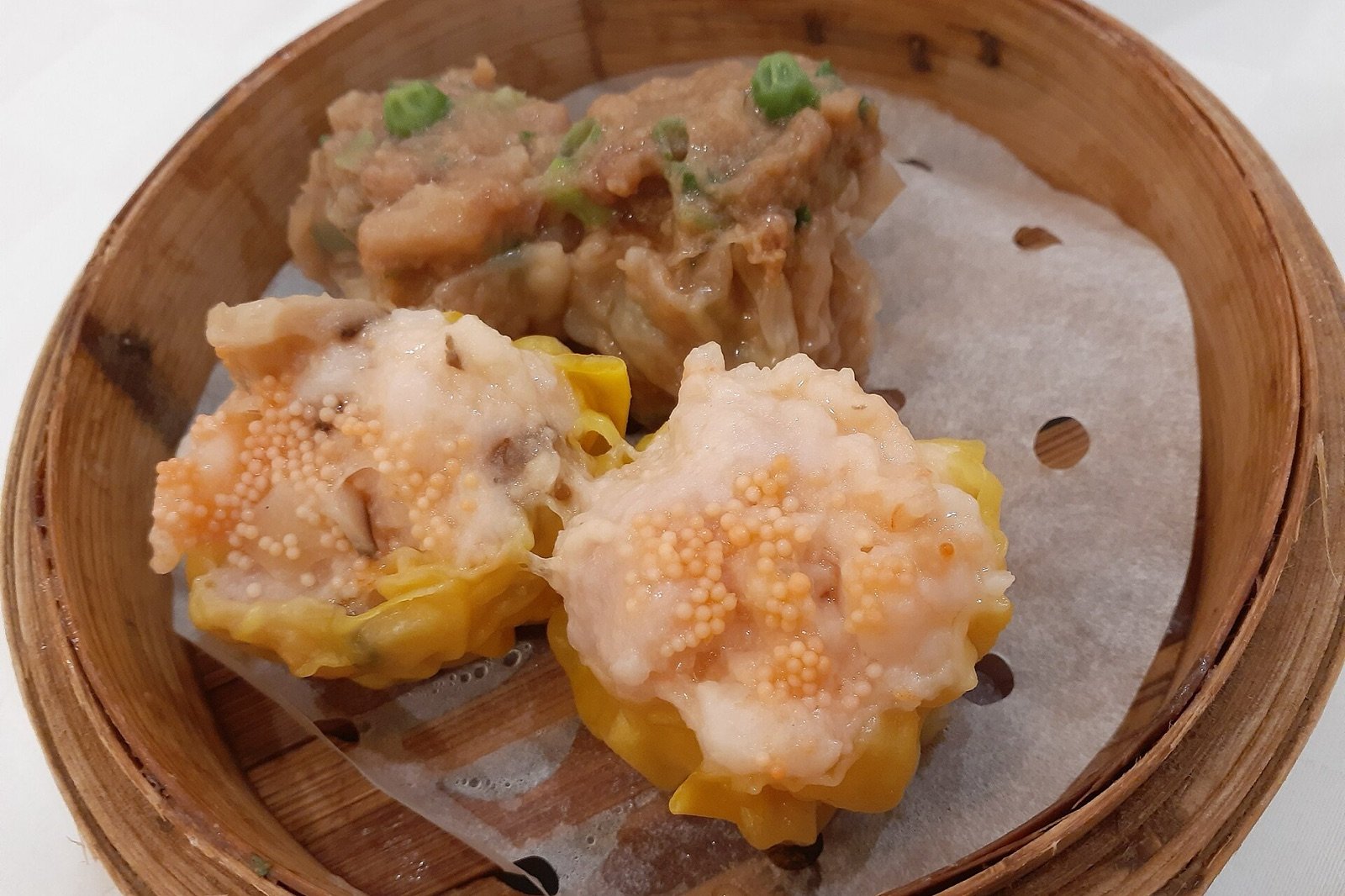
Dim sum means "touch the heart" and refers to dozens of small bite-sized dishes. You order a few at a time and keep going until you are full. Start with the classics below, then explore.
Har gow, the translucent shrimp dumpling, is the dish chefs are judged by. A good one has a wrapper thin enough to see the pink shrimp through it, with at least seven hand-folded pleats. If the har gow is excellent, the kitchen is serious.
Siu mai is the open-topped pork-and-shrimp dumpling, usually with a yellow wrapper and a dot of crab roe or carrot on top. Char siu bao is the fluffy steamed bun stuffed with sweet barbecue pork; the baked version has a crackly, sugar-glazed top.
Cheung fun are silky rice-noodle rolls filled with shrimp, beef, or barbecue pork, drizzled with sweet soy. Finish with an egg tart, a warm custard in flaky pastry that Guangzhou does better than almost anywhere.
| Dish | Cantonese name | What it is | Typical price (basket) |
|---|---|---|---|
| Shrimp dumpling | Har gow (虾饺) | Steamed shrimp in a clear wrapper | ¥18–35 |
| Pork & shrimp dumpling | Siu mai (烧卖) | Open-topped, yellow wrapper | ¥18–30 |
| BBQ pork bun | Char siu bao (叉烧包) | Fluffy or baked sweet-pork bun | ¥15–28 |
| Rice-noodle roll | Cheung fun (肠粉) | Silky roll with sweet soy | ¥15–30 |
| Egg tart | Daan tat (蛋挞) | Warm custard, flaky crust | ¥12–25 |
Beyond dim sum: Cantonese dishes to try
Yum cha is breakfast and brunch. For lunch and dinner, Cantonese food opens up into roasts, seafood, and soups that deserve their own table.
Cantonese roast meats, or siu mei, hang glistening in shop windows. Char siu (barbecue pork), roast goose, and crisp-skinned roast duck are sliced to order and served over rice. A plate of roast goose with plum sauce is one of the great cheap meals in the region.
Seafood is a religion here. Steamed fish with ginger and scallion, salt-and-pepper prawns, and clams in black bean sauce show off the "let the ingredient shine" philosophy. Point at what is swimming in the tank if the menu defeats you.
Do not skip the slow-cooked soups, called lo fo tong, which families simmer for hours. And white-cut chicken, poached and served cold with ginger-scallion oil, proves that plain can be spectacular. Priya, a traveler from Mumbai, told us the lotus-root-and-pork soup at a small Guangzhou canteen was the dish she thought about for weeks after.
The new handmade rule you should know about
Here is the 2026 detail almost no other guide mentions. On May 1, 2026, Guangzhou put a food regulation into effect to protect dim sum as intangible cultural heritage. Restaurants must now tell customers whether their dim sum is made by hand on-site or produced by "non-traditional means," meaning central factories.
Shops that make the real handmade product can earn a "traditional store" plaque to display. The rule also sets a strict 24-hour freshness window for traditionally made items, from production to plate. Some teahouses even live-stream their kitchens so you can watch the pleats being folded.
For a traveler, this is a gift. Look for the plaque, or ask staff, "Is this handmade?" A handmade har gow with warm, springy skin is a different food from a reheated frozen one. This rule quietly sorts the tourist traps from the real thing.
The rule caused a genuine stir. Some restaurateurs argued good machine-made dim sum can taste fine, while purists cheered the protection of a craft that takes years to master. Either way, you win: you now get to choose with your eyes open, and the best old teahouses have every reason to keep folding by hand.
Prices, timing, and etiquette
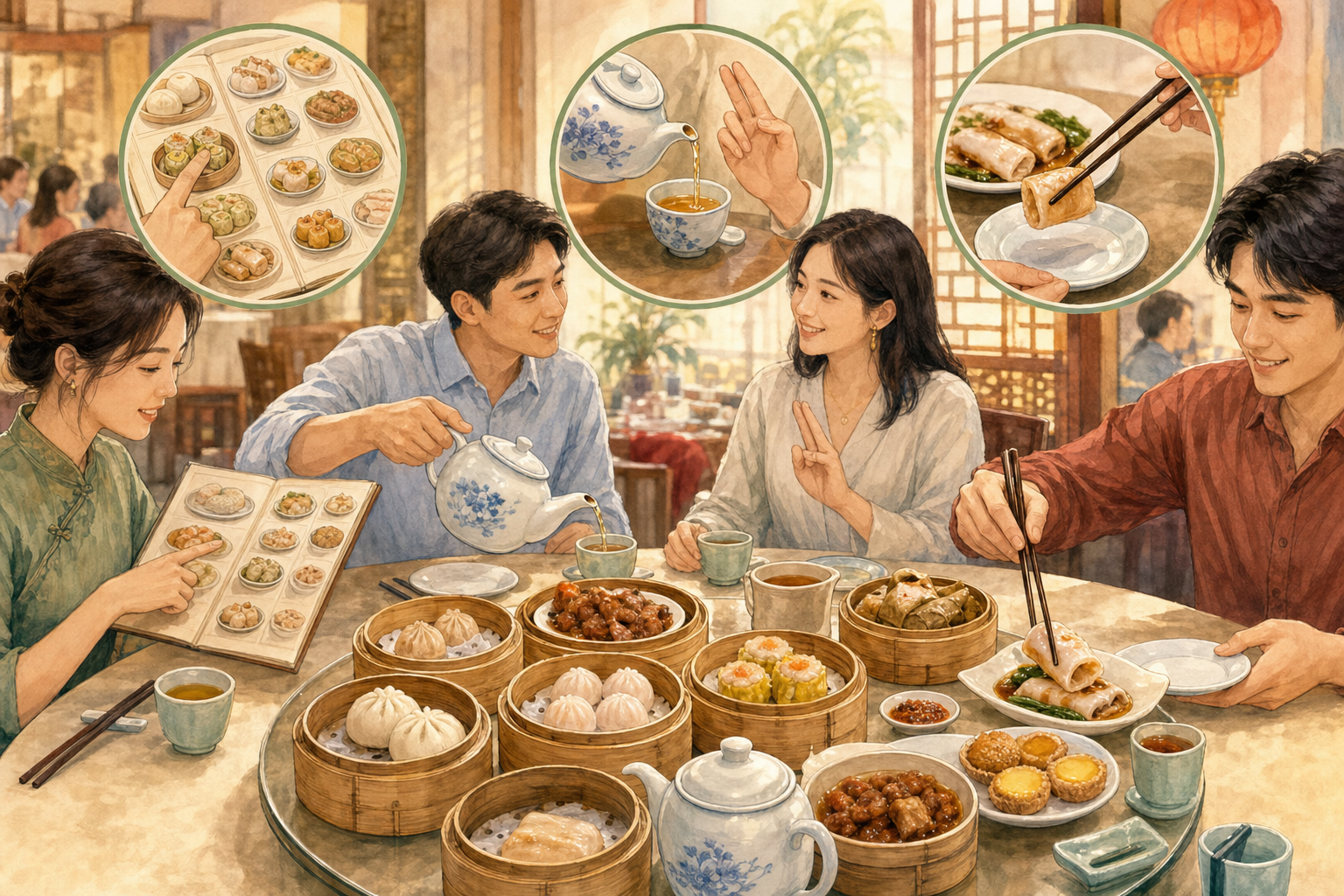
Yum cha is affordable if you go where locals go. A satisfying breakfast at a neighborhood teahouse costs roughly ¥35–60 per person. Historic names like Tao Tao Ju or Panxi run higher, around ¥70–150, and luxury hotel dim sum can top ¥200.
Timing matters twice over. Go between 7:30 and 10:00 a.m. for the freshest baskets, when kitchens have just fired up. But if you want the same food cheaper, come at weekday lunch, when many places discount dim sum 20–30% and the tourists have gone.
The tea ritual has real etiquette, and it is easy. When someone fills your cup, tap two fingers on the table to say thank you without interrupting the conversation. The gesture, called the "finger kowtow," dates to a Qing emperor traveling in disguise, whose companions could not bow without revealing him. To signal you want a refill of tea, leave the pot lid tilted open.
| Teahouse | Founded | Best for | Vibe |
|---|---|---|---|
| Tao Tao Ju | 1880 | Trolley service, locals at dawn | Historic, busy |
| Panxi | 1947 | Setting and garden views | Grand, scenic |
| Lian Xiang Lou | 1889 | Lotus-paste buns, bakery | Classic bakery-teahouse |
| Dian Dou De (点都德) | Modern | First-timers, clean menus | Contemporary, easy |
Bring a payment method that works. Most teahouses expect mobile pay, so set up Alipay before you arrive rather than fumbling with cash. A pointing finger and a translation app cover the rest.
Frequently asked questions
What is the difference between dim sum and yum cha?
Dim sum is the food, the small steamed and fried plates. Yum cha, meaning "drink tea," is the whole meal and social ritual of gathering to eat dim sum with tea. You have yum cha; you eat dim sum. Locals treat the tea as essential, not a side.
Is Cantonese food spicy?
No. Cantonese cooking is famous for being mild and fresh, focused on the natural taste of the ingredient. Chili is rare compared with Sichuan or Hunan food. If you cannot handle heat, Guangdong is one of the easiest regions in China to eat in comfortably.
How much does a dim sum breakfast cost in Guangzhou?
Budget about ¥35–60 per person at a normal local teahouse for a filling meal. Historic and famous restaurants charge ¥70–150, and hotel dim sum can exceed ¥200. Weekday lunch dim sum is often 20–30% cheaper than the same dishes at breakfast.
What should a first-timer order?
Start with five classics: har gow (shrimp dumplings), siu mai (pork dumplings), char siu bao (barbecue pork buns), cheung fun (rice-noodle rolls), and egg tarts. That covers steamed, baked, and sweet. Order two or three baskets at a time and keep going.
Do I need to speak Chinese to order dim sum?
No. Many Guangzhou teahouses use paper order sheets or picture menus you tick off, and staff are used to pointing. A translation app helps for roasts and soups. Learning "har gow" and "siu mai" out loud is enough to get you started.
Is it safe to eat street and teahouse food in Guangzhou?
Generally yes. Busy places with high turnover are the safest bet, and the 2026 freshness rules add another layer of protection. Stick to spots full of locals, and if your stomach is sensitive, our medical care guide covers pharmacies and clinics.
Before you go: your Cantonese food checklist
A little prep turns a confusing meal into the highlight of your trip.
- Set up mobile payment before you land, since most teahouses expect it.
- Save the names har gow, siu mai, and char siu bao in a note, plus the phrase for "handmade."
- Aim for a 7:30–10:00 a.m. yum cha, or weekday lunch for lower prices.
- Look for the "traditional store" plaque to find handmade dim sum.
- Base yourself near Guangzhou’s old teahouse district, and browse our Guangdong city guides to plan your days.
Guangzhou is an easy high-speed train ride from Hong Kong, Shenzhen, and much of southern China, so a food trip fits neatly into a bigger itinerary. Let us handle the trains for you. Get a free quote and book your China train tickets so all you have to worry about is how many baskets of har gow to order. For more on riding the rails, see our guide to booking high-speed train tickets.
Sources and further reading: CNN, "Dumplings vs. machines: Inside China’s latest food fight" (2026); South China Morning Post on the Guangzhou handmade dim sum rule; Hong Kong Tourism Board, beginner’s guide to dim sum.
Featured image: “Dim sum collection in Cantonese restaurant.jpg” by Geoffreyrabbit, via Wikimedia Commons, CC BY-SA 4.0.