
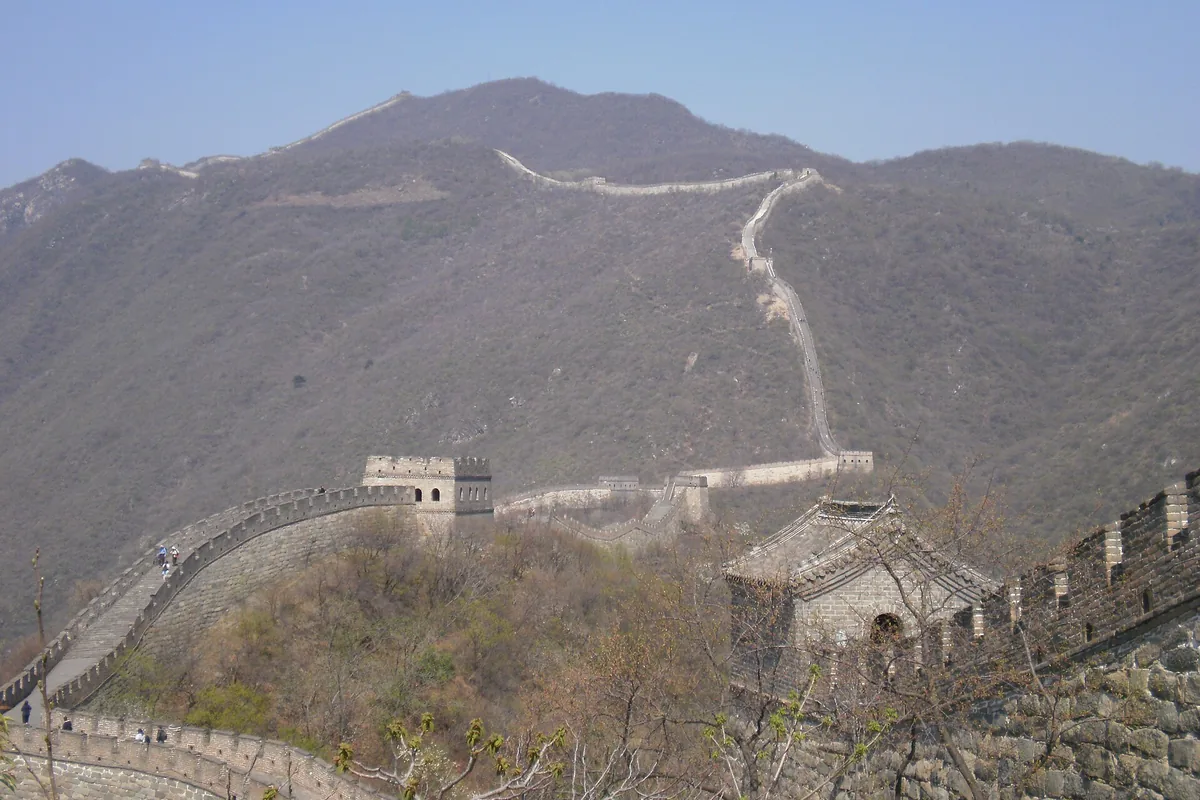
At 7:40 on a clear morning, the cable car cabin swings out over the treetops and the noise of the parking lot falls away. Below you, the forested ridge drops steeply; ahead, a grey stone rampart stitches itself along the spine of the mountain, tower after tower, until it disappears into haze. There is nobody shouting, no queue, just the creak of the cable and a magpie somewhere. That six-minute ride is the moment most people fall for the Mutianyu Great Wall, and it is worth arranging your entire day around getting there before the crowds do.
Mutianyu is the section of the Great Wall that foreigners are quietly steered toward instead of Badaling, and for good reason: it is greener, better restored, a little further from Beijing, and far less of a scrum. This is the honest, field-tested version of how to visit in 2026, from the bus out of the city to the toboggan back down.
The short version: Mutianyu sits about 70 km northeast of central Beijing in Huairou District. Entrance is ¥40, the round-trip cable car ¥140. Come on the first bus or first cable car of the day, walk toward the quieter towers, and skip the "cheap tour" that dumps you at a jade shop.
Getting out of Beijing without losing the morning
The single biggest variable in your day is how you leave the city, because Mutianyu rewards early arrivals and punishes late ones. There are three realistic ways out.
Direct tourist shuttle. The path of least resistance is a direct coach. Mubus and similar services run from around Dongzhimen straight to the scenic area, with early-morning departures (roughly 9:00 and 10:00) and a round-trip fare near ¥80. There is also a distribution-center shuttle from the Qianmen area that leaves from about 7:00 and departs when full. Booked ahead, this is the option I recommend for a first visit: one seat, no transfers, and you skip the part where a stranger in a fake uniform tries to redirect you.
Public bus, done properly. The budget route is bus 916 or the faster 916快 (express) from Dongzhimen Wai station. It does not go to the wall. You ride ten-plus stops to Huairou, get off around Huairou Beidajie, cross the road, and pick up a local line (H23, H35, H36 and others) to the Mutianyu roundabout, 200 metres from the ticket area. It works, it is cheap, and it takes real patience with a phone map. Have your translation app and Alipay set up before you go — the local buses are contactless and nobody makes change for foreigners.
Private car or taxi. A hired car for the day is the fastest and, split between three or four people, not extravagant. It also solves the return trip, which is where a lot of the day’s stress hides. Agree the price and the wait before you get in.
Whichever you choose, most travellers slot Mutianyu into a wider Beijing week rather than a standalone trip. If you are still shaping that week, our Beijing itineraries and the broader attractions guides will help you see where a half-day at the wall fits.
Cable car, chairlift, or your own two legs
Once you are through the ticket gates there is a short shuttle bus (¥15 round trip) up to the base of the wall proper, and then a decision that shapes your whole visit: how do you get onto the rampart?
You have three ways up and a few ways down, and they land you at different towers.
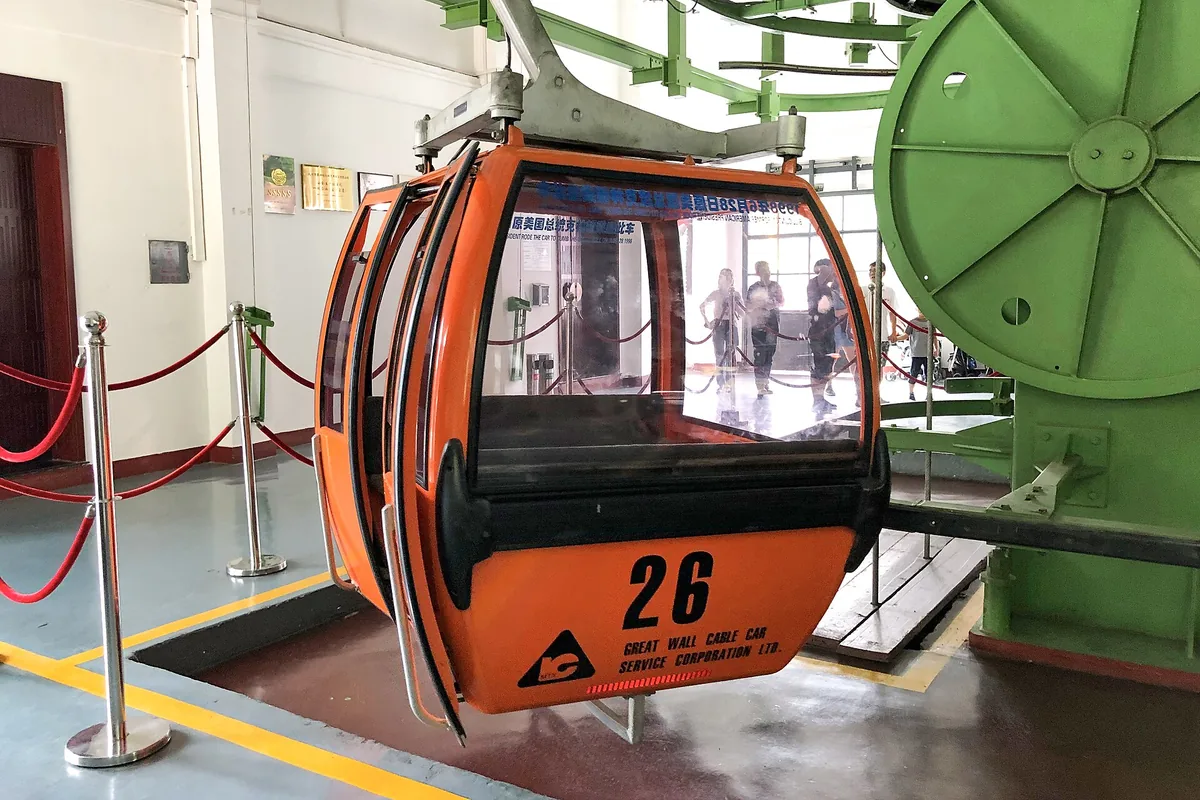
- Cable car to around Watchtower 14. Enclosed cabins, the smoothest ride, and it delivers you to the high, photogenic central stretch. Round trip ¥140, one way ¥100.
- Chairlift to Watchtower 6. Open-air, a little breezy, and — this is the point — it pairs with the toboggan for the descent.
- Walk up. A long stone staircase from the base. Free, quad-punishing, and honestly not worth it unless you specifically want the workout.
The famous way down is the toboggan: a stainless-steel chute that snakes off the ridge below Watchtower 6. You sit on a little cart, control your own brake, and drop through the trees for about five minutes. It is gimmicky and it is also genuinely fun; do not let the queue behind you rush your braking. A one-way toboggan runs roughly ¥100.
If I had one morning, I would ride the chairlift up to Tower 6, walk the wall, then toboggan down. You get the open view on the way up, the most interesting stretch of wall in the middle, and the slide as a finish. If you are travelling with someone who dislikes heights, take the enclosed cable car both ways instead.
What the wall actually feels like up top
Mutianyu runs across roughly 22 restored watchtowers, and where you turn once you are up there decides whether you remember crowds or silence.
The central golden stretch, Towers 14 to 20, is the classic Mutianyu view: broad, well-restored battlements riding the green ridgeline, the wall visibly curling ahead of you. It is also where the cable car deposits everyone, so it fills up first. Walk it early and it is sublime.
For quiet, go against the flow. Head east from Tower 6 toward Towers 1 to 5 and the restoration thins out; keep going and you reach genuinely "wild," unreconstructed wall where trees push through the stones. Or push west past Tower 20, where the path gets steeper, rougher and far emptier. This is where Mutianyu stops feeling like an attraction and starts feeling like a 500-year-old military frontier — which is exactly what it is. First built in the 6th century and rebuilt under the Ming, this stretch guarded the northern approach to the capital, and it is part of the Great Wall’s UNESCO World Heritage listing.
Bring more water than you think you need, wear real shoes — the steps are uneven and slick when damp — and give yourself two to three hours on the wall itself. Rushing it is the one regret people voice most.
The bit nobody warns you about
Here is the honest downside. Mutianyu is not overrated, but the strip between the parking lot and the ticket gate is a gauntlet, and the "budget tour" trade around it can sour a good day.
Two things to watch. First, the fake-tour and taxi hustle: people in official-looking clothing may tell you a particular bus is faster, or that your return coach has left, steering you toward an overpriced taxi. Ignore unsolicited "help" and stick to the service you booked. Second, the hard-sell souvenir corridor near the cable-car stations and on the walk out — jade "bargains," identical fridge magnets, insistent vendors. A smile and a steady walk works; engaging does not. And be wary of very cheap group day tours advertised online: the low price is often subsidised by a compulsory stop at a jade "museum" or a tea house where the real selling happens, eating an hour you wanted on the wall.
None of this is dangerous. It is just friction, and knowing it is coming takes away most of its power.
When to show up
Timing is the whole game at Mutianyu. By about 9:30 the coaches from Beijing arrive in waves, and the golden stretch that felt private at 8:00 becomes a slow shuffle of selfie sticks.
Aim to be at the ticket gate at opening and on the first cable car up. Opening hours in 2026 run 07:30–18:00 on weekdays and 07:30–18:30 on weekends from mid-March to mid-November, and 08:00–17:30 in winter. Right now, through the peak summer window (roughly 13 July to 10 August 2026), the regular night tours are paused and daytime hours are extended to 19:30 instead — useful if you would rather trade the morning rush for soft late-afternoon light and a near-empty wall as the day-trippers leave.
Season-wise: autumn (late September to early November) is the postcard, with cool air and colour on the hills. Spring is green and mild. Summer is hot, hazy and busy but the forest keeps it bearable. Winter is cold and stark but astonishingly quiet, and a dusting of snow on the ramparts is a rare sight worth the chill. Always sanity-check the day’s status on the official Mutianyu site before you set out, since weather and events can shift hours.
Tickets, money, and the small stuff
You can buy at the gate, but in 2026 booking ahead through the official channel (passport required for entry) saves queuing. Everything on-site takes mobile payment; carry a little cash only as a backup. Here is what the day actually costs per person.
| Item | Price (CNY) | Notes |
|---|---|---|
| Entrance ticket | ¥40 | Passport needed to enter |
| Shuttle bus (gate to wall base) | ¥15 | Round trip |
| Cable car | ¥140 round / ¥100 one-way | To ~Tower 14, enclosed |
| Chairlift + toboggan | ¥140 combined | Chairlift up to Tower 6, slide down |
| Toboggan only (one-way) | ~¥100 | The fun way down |
Practical odds and ends: there are toilets and a couple of cafés at the base plaza but nothing on the wall itself, so eat and use facilities before you go up. Phone signal is patchy along the ramparts. Strollers and wheelchairs cannot go on the wall, though the cable car and base area are accessible. And if a night at a Huairou guesthouse or a central Beijing base would make the early start easier, compare hotels here.
Make the wall the easy part of your trip
The wall itself is straightforward once you are standing on it. The friction is everything around it — the train into Beijing, the ride out to Huairou, getting the timing right. That is the part worth handing off.
If you want the logistics solved before you land, get a free quote on train tickets and transfers and we will map the connections so your Mutianyu morning starts on time and stress-free.
Quick questions
Is Mutianyu better than Badaling for foreign visitors?
For most, yes. Mutianyu is greener, better restored over a longer restored stretch, less crowded, and comes with the cable-car-and-toboggan combo. Badaling is closer to the city and reachable by train, but it draws the biggest crowds. If you want scenery and space, choose Mutianyu.
How long should I budget for a Mutianyu day trip?
Plan a full half to three-quarters of a day. Roughly 1.5–2 hours travel each way from central Beijing, plus 2–3 hours on the wall. Leave the city by around 7:00–8:00 to be up before the coaches.
Do I need to book tickets in advance?
In peak season it is strongly advised. Official online booking (with your passport) lets you skip the ticket queue, and it sidesteps the touts working the approach. Off-season you can usually buy at the gate without trouble.
External references: Official Mutianyu Great Wall site, UNESCO World Heritage — The Great Wall, and the official Beijing tourism portal.
Image by User:Ningling, via Wikimedia Commons. Source; CC BY-SA 3.0.