
Jiangsu works best as a two-base trip, not as a chain of rushed day trips from Shanghai. Use Suzhou for classical gardens, canals and the province’s southern water-town landscape; use Nanjing for imperial history, museums and access toward Yangzhou. The rail network makes those bases easy to connect, but its many similarly named stations punish careless booking. Four days is a useful minimum, while six or seven days creates room for one deliberate branch.
Decide whether Jiangsu is the trip or a Shanghai add-on
A single Suzhou day from Shanghai is reasonable when the wider itinerary is fixed. It is not a substitute for seeing Jiangsu as a province. Morning and evening are valuable in small gardens and canal districts, while a return train creates a hard deadline just when the city becomes quieter.
Stay in Suzhou if gardens and historic streets are the priority. Stay in Nanjing if the city wall, museums, Purple Mountain and modern history matter more. Combining the two creates contrast rather than duplication: Suzhou is a compact Jiangnan landscape city; Nanjing is a former capital whose main sights are spread across a much larger urban area.
The existing Suzhou travel guide and Nanjing travel guide explain those cities in detail. This page answers a different question: how to allocate nights and movement across the province.
Give Suzhou two mornings, not a garden checklist
UNESCO’s Classical Gardens of Suzhou property comprises gardens designed as condensed natural landscapes. Seeing every named garden is not necessary to understand that idea. Choose one larger, water-led garden and one smaller garden where corridors, windows and framed views are easier to read. Use the rest of the time for the canal fabric around the old city.
Popular gardens use dated or timed entry controls, especially during holidays and peak blossom periods. Prices, opening hours, passport handling and release windows can change. Check the official garden operator for the selected date and carry the same physical passport used for booking. An aggregator’s old screenshot is not reliable entry evidence.
Suzhou has several railway stations. The Suzhou Railway Station transfer guide is for the central station near the historic city; a ticket marked Suzhou North is a different journey to a different part of the city. Confirm the station characters and metro route before paying.
Use Nanjing for depth and the northern branch
Nanjing needs at least two full days if the route includes both Purple Mountain and the historic core. One day can pair the city wall with a museum or riverside district. Another can be reserved for Ming Xiaoling, the Sun Yat-sen Mausoleum area or a focused modern-history visit. Do not stack several large memorial and museum sites into an hour-by-hour checklist.
The Nanjing municipal government’s English visitor pages are a better action-time source for opening arrangements than undated listicles. Free admission does not necessarily mean walk-in access: museums and memorial venues may still require a reservation, identity document or security check. Monday closures and temporary exhibition changes also need a final review.
Most high-speed services use Nanjing South, while some trains serve Nanjing station. The Nanjing South Railway Station guide covers the larger interchange. Search the actual date in Railway 12306 and plan from the station printed on the ticket rather than from the city name alone.

Add Yangzhou only when canal history or food leads the trip
Yangzhou is the strongest third stop for travellers interested in the Grand Canal, gardens and Huaiyang cooking. It fits naturally after Nanjing and works better as an overnight than as a hurried detour between two hotel changes. Zhenjiang is a lighter alternative when the available time is only half a day.
UNESCO’s Grand Canal inscription spans multiple provinces and cities; Jiangsu is one of the places where the canal can give an itinerary a coherent theme. The useful decision is not how many canal towns can be collected. It is whether the route follows water, gardens and food, or whether it stays focused on Suzhou and Nanjing.
Northern Jiangsu has separate archaeological, coastal and wetland interests, but adding Xuzhou or Yancheng changes the journey’s scale. Save that branch for a longer or repeat trip. It should not be squeezed into the same four-day plan merely to claim province-wide coverage.
Match the route to weather, not a universal “best month”
Southern Jiangsu has humid summers and a seasonal plum-rain period, but its start and intensity vary from year to year. Winter can feel damp in buildings even when temperatures look moderate. Check the China Meteorological Administration forecast for each city close to departure and treat long-range climate summaries as planning context only.
Spring blossom periods and public holidays bring demand to Suzhou’s small gardens. Summer heat makes exposed city-wall walking tiring in Nanjing. A practical warm-weather day puts the most exposed site early, reserves a museum for the hottest or wettest period, and leaves an evening canal walk as the flexible element.
Avoid claiming that any shoulder month will be quiet. Domestic weekends, school holidays, exhibitions and local events can outweigh the season. Dated tickets and accommodation availability are better crowd signals than a generic calendar.
Build the rail plan before the hotel plan
For four days, allocate two nights in Suzhou and two in Nanjing. For six days, add one more night to each base or insert an overnight in Yangzhou. Avoid changing hotels every night: station transfers and luggage handling consume the time the rail network appears to save.
Railway 12306 is the action-time source for train numbers, running days and station names. Schedules and fares are inventory-dependent. Search with passport details prepared, leave transfer margin and do not publish a permanent “fastest train” promise. If the province follows Shanghai, moving west from Suzhou to Nanjing usually avoids backtracking; the reverse works when the onward route continues toward Shanghai or Hangzhou.
Frequently asked questions
How many days does Jiangsu need?
Four days covers a focused Suzhou-and-Nanjing route. Six or seven days allows slower mornings plus Yangzhou or another deliberate branch. A single Suzhou day is still useful, but it is a Shanghai excursion rather than a province itinerary.
Should I stay in Suzhou or commute from Shanghai?
Stay in Suzhou when gardens and canals are a main reason for travelling. The overnight removes the return-train deadline and makes early entry easier. Commute only when changing accommodation would create more friction than the extra time provides.
Can I use one railway station name for each city?
No. Suzhou and Nanjing both have multiple passenger stations. Match the exact station on Railway 12306 with the transfer plan; Suzhou and Suzhou North, or Nanjing and Nanjing South, are not interchangeable labels.
Keep the province coherent
The strongest first Jiangsu route has two bases and one optional branch. Let Suzhou explain the garden-and-canal landscape, let Nanjing carry the historical range, and add Yangzhou only when it deepens the theme. That structure gives the province its own travel logic instead of treating it as spare hours around Shanghai.
Image credits
- Featured image: A Suzhou canal. Photo by gang liang on Pexels. — Pexels License.
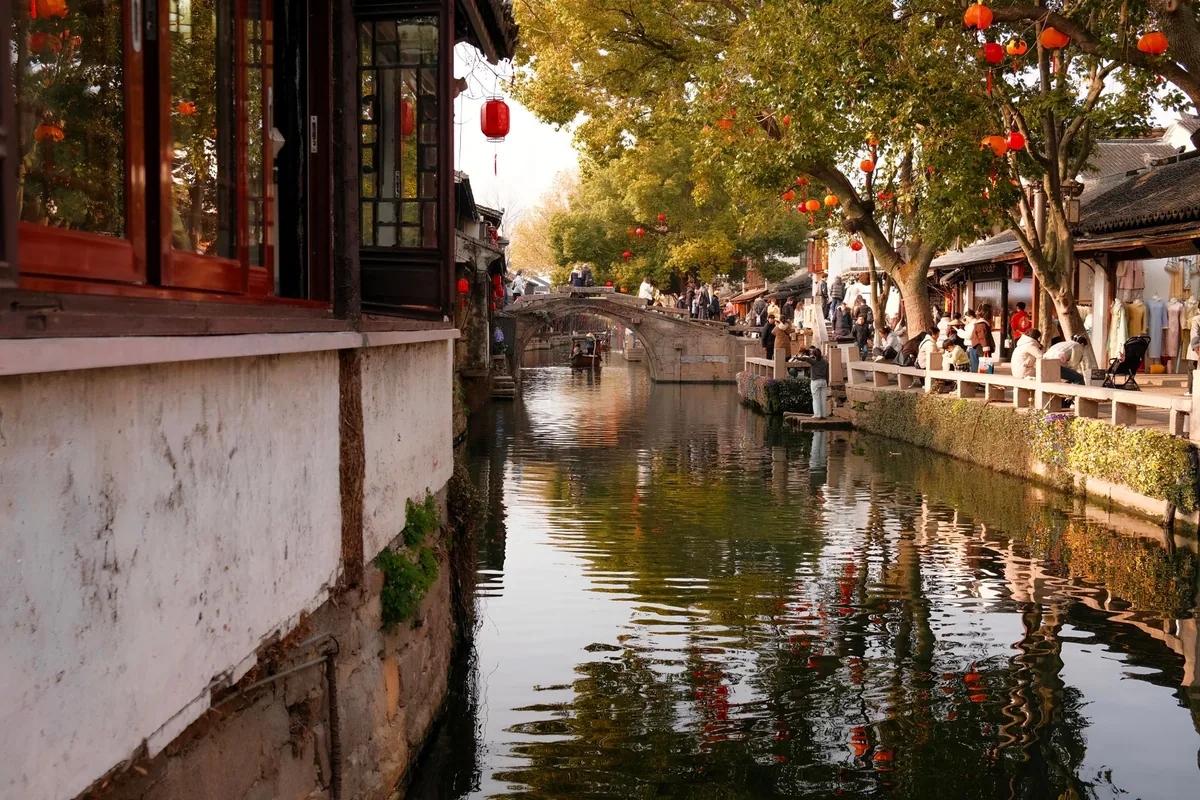
- First inline image: A canal street in Suzhou. Photo by Garrison Gao on Pexels. — Pexels License.
- Second inline image: Nanjing City Wall. Photo by xiquinhosilva, via Wikimedia Commons. — CC BY 2.0.