
Planning treatment in mainland China? A China medical visa search will often point you toward the S2 private-affairs visa, but the right route depends on your passport, application location, treatment length and any applicable visa exemption. Ask the Chinese embassy or visa centre responsible for your application to confirm the category before you book non-refundable travel. A hospital appointment alone does not establish permission to enter or stay.
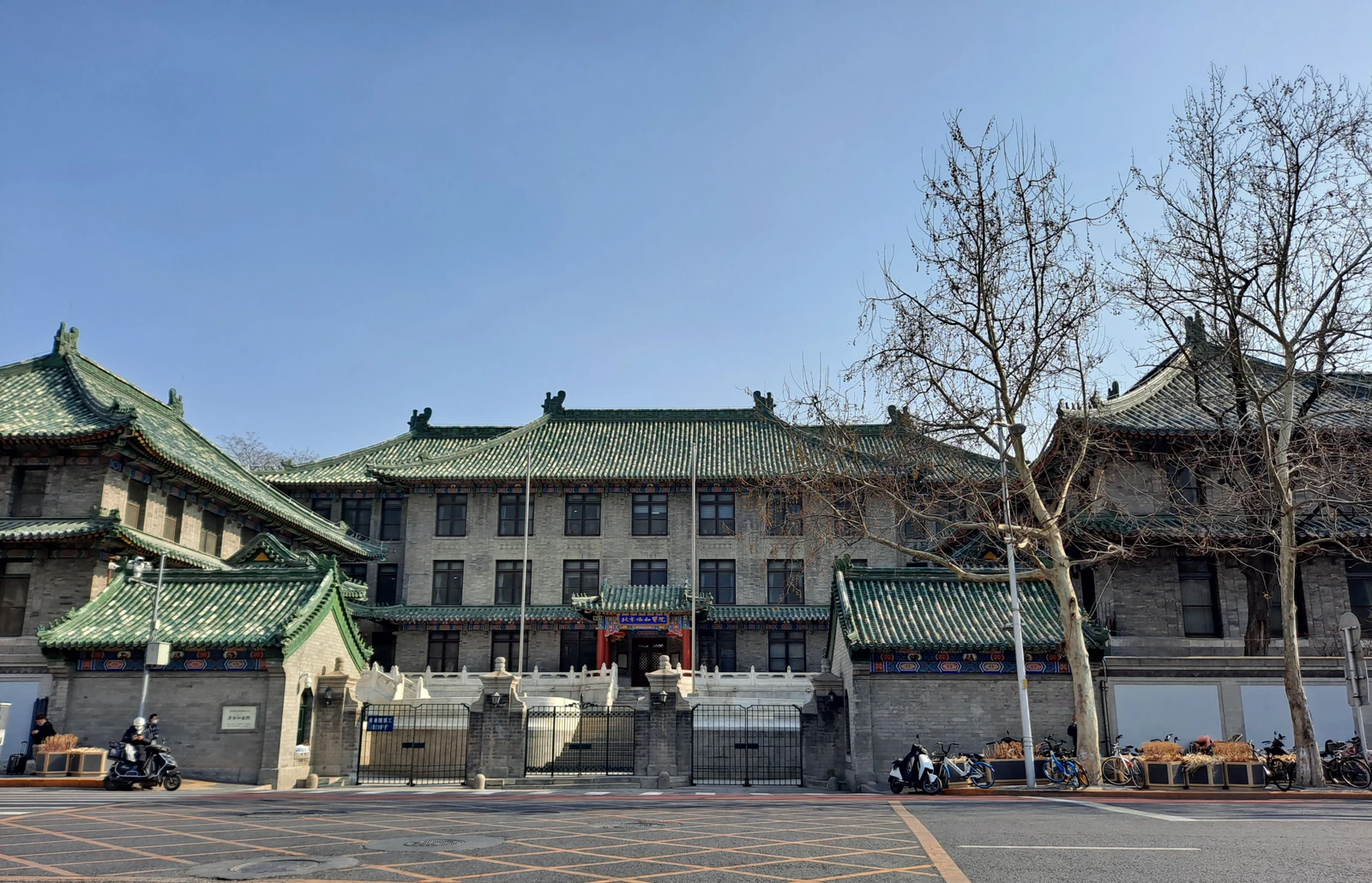
Peking Union Medical College Hospital, Dongdan campus, photographed in February 2023. Editorial illustration only—not a hospital recommendation, partnership or confirmation of services. Photo: EditQ, Wikimedia Commons, CC BY-SA 4.0. Resized and converted to WebP; the photograph remains under the same licence.
Policy sources checked 15 September 2026. This guide covers immigration preparation, not treatment selection, clinical advice or individual legal advice. Visa issuance, border admission and permission to remain are separate decisions.
Which China medical visa route should you ask about?
China’s national regulations list S1 and S2 under private affairs; they do not create a separate letter-coded “medical visa.” S1 includes private matters requiring residence, while S2 includes private matters requiring a stay. See Article 6 of the current regulations.
The Chinese Embassy in Pakistan explicitly includes patients and people accompanying them for medical care in its S2 category for visits of no more than 180 days. That makes an S2 visa for medical treatment a route to ask about—not an automatic entitlement to a 180-day stay. Use the duration actually granted on your document. Embassy application instructions.
If treatment is expected to require longer residence, ask about the appropriate S1/private-affairs residence route before departure. The NIA residence guide includes a medical-services provision for treatment exceeding six months, with specified hospital evidence and a possible residence period of up to one year. It does not promise approval for every treatment plan. Where a visa requires a post-entry residence application, the deadline is within 30 days of entry. NIA residence-permit guide.
China medical visa requirements: build a case-specific document pack
Start with the latest checklist for the place where you will apply. Do not combine passport rules from one consulate, funding rules from another and processing times from an old article.
The following is a preparation list to discuss with the accepting office:
| Document group | What to prepare or confirm |
|---|---|
| Identity and application | Passport, application form, compliant photograph and any required copies; check remaining validity and blank-page requirements |
| Applying outside your home country | Evidence of lawful stay or residence, where required |
| Hospital evidence | The admission confirmation, hospitalization record or hospital invitation letter accepted for your case |
| Treatment timing | Ask the hospital to clarify the expected admission and treatment period, including planned follow-up |
| Funding | Ask what evidence is required for treatment and living expenses, and whether sponsor funding is accepted |
| Accompanying person | A separate eligibility check and application where needed, plus the requested relationship and hospital documents |
The Chinese Embassy in the UK’s published S2 guidance identifies hospitalisation proof, a medical admission record or a hospital invitation as supporting evidence for medical private affairs. Use it to understand the document type, not as a substitute for your current local checklist. UK embassy guidance.
Ask the hospital which department issues visa-supporting documents. Check that your name and passport details match across the application and hospital paperwork. If a seal, original, translation or specific format is required, have the issuing institution prepare it. Do not edit or recreate an official medical letter yourself.
Are US$10,000 and two companions universal requirements?
No worldwide rule should be inferred from one embassy checklist. There are official local requirements using these figures: the Chinese Embassy in Iran’s instructions, dated 21 December 2025, require a medical applicant’s bank deposit certificate of at least US$10,000 and limit accompanying persons to no more than two family members. They also request relationship evidence and a hospital certificate. Iran embassy instructions.
That page’s family definition includes adult children, siblings and grandparents, among others. Reducing it to “immediate relatives only” would change the rule. Equally, the page does not establish that every consulate uses the same funding threshold or companion limit.
For your own application, ask:
- Which relationships qualify, and how many accompanying people may apply?
- What hospital confirmation is needed for each person?
- Does relationship evidence need translation, an apostille or another form of authentication?
- If the proposed companion is a friend or paid carer, what route, if any, is available?
Do not assume that approval for the patient covers a companion, or that a person qualifies merely because they are travelling together.
Can you enter China visa-free for medical treatment?
Sometimes, under a policy that expressly covers it. “Visa-free for tourism” and “visa-free for this medical trip” are not interchangeable descriptions.
Two official examples show why a blanket ban is inaccurate:
- Hainan: the NIA’s regional-policy page, updated 20 August 2026, covers ordinary-passport holders from 61 countries for stays of up to 30 days within Hainan. Medical treatment is expressly included. Check nationality, entry-port and geographic conditions; this is not permission to continue the same trip to a hospital anywhere in mainland China. NIA regional visa-free policies.
- Malaysian ordinary-passport holders: the Chinese Embassy in Malaysia lists medical treatment among the purposes covered by the bilateral 30-day visa exemption. Read the agreement-related conditions for your itinerary rather than applying that example to other nationalities. Embassy of China in Malaysia.
Confirm the patient’s and companion’s eligibility separately. If the expected stay exceeds the applicable exemption, settle the visa or residence plan before travelling rather than relying on a future extension.
Beijing Capital Airport (PEK), not Daxing Airport; archival photograph from 2012. Photo: Donald Trung Quoc Don, Wikimedia Commons, CC BY-SA 4.0. Resized and converted to WebP; the photograph remains under the same licence.
Medical visa extension in China: act before the stay expires
If the treatment timetable changes, contact the local exit-entry administration promptly. For a visa-stay extension, apply at least seven days before the permitted stay expires. Article 29 also limits the accumulated extension to the original visa-stay duration; approval depends on sufficient reasons. Exit and Entry Administration Law.
Request updated evidence from the hospital showing why more time is needed. The NIA’s S2 extension instructions distinguish family visits from other private or humanitarian purposes; the latter have a stated extension limit of no more than 90 days, also subject to the original-stay limit. This is a ceiling, not a promised extra 90 days. NIA visa-extension instructions.
Visa-free entry is a different starting point. The NIA provides a stay-permit application route for people who entered visa-free and need to remain beyond the exempt period. Therefore, “nothing can be changed after entry” is too absolute. It does not follow that a planned long treatment can safely be built around an unapproved extension. NIA stay-permit guide.
Where illness makes attendance difficult, ask the accepting office about representative submission. NIA guidance allows specified representatives to apply in certain circumstances; it is not a general exemption from all application formalities.
For everyday arrival arrangements, see our China arrival and accommodation checklist. Discuss planned treatment coverage directly with your insurer; use our insurance questions checklist to prepare that conversation.
Frequently asked questions
Does an S2 visa always allow 180 days?
No. A category’s maximum is not the stay granted to every applicant. Check your issued document and confirm any unclear conditions before travel.
Can a tourist receive care if they become ill in China?
Do not treat advice about choosing an entry category for planned treatment as a reason to delay necessary care. Seek medical help and address any resulting immigration issue with the relevant authorities. Our emergency-number guide explains how to prepare for a call.
Does every hospital letter have to come from a top-tier hospital?
Do not assume a universal hospital-grade requirement. Requirements can differ between an overseas visa application and an in-country residence application. Ask which issuing institutions and documents the accepting office recognizes for your route.
How much does the visa cost, and how long does it take?
Use the fee schedule and processing notice for your nationality and application centre. An article’s generic price or turnaround is not a reliable basis for scheduling admission. Leave room for requests for more information.
Before booking treatment travel
A useful China medical visa plan connects three things: the hospital’s documented timetable, the entry route confirmed for your circumstances, and enough lawful stay for the proposed visit. Resolve those first. Then check the companion’s documents and keep a plan for contacting exit-entry administration if treatment dates change.