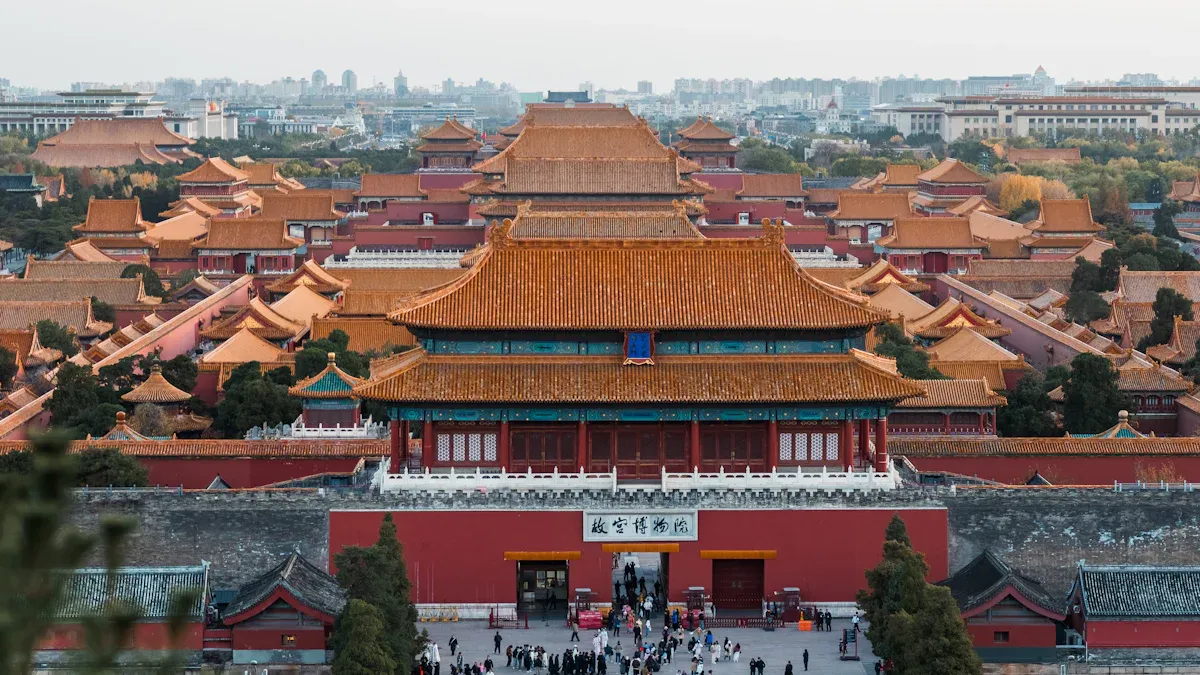
The Forbidden City is the emperor’s palace in Beijing. It was the center of China’s politics and ceremonies for over 500 years. Twenty-four emperors lived in this huge place. Today, it is a UNESCO World Heritage site. The table below lists some emperors and their dynasties who lived in The Forbidden City:
| Emperor Name | Dynasty |
|---|---|
| Yongle | Ming |
| Chongzhen | Ming |
| Pu Yi (Xuantong) | Qing |
Key Takeaways
- The Forbidden City was the emperor’s home for more than 500 years. It showed that China’s leaders and culture were very important.
- Building started in 1406 when the Yongle Emperor ruled. More than a million people helped build it. They finished the palace in 1420.
- The palace’s shape and look show old Chinese ideas. It shows harmony and that the emperor was the most important person.
- Life in the Forbidden City had many rules. The emperor, his family, and helpers followed strict daily routines.
- Now, the Forbidden City is a UNESCO World Heritage site. It is the world’s most visited museum. It shows China’s long and rich history.
Construction
Historical Origins
The Forbidden City started as an idea from the Yongle Emperor in the early 1400s. He wanted to move the Ming dynasty’s capital from Nanjing to Beijing. This happened after a time of fighting and trouble. The emperor thought a new capital would help make China peaceful and strong. He told people to build The Forbidden City in 1406. More than a million people worked on it. There were skilled workers and regular laborers. Workers moved their families and found building materials. They changed the land to make a palace that showed the emperor’s power. The building took until 1420 to finish. After that, Beijing became the center of Chinese politics and culture.
Architecture Of The Forbidden City
The Forbidden City is the biggest imperial palace complex in the world. It covers 720,000 square meters. There are more than 980 buildings and over 8,728 rooms. The palace is much bigger than the Louvre Palace in France. Builders used smart methods and special materials. They wanted the palace to last a long time.
| Material/Technique | Description |
|---|---|
| Phoebe zhennan wood | Whole logs from jungles in southwestern China. |
| Marble | Large blocks from quarries near Beijing. |
| Golden bricks | Special paving bricks from Suzhou for major halls. |
| Excavation and Moat | 29,000 cubic meters of mud dug for the moat, used to build Jingshan Hill for feng shui. |
| Timber | Sourced from forests in southwest China. |
| Stone | Transported from lakes and quarries, including carved stones from 70 km away. |
| Golden Tiles | Millions of golden tiles made in Suzhou, with about 100 million used throughout the palace. |
| Construction Workforce | 100,000 artisans and one million laborers worked from 1416 to 1420. |
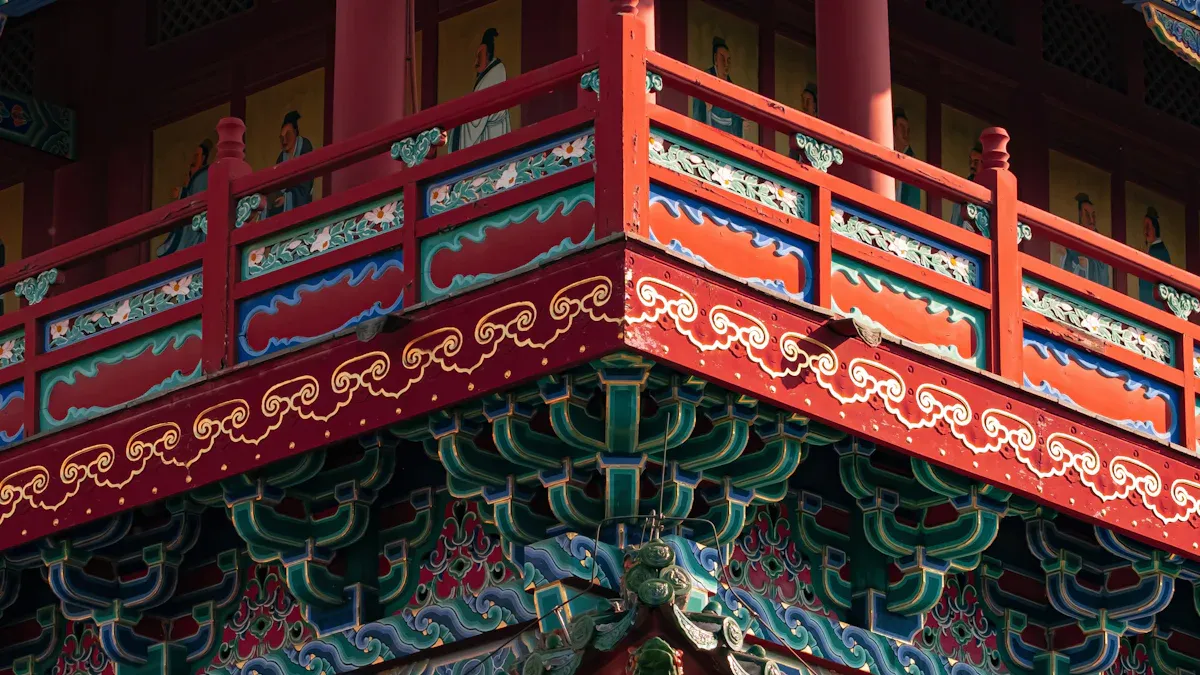
The main designers were Kuai Xiang, Cai Xin, Nguyen An, and Lu Xiang. The buildings have red walls, white marble bases, and yellow roofs. Important halls have animal statues like dragons and phoenixes. These animals mean good luck and wealth. Gates have golden studs in a nine-by-nine pattern. This shows the emperor’s power and forever rule. The Forbidden City has the largest group of old wooden buildings in the world.
Layout And Symbolism
The Forbidden City’s layout follows old Chinese ideas about balance and order. The whole palace sits on a north-south line. This line stands for the link between heaven and earth. Big palaces like the Hall of Supreme Harmony and the Palace of Heavenly Purity are on this line. This shows the emperor is at the center of everything.
The whole palace copies star patterns. The north-south line stands for the link between heaven and earth. It shows people and nature living together in harmony.
The design splits the Outer Court from the Inner Court. Ceremonies and government work happen in the Outer Court. The emperor and his family lived in the Inner Court. This split shows Confucian ideas about rank and order. The fancy palaces and neat rows of halls, gates, and yards show the emperor’s great power. The Forbidden City’s colors, shapes, and balance all have special meanings from Chinese culture. Yellow roofs mean the emperor’s power. Red walls stand for happiness and good luck.
Life Inside
Daily Routines
Life in The Forbidden City had many rules. People followed a strict schedule every day. The emperor, his family, and officials lived inside the palace. Their day started before the sun came up. The emperor met ministers in the morning. They talked about laws, taxes, and the army. Ministers waited at the gates. They knelt until the emperor called them.
The table below shows the main parts of daily life for the emperor and his court:
| Aspect | Description |
|---|---|
| Governance | The emperor gave orders to scholar-ministers. A Ministry of Rules watched everyone to make sure they behaved. |
| Holding Court | Morning meetings happened at special gates. Ministers knelt to speak. Decrees were announced and posted for all to see. |
| Personal Life | The emperor had one empress and many concubines. Strict rules controlled their lives. Concubines did crafts and were watched closely. |
| Administrative Affairs | The Hall of Mental Cultivation was the emperor’s office and home. He worked and rested in different rooms. |
| Diet | The emperor ate simple meals. Many cooks made his food. Rules kept everything safe and proper. |
Palace servants and eunuchs had important jobs. Eunuchs carried water, watched the gates, and took care of gardens. Inside, they cooked, cleaned, and served the emperor’s family. Their lives were hard and risky. Many did not survive becoming a eunuch. Those who did lived with strict rules and felt lonely. Concubines were picked for their beauty and family. They came from noble families to help make alliances. Once inside, they were watched closely and rarely left the palace.
Cultural Traditions
The Forbidden City had many traditions and rituals. Festivals and ceremonies happened all year. These events showed the emperor’s power and kept order.
| Tradition/Ritual | Description |
|---|---|
| Spring Festival | The court celebrated with worship, family time, and games. The emperor led special rituals. |
| Lantern Festival | The emperor and his family enjoyed lanterns and parties. Paintings show these fun events. |
| Spiritual Traditions | Empresses practiced shamanism and Buddhism. They prayed for blessings and peace. |
| Tibetan Buddhism | Empresses supported Tibetan Buddhism to build ties with Tibetans and Mongols. |
| Devotional Activities | Empresses prayed for their families and the country’s safety. |
Special ceremonies happened in the Hall of Supreme Harmony. The emperor performed rituals to connect with the heavens. These events showed he ruled with a special right. Coronation rituals and cosmic signs made his power stronger. The emperor’s actions reminded everyone of his important role.
Note: Festivals and rituals in The Forbidden City helped keep order and showed the emperor’s power. They also brought the imperial family and court together for important moments.
Notable Events
Many big events in Chinese history happened in The Forbidden City. Some changed China forever.
- In April 1644, Li Zicheng captured The Forbidden City. The last Ming emperor, Chongzhen, took his own life.
- In 1860, during the Second Opium War, Anglo-French forces took over the palace until the war ended.
- In 1900, the Boxer Rebellion made Empress Dowager Cixi flee. Foreign troops controlled the palace.
The Cultural Revolution caused more trouble. In 1966, people damaged the Hall of Worshipping Ancestors and destroyed artifacts. Premier Zhou Enlai sent soldiers to protect The Forbidden City and stopped more destruction.
Other events also changed China’s history. The Qing Dynasty fell in 1912 and ended imperial rule. The last emperor, Puyi, left The Forbidden City in 1924. Later, political struggles and changes happened inside the palace. These moments ended one era and started another.
The Forbidden City Today
Preservation Efforts
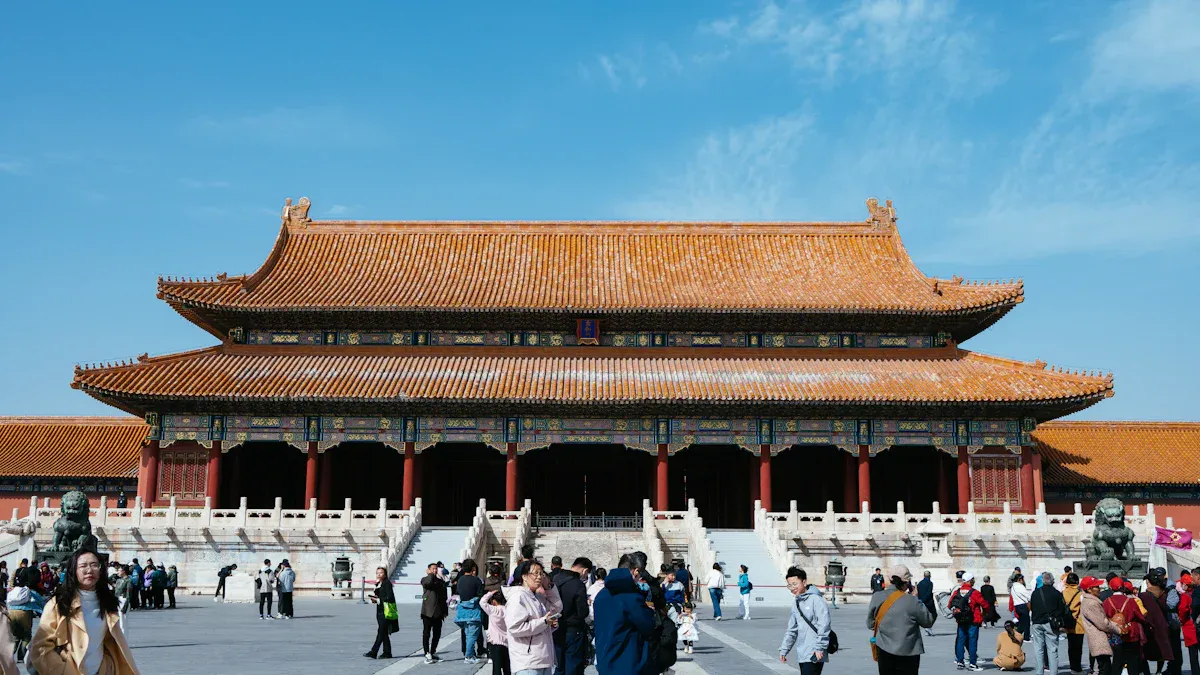
The Forbidden City became the Palace Museum in 1925. Experts work hard to protect its buildings and treasures. They use different ways to keep the palace safe:
- Preventive conservation controls the air and temperature to stop damage.
- Restoration teams use old building methods to keep things real.
- Digital tools like 3D modeling help record every detail for later.
- Modern fire safety systems protect the wooden halls from fire.
- Pest control keeps bugs away from artifacts and wood.
A big conservation project started in 2015. Teams studied the buildings before fixing them. Zhao Peng leads the ancient architecture department. He said they try to keep everything as original as possible. Workers only add small touches and fix weak spots. They have restored places like the Hall of Supreme Harmony and the Palace of Tranquil Longevity. These efforts help keep the history and beauty of The Forbidden City alive.
Public Access
Millions of people visit The Forbidden City each year. In 2018, over 17.5 million tourists came. It is the most visited museum in the world. To protect the site, the museum limits visitors to 80,000 each day. This rule started in 2015. It helps keep the buildings safe and gives everyone a better visit.
Visitors can see many famous places. The table below shows some main attractions:
| Attraction/Exhibition | Description |
|---|---|
| Treasure Gallery | Shows jade, rare stones, and special locks. |
| Imperial Garden | A peaceful place with old trees and flowers. |
| Recommended Routes | Includes the Meridian Gate, Three Great Halls, and living quarters. |
Tip: Buying tickets online helps visitors plan their trip and skip long lines.
Cultural Significance
The Forbidden City is a symbol of Chinese culture and history. Its ceramics and art show the skill of ancient craftsmen. These treasures help people learn about China’s past and connect with other cultures. The museum has sent over 200 exhibitions to more than 30 countries. It also hosts forums and workshops to share ideas about protecting old buildings.
In May 2017, world leaders’ families visited The Forbidden City during a big summit. Students from different countries join workshops to learn about its history. The palace brings people together and helps them understand China’s role in the world.
The Forbidden City is a sign of China’s long history. Its huge size and special design make it important. The art inside shows how rich its culture is.
| Evidence Description | Significance |
|---|---|
| More than 900 buildings and a straight north-south line | Shows the rule of dynasties and deep meaning |
| Lasted through fires and bad weather | Proves it is built well and cared for |
| Palace Museum’s big collection | Keeps old records and art safe |
People can see big halls, shiny roofs, and old treasures.
- Turning the site into a museum helps everyone learn about China.
- Guides, audio tours, and books help people enjoy their visit.
Visiting lets you see famous buildings and learn about China’s story.
FAQ
What is the Forbidden City’s real name?
The real name is “Zijin Cheng” (Purple Forbidden City). This means “Purple Forbidden City.” It is called “forbidden” because regular people could not go in. They needed special permission to enter.
How long did it take to build the Forbidden City?
It took 14 years to build the Forbidden City. Workers started in 1406 and finished in 1420. The Yongle Emperor told them to build it.
Why are the roofs yellow?
Yellow is the emperor’s color in Chinese culture. Only the emperor could have yellow roof tiles. Other buildings in Beijing use other colors.
Can people visit all areas of the Forbidden City?
No, some parts are closed to keep them safe. Most big halls and gardens are open for visitors. The museum protects the most delicate places.
What treasures can visitors see inside?
- Old paintings
- Ceramics
- Jade carvings
- Imperial seals
The Palace Museum shows thousands of artifacts from China’s past.