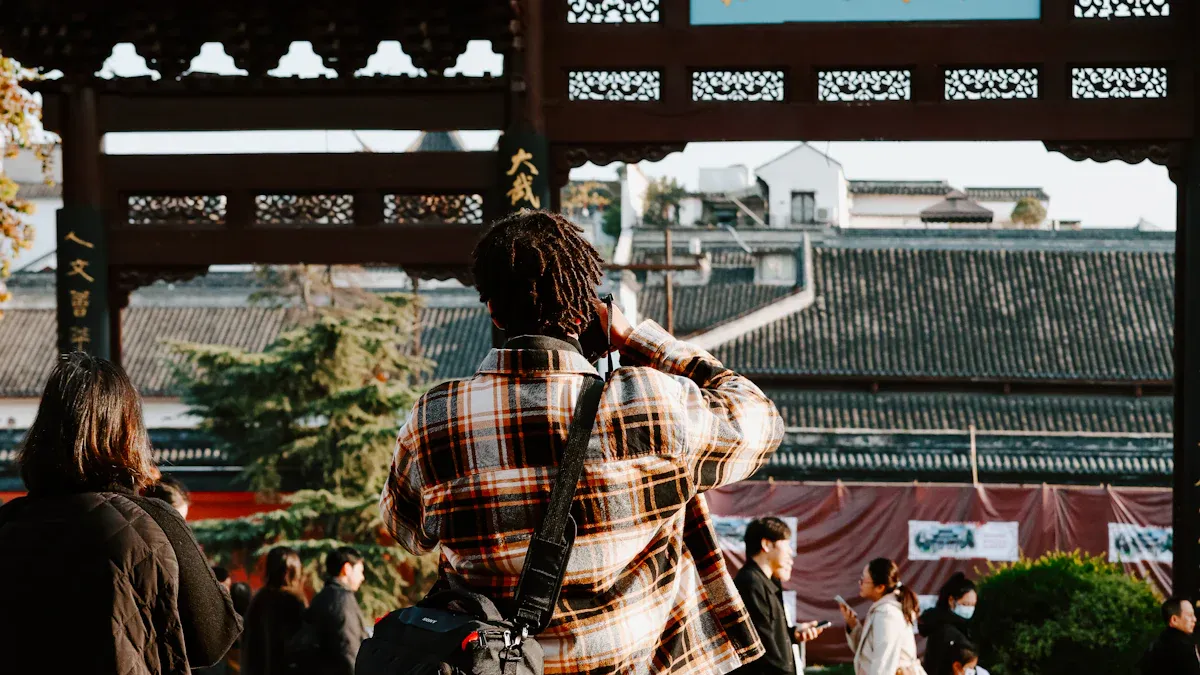
The confucius temple in nanjing is a sign of Chinese history and wisdom. You can find it next to the Qinhuai River. The temple’s pretty location makes it more special. Everyone can enter for free. This makes it a popular place for tourists and people who live nearby. People visit to respect confucius and learn about his ideas. The area has always been a place for learning and tradition.
| Evidence Description | Type of Evidence |
|---|---|
| The temple is located on the banks of the Qinhuai River, enhancing its charm and cultural significance. | Cultural Landmark |
| The river has historically been a center for cultural activities and tourism, elevating the temple’s status. | Historical Importance |
Key Takeaways
- The Confucius Temple in Nanjing is a free place to visit. It is next to the pretty Qinhuai River. Many tourists and local people like to go there.
- The temple was built in 1034. It has a long history as a place for learning and Confucian culture. It has helped many people in southern China for many years.
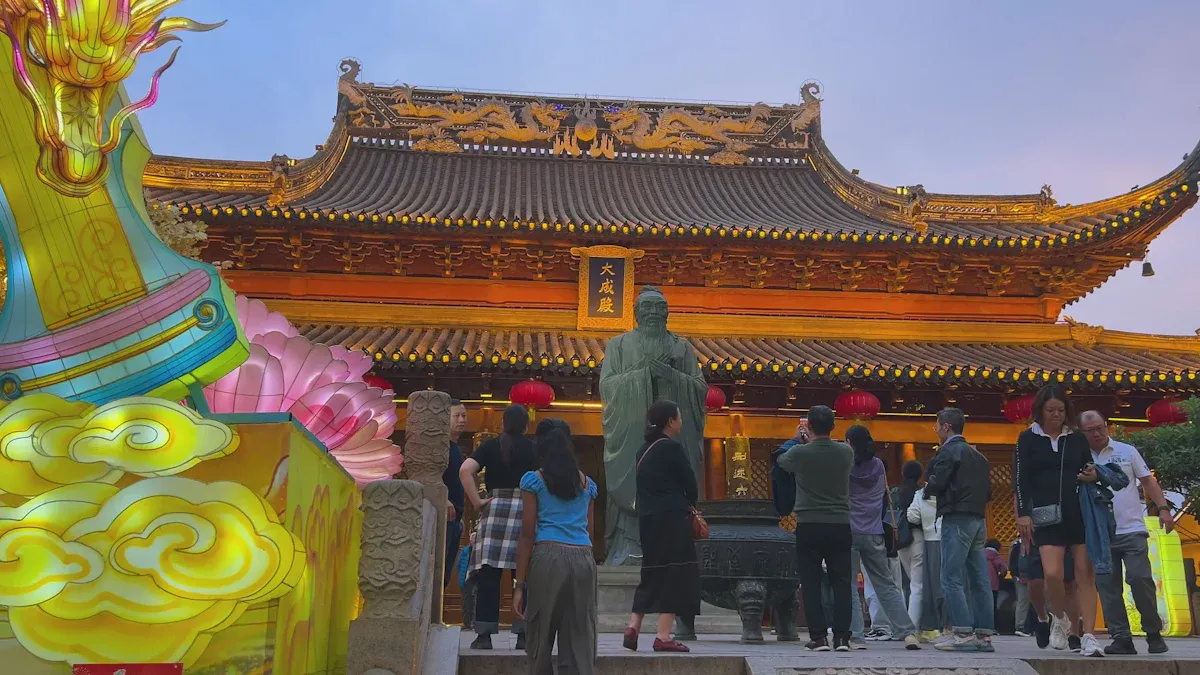
- People can see important buildings like Dacheng Hall. Dacheng Hall has the biggest statue of Confucius in China. There is also the old Jiangnan Gongyuan exam hall.
- The temple has old ceremonies and new festivals. One festival is the Qinhuai Lantern Festival. These events show Chinese culture and bring many people to visit.
- The museum at the temple has displays about the imperial examination system. These exhibits help people learn about why learning and Confucian values are important in Chinese history.
History of Nanjing Confucius Temple
Origins and Founding
The Confucius Temple in Nanjing has a very old history. It was first built in 1034 during the Song Dynasty. People made the temple to honor Confucius, who was a wise teacher. Over the years, the temple became a sign of wisdom and learning. Nanjing is a city famous for culture and history. This helped the temple become more important. The temple had many buildings. There were halls for worship and study. These buildings showed that people cared about education and tradition.
Role in Education and Culture
The Confucius Temple helped spread Confucian culture in southern China. It was a place where people honored Confucius and learned his ideas. The temple became a center for education and cultural events. Many students came to study for the imperial civil exams. These exams were used to pick government officials based on Confucian ideas. The temple’s influence went beyond Nanjing. It shaped the beliefs and values of many people in the area.
- The Confucius Temple is part of a big educational complex that includes:
- The School Palace (School Palace)
- Examination halls (Examination Hall)
- Important buildings like:
- Dacheng Hall (Dacheng Hall)
- Mingde Hall (Mingde Hall)
- Zunjing Pavilion (Zunjing Pavilion)
The temple was a center of learning for the community. It brought together scholars, teachers, and students. They wanted to learn more and help society.
Key Historical Events
The Confucius Temple in Nanjing is very special in history. When the Ming Hongwu emperor won his wars against the Mongol Yuan empire, he did not like Confucian scholars much. He listened more to his eunuch advisers. But he needed the scholars for his government. This temple was the main place for learning. It helped the Ming empire. Sometimes it disagreed with the Confucian scholars in Beijing.
- In 1381 CE, 14 years after Hongwu became emperor, the temple was renamed as a State Academy. It started training people in Confucian learning.
- The temple kept training people in Confucian learning until the Republican government stopped the exams.
The Confucius Temple went through many changes in its long history. It survived wars, political changes, and reforms. Each time, the temple changed a little. But its main purpose stayed the same. It was always a place to learn, honor Confucius, and connect with Chinese heritage.
Visiting Nanjing Confucius Temple
Location and Qinhuai River
Nanjing Confucius Temple is in the center of Qinhuai District. The temple sits next to Gongyuan Street on the north side of the Qinhuai River. This spot is part of the Qinhuai River Scenic Area. Visitors see pretty river views and busy streets. The area feels lively and full of energy. The temple is close to many cultural places, coffee shops, and snack stands. People walk along the river and enjoy the sights. They also learn about the history. The temple’s spot by the river makes it popular with tourists and locals. Entry is free, so many people come to visit and learn about Chinese culture.
- The temple’s address is in the Qinhuai River Scenic Area, Qinhuai District, Nanjing.
- It is next to Gongyuan Street on the north bank of the Qinhuai River.
- The area has nice views, busy streets, and a fun atmosphere.
- Visitors can find coffee shops and snack stands nearby.
Architectural Highlights
Nanjing Confucius Temple has many cool buildings. Dacheng Hall is the most famous one. This hall is 54 meters long and 34 meters wide. It is over 32 meters tall. Twenty-eight pillars with fancy designs hold up the roof. Dacheng Hall was used for big ceremonies. Now, it has the biggest statue of Confucius in China. The temple also has Jiangnan Gongyuan. This is the largest exam hall from the Qing Dynasty. It has a three-level Mingyuan Tower and more than 20,000 exam cells. These buildings show the temple’s role in learning and tradition.
| Architectural Feature | Description | Historical Significance |
|---|---|---|
| Dacheng Hall | The main building of the temple, 54 by 34 meters, under 32 meters high, with 28 decorated pillars. | It was used for ceremonies and has the biggest Confucius statue in China. It is a symbol of Confucian worship. |
| Jiangnan Gongyuan | The largest exam hall for students during the Qing Dynasty, with a three-level Mingyuan Tower and over 20,000 exam cells. | Shows how the imperial exams shaped the government in ancient China. |
The temple’s design uses old Chinese ideas. Builders made sure the space feels calm and balanced. The layout follows yin-yang ideas. This style links the temple to other Confucian places in China.
| Aspect | Detail |
|---|---|
| Architectural Principles | Uses balance and harmony, showing traditional Chinese style. |
| Historical Significance | The Temple of Confucius in Qufu, built in 478 BCE, is an early example of ritual buildings. |
| UNESCO Recognition | Important Confucian sites have been UNESCO World Heritage Sites since 1994. |
| Design Philosophy | Yin Yang balance and harmony guide how Confucian buildings are planned and built. |
What to See and Do
People visiting Nanjing Confucius Temple have lots to do. The temple complex has the main Confucius Temple, the Studying Hall, and Gongyuan. Gongyuan was the biggest exam hall during the Ming and Qing Dynasties. Visitors can walk through the halls and look at the buildings. They can learn about the history of the exams. The temple is next to the Qinhuai River, so there are nice walks and places to take photos. The area has busy shopping streets. Many coffee shops and snack stands are there. Visitors get to see local life. The temple’s history and culture make it a top place to visit in Nanjing.
- Visit the Confucius Temple, Studying Hall, and Gongyuan.
- Enjoy views along the Qinhuai River.
- Walk through busy shopping streets with coffee shops and snack stands.
- Learn about the history of the imperial exams.
How to Get to Nanjing Confucius Temple
Travelers can get to Nanjing Confucius Temple in many ways. The Nanjing metro connects the temple to other big places in the city. Many people use the metro because it is fast and easy. Public buses, like Tourist Bus 1, let people hop on and off at main sites. This is good for those who want to see more of Nanjing. Taxis are good for short trips. Ride-hailing apps like Didi Chuxing are helpful, especially if you have bags. The temple’s central spot makes it easy to find and visit.
Tip: The temple is free to enter, so visitors do not need to worry about ticket costs.
- Metro System: Connects main places, including the Confucius Temple.
- Public Buses: Tourist Bus 1 gives cheap hop-on-hop-off service.
- Taxis & Ride-Hailing: Taxis and Didi Chuxing are good for short trips or people with bags.
Traditions and Events at Confucius Temple
Ancient Rituals and Ceremonies
People have done rituals at the Confucius Temple for a long time. These ceremonies honor Confucius and his teachings. On special days, scholars and officials come together. They wear old-style robes and bow to the statue of Confucius. Musicians play old instruments. Bells and drums fill the air with sound. These rituals show respect for teachers and wisdom. Visitors can watch these events and learn about Chinese traditions.
Modern Festivals and Revitalization
The Confucius Temple has many fun festivals today. The Qinhuai Lantern Festival is the most famous one. This festival has been around for over a thousand years. People hang colorful lanterns all over the area. The lanterns light up the night and bring many visitors. The festival started in the Southern Dynasties and grew in the Ming Dynasty. In 1985, the city brought the festival back. This made the temple lively again and helped people connect with Chinese culture.
- The Qinhuai Lantern Festival includes:
- Bright lanterns along the river
- Traditional shows and music
- Families and tourists enjoying the sights
The festival keeps the temple important today. It brings people together and celebrates history.
Community and Educational Activities
The Confucius Temple is a place for learning and community events. Schools bring students for field trips. Teachers give lessons about Confucian values and Chinese history. Local groups run calligraphy workshops and poetry readings. These activities help young people learn about their heritage. The temple also has lectures and art shows. People from the community come to share ideas and learn. The temple inspires respect for knowledge and tradition.
Museum and Artifacts
Imperial Examination Exhibits
The museum at Nanjing Confucius Temple tells about the imperial exams. Visitors learn how students got ready for these hard tests. The Jiangnan Examination Hall is a big part of this story. This hall had more than 20,000 tiny rooms for test-takers. It could fit 20,644 people at once. It was the biggest exam site in old China.
The museum has displays and models to show how exams worked. Students stayed in small rooms for days. They wrote essays and answered questions. The exams checked what they knew about Confucian texts. Passing the exams could change someone’s life. Many families wanted their kids to pass and become officials.
The imperial exams shaped China for over a thousand years. The museum shows why learning was so important.
| Year | Event | Significance |
|---|---|---|
| 1168 | Jiangnan Examination Hall established | Became a key site for civil service exams in Southern China. |
| 1348-1911 | Ming and Qing Dynasties | The hall reached its peak, influencing governance and society. |
| 1905 | Abolishment of the imperial examination system | Marked the end of a thousand-year tradition, leading to the establishment of the museum in the 1980s. |
Notable Artifacts
The museum has many special objects. Visitors see exam papers, ink stones, and brushes used by students. There are also robes and hats worn by scholars who passed. Some displays have wooden name tags and exam certificates. These things help people picture life during the exams.
A big bronze statue of Confucius stands in the museum. This statue reminds people of his role in Chinese education. The museum also has old books and scrolls. These items show how much learning and tradition matter in China.
Learning Opportunities
The museum gives people many ways to learn. School groups come to study Chinese history and culture. Teachers use the exhibits to talk about hard work and respect for knowledge. Sometimes, the museum has calligraphy workshops and lectures. These let visitors try writing with brush and ink.
People can join tours to hear stories about famous scholars. The museum wants everyone to ask questions and explore. By learning about the past, visitors respect Chinese heritage even more.
Nanjing Confucius Temple connects old wisdom to today’s life. The temple has a long history and is full of energy. Entry is free, so many people visit. It is a great place for anyone who likes Chinese culture.
- Visitors see busy shops and places to eat. At night, the buildings shine with lights.
- The temple still teaches and keeps traditions alive.
“Reading Confucius in New York is not the same as visiting the Confucius Temple and Yuan Emperor’s Tomb where rituals happen.”
A trip here gives you learning and memories you will not forget.
FAQ
What is the best time to visit Nanjing Confucius Temple?
Spring and autumn are good times to visit. The weather is nice and not too hot or cold. The scenery looks pretty in these seasons. Many people come during festivals. Travelers can enjoy the temple and the Qinhuai River area more easily.
Why is the Confucius Temple important in China?
The Confucius Temple is a sign of learning and respect for teachers. It links people to China’s long history of education. Students and families visit to learn about values that shaped China’s culture.
Can visitors take photos inside the temple?
Visitors can take photos outside in most places. Some indoor exhibits do not allow photos. Signs show where you cannot take pictures. Staff members help guests follow the rules. Many people like to take photos of this famous site in China.
How does the temple reflect Confucian values in China?
The temple’s design shows balance and respect. Ceremonies honor teachers and wisdom. Educational activities teach young people about tradition. These things help keep Confucian values alive in China today.
Is the Nanjing Confucius Temple different from other temples in China?
Yes, this temple sits by the river and has a big exam hall. It was important in China’s history of education. Each Confucius Temple in China has its own special features and stories.