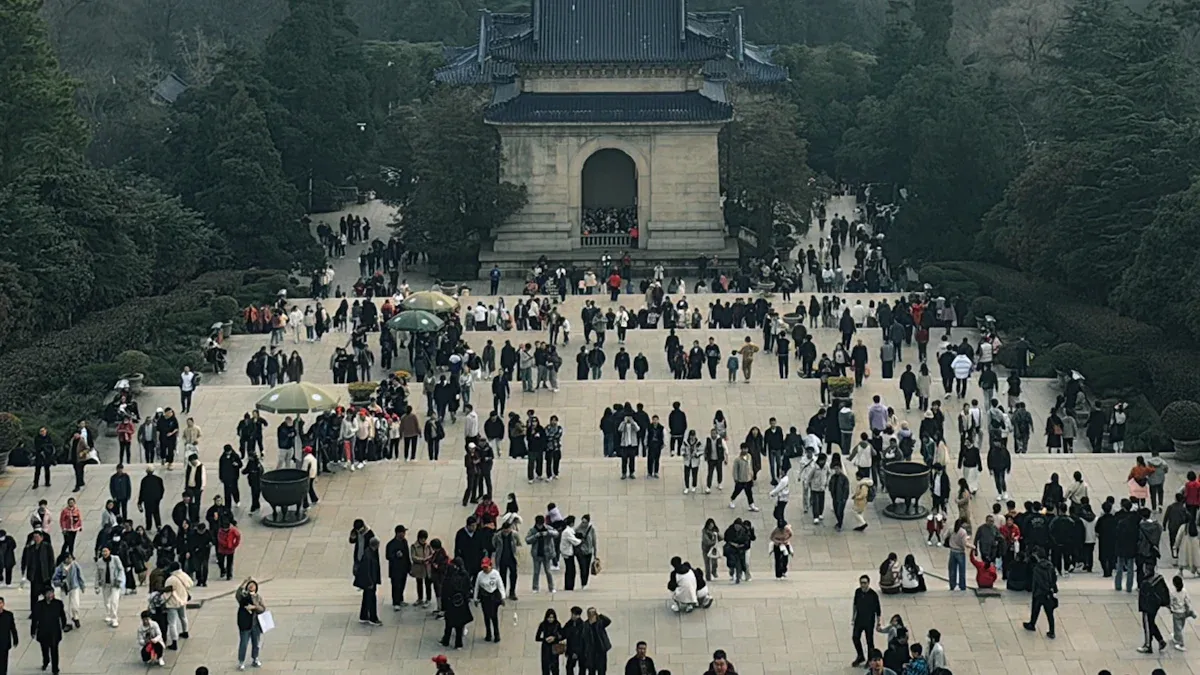
The sun yat-sen mausoleum is a sign of hope and dreams in Chinese history. Sun Yat-sen is often called the founding father of the republic of china. He inspired many people with his dream for a modern country. Many people see him as the father of the nation and the father of modern china. He spent his life working for nationalism, people’s sovereignty, and livelihood. These are called the ‘Three Principles of the People.’
Sun made his main ideas under the phrase, ‘The Three Principles of the People.’ These ideas helped a country become independent and strong. The three principles are nationalism, people’s sovereignty, and the people’s livelihood.
Visitors are amazed by the special buildings and the stories in every stone. When making travel plans, people often pick the sun yat-sen mausoleum as a place to visit. If you plan your trip early, you can enjoy its quiet grounds and learn about its history.
Key Takeaways
- Sun Yat-sen is called the ‘Father of Modern China.’ He helped end imperial rule. He worked to make China strong.
- The Sun Yat-sen Mausoleum mixes Chinese and Western building styles. This shows unity and progress.
- People can visit the mausoleum and see its beauty. They can learn about Sun Yat-sen’s legacy. It is best to go when it is less crowded.
- The mausoleum is a place for culture. It has events that teach about democracy. People also learn about Sun Yat-sen’s effect on China.
- People work to keep the mausoleum nice and respectful. This helps future generations honor Sun Yat-sen.
Explore Sun Yat-sen Mausoleum: Site and Legacy
Sun Yat-sen: Founding Father of the Republic of China
Sun Yat-sen helped shape modern China. Many people call him the first leader of the republic of china. He became president in 1912. His ideas changed the country forever. The table below shows big events that made him a hero:
| Event | Significance |
|---|---|
| Founding of the Revive China Society | Started efforts to end the Qing dynasty and build a republic. |
| 1911 Xinhai Revolution | Ended over 2,000 years of imperial rule and led to the Republic of China. |
| Inauguration as Provisional President | Proved his leadership in the new republic and showed his willingness to step aside for unity. |
| Development of the Three Principles | Gave the country a new political framework focused on nationalism, democracy, and livelihood. |
Sun Yat-sen’s vision inspired millions. He wanted a strong nation. His legacy lives on at the sun yat-sen mausoleum, also called zongshan ling. Many students and tourists visit sun yat-sen mausoleum to learn about his life.
Choosing the Mausoleum Site
Leaders picked the site for the sun yat-sen mausoleum carefully. They chose Purple Mountain in Nanjing. This mountain is a famous landmark and has deep meaning. The area around Purple Mountain has other important places, like the Ming Xiaoling Mausoleum and the Sacred Way. These spots add to the history of the region.
The location of zongshan ling helps visitors see why the site matters. Purple Mountain’s beauty makes it a great place to honor Sun Yat-sen. The mausoleum helped Nanjing grow. It brought more visitors to the city. The mausoleum mixes Chinese and Western styles, making it special among must-see spots in China.
Note: The sun yat-sen mausoleum got the title “National AAAAA Tourist Attraction” in 2006. In 2016, it was named “Architectural Heritage in the 20th Century in China.” These awards show its lasting value.
Early Public Response
People across China felt proud when the sun yat-sen mausoleum opened. Many saw it as a sign of hope and a new future. The site quickly became a place for learning and thinking. Families, students, and travelers visit to pay their respects.
The mausoleum’s influence goes beyond history. It helped shape Nanjing’s culture and economy. Local businesses grew as more people came to visit sun yat-sen mausoleum. The area became easier to reach with public transportation. This made it simple for everyone to visit. Many visitors plan their trips to avoid crowds and enjoy the quiet grounds.
- The mausoleum is a key part of Nanjing’s culture.
- Its mix of old and new styles adds to the city’s charm.
- Easy access by public transportation helps more people visit and avoid crowds.
Scholars have studied the sun yat-sen mausoleum for many years. Some important books and articles are:
| Title | Author | Journal | Year | Pages |
|---|---|---|---|---|
| Searching for a Modern Chinese Monument: The Design of the Sun Yat-sen Mausoleum in Nanjing | Delin Lai | Journal of the Society of Architectural Historians | 2005 | 22–55 |
| Beyond Revolution: Notes on Contemporary Chinese Architecture | Jianfei Zhu | AA Files | 1998 | 3–14 |
| The French Connection that Failed: France and Sun Yat-Sen, 1900–1908 | J. Kim Munholland | The Journal of Asian Studies | 1972 | 77–95 |
| The Kuomintang Movement in Malaya and Singapore, 1912–1925 | C. F. Yong, R. B. McKenna | Journal of Southeast Asian Studies | 1981 | 118–132 |
| Overseas Chinese Nationalism in Singapore and Malaya 1877–1912 | Yen Ching-Hwang | Modern Asian Studies | 1982 | 397–425 |
| THREE VISIONARIES IN EXILE: YUNG WIṄG, K’ANG YU-WEI AND SUN YAT-SEN, 1894–1911 | J. Y. WONG | Journal of Asian History | 1986 | 1–32 |
The sun yat-sen mausoleum stands as a symbol of unity and progress. Its story inspires people from all walks of life.
Design and Architecture of Sun Yat-sen Mausoleum
Construction Timeline (1926-1929)
Building the sun yat-sen mausoleum started a new chapter in Chinese architecture. Workers began in January 1926. They finished the main building in spring 1929. Many people worked together to honor Sun Yat-sen. The project moved fast, showing respect for their leader.
- Workers started in January 1926.
- The main building was done in spring 1929.
The mausoleum stands today because of careful planning and teamwork.
Architectural Features and Symbolism
The sun yat-sen mausoleum mixes Chinese and Western styles. Architect Lu Yanzhi wanted the site to show tradition and modern ideas. The layout looks like a Freedom Bell, which stands for liberty. Blue and white colors match the Kuomintang flag. These colors show brightness and purity.
Visitors see many symbols as they walk around:
- The Boai Archway has “Boai,” meaning Universal Love. This shows Sun Yat-sen’s hope for love and equality.
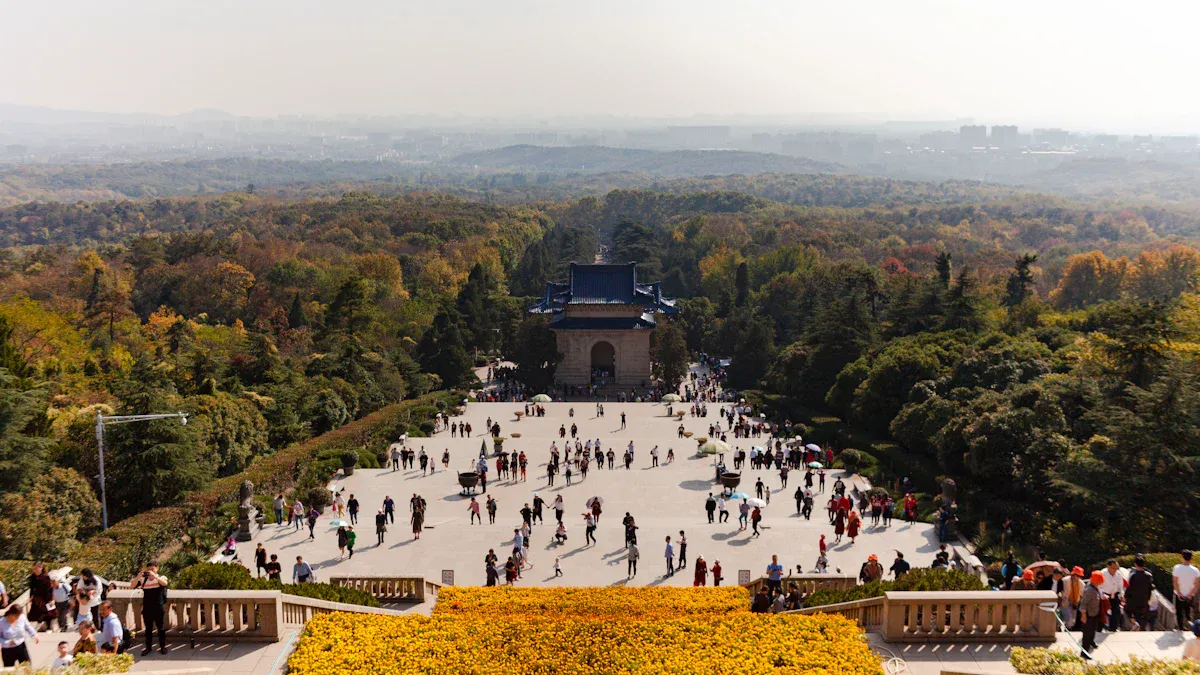
- The 392 steps stand for the unity of 392 million Chinese people.
- The gate has “Tian Xia Wei Gong.” It means “The World Belongs to the Public.” This shows Sun Yat-sen’s dream of a fair society.
- The Sacrificial Hall holds Sun Yat-sen’s main ideas: Nationalism, Democracy, and People’s Livelihood.
The central axis layout follows traditional Chinese design. Each part, from the Memorial Archway to the Sacrificial Hall, adds to the site’s grandeur.
The table below shows some key features:
| Feature | Description |
|---|---|
| Design | Combines traditional tombs with modern architecture |
| Location | Built on a mountain slope, 700 meters from the entrance |
| Stairway | 480 meters long with 392 stairs, lined with trees |
| Gate | Tri-arched marble gate with Sun’s motto |
| Memorial | Pavilion with a 9-meter-high stele for Sun Yat-sen |
These features make the sun yat-sen mausoleum special in China’s history.
Comparison with Lincoln Memorial
Many people compare the sun yat-sen mausoleum to the Lincoln Memorial in the United States. Both honor leaders who changed their countries. The mausoleum mixes Eastern and Western styles. The Lincoln Memorial uses only neoclassical design. The sun yat-sen mausoleum sits in nature, surrounded by trees and mountains. The Lincoln Memorial stands in a busy city.
- Both places are national memorials.
- Each building sends a message that fits its culture.
The sun yat-sen mausoleum is an architectural masterpiece. Architect Lu Yanzhi led the design. The site shows a trend from the 1920s and 1930s. It mixes Eastern and Western ideas. The mausoleum’s national style and careful details make it unique.
The sun yat-sen mausoleum honors a revolutionary leader. It shows the beauty of mixing old and new styles.
Visiting the Mausoleum Today
Preservation and Restoration Efforts
The sun yat-sen mausoleum is a famous place in nanjing. Experts work hard to keep it clean and safe. They fix stone steps and make old carvings look new. Workers use special tools to protect blue tiles and white walls. The team checks the main gate and worship hall every year. They want visitors to see the mausoleum as it looked long ago. The city of nanjing helps with these projects. Schools in nanjing send students to learn history and help clean. These actions keep the sun yat-sen mausoleum beautiful for future generations.
Visitor Experience and Access
People from nanjing and other cities can visit the sun yat-sen mausoleum in different ways. The table below shows how you can get there:
| Transportation Method | Cost Estimate | Pros | Cons |
|---|---|---|---|
| Taxi | $30 – $40 | Convenient | Language barriers, variable pricing |
| Bus | $5 | Budget-friendly | Crowded, longer travel times |
| Train | $7 | Punctual | Transfer times may not align |
| Transfer Service | Varies | Personalized service, comfort | Requires booking in advance |
Buy tickets before you go. Tickets help control how many people enter. Many people in nanjing use buses because they are cheap. Some choose taxis for comfort. The best time to visit is early morning or late afternoon. Early morning is cool and not crowded. Late afternoon has golden sunlight and a peaceful walk. Autumn is popular because trees on Wutongshu Avenue turn bright colors.
The sun yat-sen mausoleum has many famous places. People like the stone archway, the long path, the main gate, and the worship hall. The burial room is quiet and full of respect. The whole area sits on Purple Mountain. This makes nanjing more beautiful.
Cultural Events and Modern Importance
The sun yat-sen mausoleum holds many events in nanjing. Schools bring students for history lessons. Teachers talk about Dr. Sun Yat-sen and how he ended the Qing dynasty. The site helps people in nanjing learn about democracy and modern government. During holidays, families visit to honor Sun Yat-sen. The mausoleum gets busy with ceremonies and flower offerings. Local guides tell stories about the leader’s life. The site also has art shows and music events. These activities make the sun yat-sen mausoleum a lively part of nanjing’s culture.
People in nanjing see the mausoleum as a sign of unity. Tickets let everyone join these special moments. The sun yat-sen mausoleum inspires pride in nanjing and all over China.
The sun yat-sen mausoleum began as a tribute to a leader. Over time, it became a symbol of unity and hope. Today, people visit the sun yat-sen mausoleum to learn about history and honor Sun Yat-sen. The site stands as a reminder of his dream for a strong nation.
The sun yat-sen mausoleum connects the past with the present. It helps new generations understand why his legacy matters.
FAQ
What is the Sun Yat-sen Mausoleum?
The Sun Yat-sen Mausoleum is a famous memorial in Nanjing. People built it to honor Sun Yat-sen. He helped start modern china. The mausoleum stands on Purple Mountain. Many visitors from china and other countries come to see it every year.
Why do people call Sun Yat-sen the “Father of Modern China”?
People call Sun Yat-sen the “Father of Modern China” because he led the movement that ended the last dynasty. He wanted china to become strong and free. His ideas changed how people in china think about government and society.
How does the mausoleum show both Chinese and Western styles?
The mausoleum mixes styles from china and the West. The roof and colors come from old china. The layout uses ideas from Western buildings. This mix shows how china wanted to join new ideas with old traditions.
Can students learn about china’s history at the mausoleum?
Students visit the mausoleum to learn about china’s history. Teachers explain how Sun Yat-sen helped change china. The site has signs and guides. These help students understand why china remembers Sun Yat-sen.
What makes the Sun Yat-sen Mausoleum important in china today?
The mausoleum is a symbol of unity in china. People visit during holidays. They honor Sun Yat-sen’s dream for a better china. The site helps everyone remember the changes that shaped china. It stands as a place of pride for all of china.