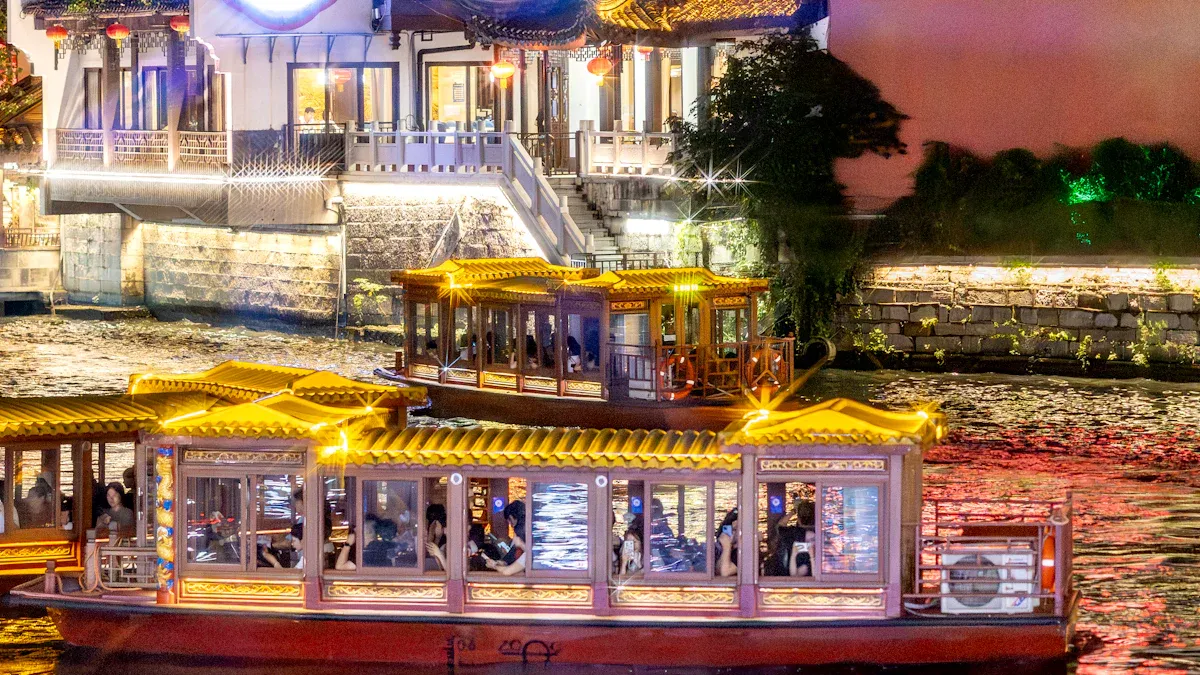
The Qin Huai River goes through the center of Nanjing. People call it “Nanjing’s mother river.” This is because it has helped shape the city’s history and culture for many years. The river is about 110 kilometers long. You can see this in the table below:
| Source | Length of Qin Huai River |
|---|---|
| Top China Travel | 110 km |
| Wikipedia | 110 km |
| Anywhere.net | More than 110 km |
| China Tours Net | 110 km |
The Qin Huai River is a main tributary of the Yangtze River. It brings history fans and travelers who want to see its old traditions and pretty views.
Key Takeaways
- The Qin Huai River is called ‘Nanjing’s mother river.’ It has helped shape the city’s history and culture for many years. Visitors can see pretty views and famous places along the river. Some of these are the Confucius Temple and Zhonghua Gate. The best time to visit the Qin Huai River is in spring or autumn. The weather is nice and there are fun festivals. Boat cruises are a special way to see the river. You can ride boats during the day or at night. Local foods like duck blood soup and sesame cakes are very popular. Everyone should try them when they visit.
Qin Huai River Overview
Location and Course
The Qin Huai River runs through the middle of Nanjing. It is a main waterway and splits the city into parts. The river goes north and joins the Yangtze River. People call it “Nanjing’s mother river” because it has helped the city for hundreds of years. In Nanjing, the river is about 15.5 kilometers long. This part is called the “Ten Miles of Qinhuai.” It is famous for its pretty views and busy life.
The river connects to other important waters. The table below shows how it links to the Yangtze River:
| Feature | Description |
|---|---|
| River Course | The Huai River flows south and becomes the Sanhe River. |
| Lakes | It passes through Gaoyou Lake and Shaobo Lake. |
| Connection to Yangtze | It empties into the Yangtze River near Yangzhou, indicating a direct link. |
Physical Features
The Qin Huai River has special features. These features shape the land and help people and animals live there.
- Length: 3,230 meters in the main scenic area
- Width: 80 to 90 meters
- Average Depth: 4 meters
- Drainage Area: 2,631 square kilometers
These numbers show the river is wide and deep for boats. The big drainage area means it gets water from many places near Nanjing.
Note: The river’s size and flow make it important for travel, trade, and daily life in Nanjing.
Landmarks
Many well-known landmarks are next to the Qin Huai River. These places show the river’s long history and culture. The table below lists some important landmarks and what they mean:
| Landmark | Historical Significance |
|---|---|
| Confucius Temple | This temple is in the main scenic area and stands for culture and learning in Nanjing. |
| Zhanyuan Garden | This old garden shows Chinese landscape design and cultural history. |
| Egret Islet | This pretty spot makes the river more beautiful and is a cultural place. |
| China Gate | This gate shows old buildings and is an entrance to cultural sites along the river. |
| Eight Beauties | These people are symbols of love for their country and strength during hard times in different dynasties. |
These landmarks bring visitors from many countries. They help people learn about Nanjing’s history and customs.
Qin Huai River History
Ancient Names and Legends
Long ago, people called the Qin Huai River “Huai Water.” This name was used before the Qin Dynasty. Emperor Qin Shihuang ordered workers to clean the river. After that, people started calling it “Qin Huai.” Many stories grew around the river. Some say the river got its name because it joined the Huai River system. Others think the emperor’s work made people honor him by changing the name. These stories show the river is important in nature and history.
Historical Events
The Qin Huai River was part of many big moments in Chinese history.
- Six Dynasties: The area became a place for rich people, scholars, and writers. Many famous poems and stories were written then.
- Ming Dynasty: The river became busy again. Rich merchants built homes and shops near the water. Music and art filled the city’s pleasure quarters.
- Qing Dynasty: The river stayed important. Barges came back, and people held cultural events on the water.
These times helped make the river special in Chinese culture.
Role in Nanjing’s Development
The Qin Huai River helped Nanjing become a lively city. The river’s edge brings people for work, shopping, and fun. Restaurants and shops are along the banks. Parks and walkways make the area look nice. The government cleaned the river’s water. This made life better for people living nearby. New projects in Xuanwu District made places for living, working, and relaxing. The government also protects the river’s history. These efforts help people and the river live together peacefully.
Qin Huai River Culture
Literary Inspiration
The Qin Huai River gave ideas to many poets and artists. Writers and painters liked to visit the river’s banks. They looked for beauty and meaning for their work. The river’s views and busy life helped them make poems, paintings, and music. Bian Yujing was a famous poet and artist in the late Ming period. Li Xiangjun was known for her talent and influence in the area. Chen Yuanyuan was important in Suzhou opera and met many poets and scholars. The Eight Beauties of Qinhuai became symbols of art and pride.
| Name | Description |
|---|---|
| Eight Beauties of Qinhuai | Notable figures skilled in literature, poetry, fine arts, dancing, and music. |
| Bian Yujing | Painter and poet from the late Ming period, known for her poetry and connections. |
| Li Xiangjun | Respected figure in the Qinhuai area, known for beauty and artistic talents. |
| Chen Yuanyuan | Leading figure in Suzhou opera, known for relationships with scholars and poets. |
Eight Beauties of Qinhuai
The Eight Beauties of Qinhuai lived during a time of change. They were famous for their art, music, and poetry. Their stories show they were strong and loved their country. Li Xiangjun was the main character in “Peach Blossom Fan.” She was important in Ming Dynasty culture. Ma Xianglan was respected for her poems and paintings. She was known for painting orchids. These women helped shape the river’s culture.
- Li Xiangjun: Main character in “Peach Blossom Fan,” important in Ming Dynasty culture.
- Ma Xianglan: Famous for poetry and painting, especially orchids.
Local Traditions
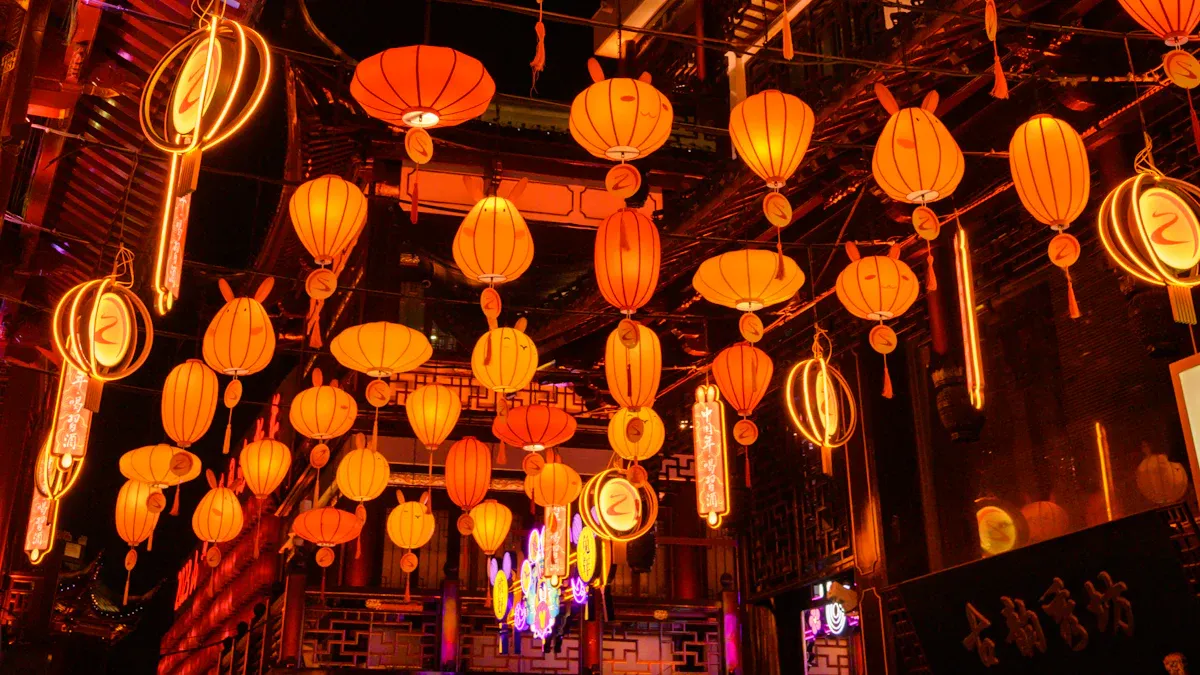
The Qin Huai River is the heart of Nanjing. Its banks have white walls and black roofs that show the city’s past. Local foods like beef soup with dumplings and baked cakes are popular. At night, lanterns light up the river and make it lively. The Qinhuai Lantern Festival started in the Southern Dynasties. It has lasted for over a thousand years. The festival came back in 1985. It welcomes the new year and brings hope and good luck. Lanterns bring people together and show the river’s importance in Nanjing’s life.
Modern Qin Huai River
Attractions and Activities
There are many fun places to see along the river. The area by the Confucius Temple is busy. It has gardens, temples, and local life. Zhonghua Gate is the biggest city gate in the world. It is also the best kept. Jiangnan Gongyuan shows how imperial exams worked in China. Many people like to take a river cruise. The cruise lets you see old sites and pretty views.
| Attraction Name | Description |
|---|---|
| Confucius Temple & Qinhuai River Scenic Area | This is a top tourist spot. It has nature, gardens, temples, and local life. |
| Zhonghua Gate | This is the largest and best city gate in the world. It is important for history. |
| Jiangnan Gongyuan | This is the biggest exam hall from ancient China. It shows the area’s school history. |
| Qinhuai River Cruise | You can take a boat ride. You will hear stories and see old sites and nice views. |
The best time to visit is spring or autumn. April, May, September, and November have nice weather and pretty sights.
Nightlife and Cruises
The river gets busy at night. Lanterns light up the sides. Shops and restaurants stay open late. The Fuzimiao district is full of people shopping and eating. Many people take a night cruise. They see old buildings glowing in the dark.
| Cruise Type | Price (CNY) | Duration | Attractions |
|---|---|---|---|
| Ordinary ship (daytime) | 60 per person | 50 minutes | Panchi Wharf, Bai Lu Zhou Cultural Theme Park, Dong Shui Guan, Zhong Hua Men, etc. |
| Ordinary ship (night) | 80 per person | 50 minutes | Panchi Wharf, Bai Lu Zhou Cultural Theme Park, Dong Shui Guan, Zhong Hua Men, etc. |
| Luxury ship (tour group) | 2400-2600 per ship | 50 minutes | Panchi Wharf, Bai Lu Zhou Cultural Theme Park, Dong Shui Guan, Zhong Hua Men, etc. |
| Night route | 100 | 1 hour | Stone City Ruins Park, Ming City Wall, Xishuiguan, Zhonghua Gate, etc. |
| Longer cruise | 150 | 85 minutes | Stone City Ruins Park, Ming City Wall, Zhonghua Gate, Nandu Fanhui Stone Carvings, etc. |
| Scenic cruise | 100 | 1 hour | Stone City Ruins Park, Shuimu Qinhuai Leisure District, TV tower, etc. |
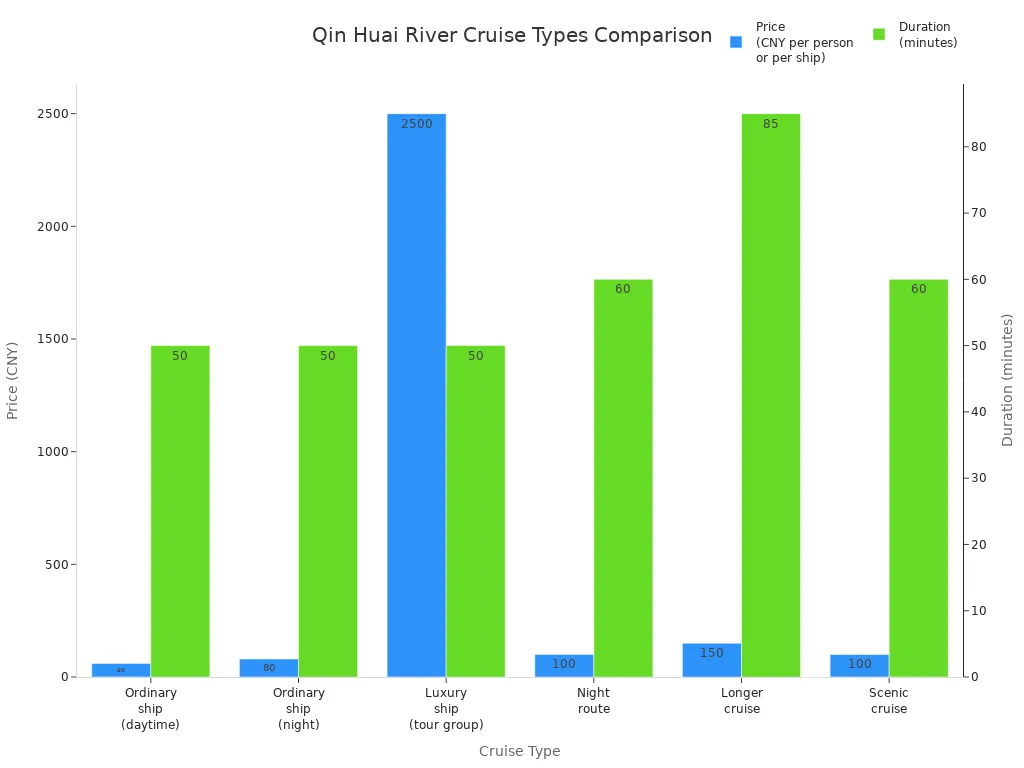
People like the 50-minute boat ride. They listen to stories about the river’s past. The night lights and river views feel calm and nice. The Confucius Temple area is best at night. Other places like Xinjiekou and the 1912 District are also popular.
Travel Tips
Tip: Spring and autumn are the best times to go. The weather is nice, and there are many festivals.
- Walk around Fuzimiao at night to see bright lights.
- Take a boat ride for cool pictures.
- Try food and drinks at places by the river.
- Go in the evening for the best time.
- Bring a camera for photos of lanterns.
The Qin Huai River mixes history, culture, and fun for everyone.
The Qin Huai River still affects how people in Nanjing live. People can walk by the river and see pretty views. They can try tasty duck meals. There are busy neighborhoods to visit and explore. The river’s old stories, special places, and new things all mix here.
| Aspect | Description |
|---|---|
| Historical Role | The river has helped Nanjing grow since it began. |
| Cultural Importance | This area is the oldest and busiest part of the city. |
| Tourism and Activities | Night boat rides and local food are special things to do. |
Visitors can find a place where old ways and new ideas come together.
FAQ
What is the best time to visit the Qin Huai River?
Spring and autumn offer the best weather. Many people visit in April, May, September, or November. The river looks beautiful during these months. Festivals and lanterns make the area lively.
Can visitors take a boat cruise on the Qin Huai River?
Yes, visitors can enjoy boat cruises. Day and night cruises show different views. Guides tell stories about the river’s history. Many people like the night cruises for the lights and scenery.
What foods should travelers try near the river?
Travelers should try duck blood soup, salted duck, and sesame cakes. Local snacks are easy to find along the riverbanks. Many restaurants serve traditional Nanjing dishes.
Is the Qin Huai River safe for families?
The river area is safe for families. Walkways have lights at night. Many families visit the parks and markets. Security staff help keep the area safe.
Why do people call the Qin Huai River “Nanjing’s mother river”?
People call it “Nanjing’s mother river” because it helped the city grow. The river gave water, food, and trade routes. It shaped Nanjing’s culture and history.