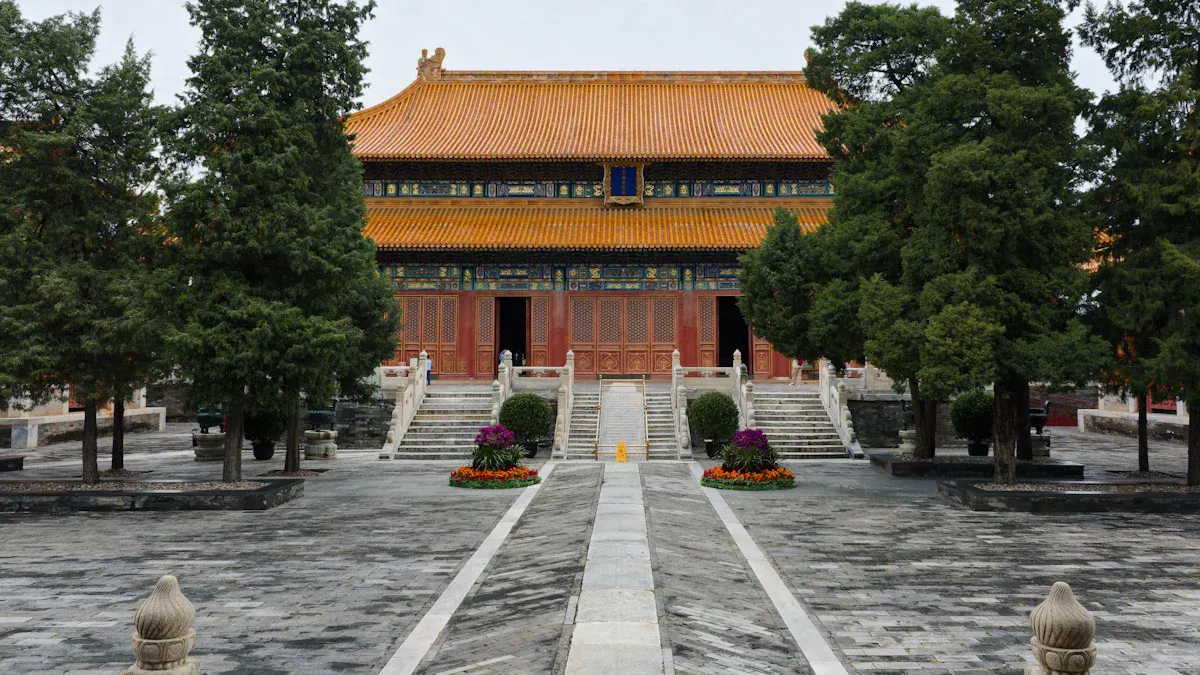
The Ming Tombs are a big group of royal burial places. These tombs are in Changping District. They are 42 kilometers (26 miles) from Beijing’s city center. The site has thirteen tombs for Ming dynasty emperors.
| Location | Distance from Beijing City Center | Number of Mausoleums |
|---|---|---|
| Changping District, Beijing | 42 kilometers (26 miles) | 13 |
UNESCO added the Ming Tombs to the list of Imperial Tombs of the Ming and Qing Dynasties. This award shows their amazing building style and the history of China’s rulers. The Ming Xiaoling Mausoleum gave ideas for later tombs and mixes beauty with meaning.
Key Takeaways
- The Ming Tombs are an important place in history. They hold the bodies of 13 Ming dynasty emperors. They show China’s rich culture and past. Visitors should plan their trip with care. Pick which tombs you want to see. Think about taking a guided tour to learn more. The best time to go is spring or autumn. Weekdays are good because the weather is nice. There are fewer people then. The Sacred Way has statues along the path. It leads to the main tombs. Walking here feels calm and peaceful. It makes your visit better. Seeing the Ming Tombs lets you learn about old Chinese traditions. You can see the amazing buildings from the Ming dynasty.
Ming Tombs Overview
What Are the Ming Tombs?
The Ming Tombs are a group of royal burial places for Ming dynasty emperors. They are in Changping District, north of Beijing. Mountains and quiet scenery surround the tombs. The whole area is over 120 square kilometers. Thirteen tombs hold the bodies of thirteen Ming emperors. The main mausoleum area is 40 square kilometers. Empresses, concubines, and one eunuch are also buried here.
- There are 13 tombs in the Ming Tombs.
- The site covers over 120 square kilometers.
- The mausoleum area covers 40 square kilometers.
- The Ming Tombs are burial sites for 13 Ming emperors.
The Ming Tombs are the biggest and best-kept imperial burial site in China. The layout uses old Chinese rules. Buildings are lined up on a main path. This shows balance and order. Changling, Emperor Yongle’s tomb, has a square front and a round back. The mountains around the tombs have special meaning. They stand for the “Azure Dragon” and “White Tiger.”
| Burial Site | Number of Tombs | Type of Tombs |
|---|---|---|
| Ming Tombs | 13 | 13 imperial, 7 concubines, 1 eunuch |
| Qing Dynasty Tombs | Varies | Different emperors and empresses |
Historical Importance
The Ming Tombs show the history and culture of the Ming dynasty. The Ming dynasty lasted from 1368 to 1644. This time brought peace and wealth to China. The Ming rulers built famous places like the Forbidden City and parts of the Great Wall. They cared about order and balance in their cities. This shaped how people remember them.
The Ming Tombs are the burial sites of 13 Ming emperors, 23 empresses, and many other royals. They are the largest and best-preserved imperial tombs in China.
UNESCO named the Ming Tombs a World Heritage Site. This shows they are important to the world. The tombs show what the Ming dynasty did and how much people respected their rulers.
| Characteristic | Description |
|---|---|
| Historical Significance | The Ming Tombs are the largest and most well-preserved imperial burial complex, housing the remains of thirteen emperors over a span of 200 years. |
| Architectural Design | The layout of the tombs follows traditional Chinese principles, with structures arranged symmetrically along a central axis, exemplified by Changling, the Tomb of Emperor Yongle, which features a square front and circular rear. |
| Natural Landscape | The tombs are set within a tranquil landscape, surrounded by mountains and hills, which symbolize the “Azure Dragon” and the “White Tiger,” enhancing the spiritual significance of the site. |
| Evidence Type | Details |
|---|---|
| Historical Importance | The tombs are the burial sites of 13 Ming emperors, 23 empresses, and many other royals. |
| Architectural Significance | They are the largest existing and best-preserved imperial tombs in China. |
| UNESCO World Heritage Designation | Inscribed on UNESCO’s World Heritage List, highlighting their global cultural importance. |
The Ming Tombs are an important part of Chinese history. They show the power of the Ming dynasty. Their design and place show respect for ancestors and balance. People from all over the world come to see and study the tombs.
Ming Tombs History
Construction and Timeline
The story of the Ming Tombs began in 1409. Emperor Yongle, also known as Zhu Di, started the construction of the first tomb after he moved the capital to Beijing. He chose the site with great care, using Feng Shui principles to find a place surrounded by mountains and peaceful scenery. The first tomb, called Changling, became the model for all the others.
The building of the tombs continued for more than 230 years. Each new emperor built his own tomb near the earlier ones. The site grew as each ruler added his own mark. The Sacred Way, a long road lined with stone statues, was built in 1540. This road became an important part of the area, leading visitors to the heart of the tombs.
- Construction started in 1409 under Emperor Yongle.
- The first tomb was Changling.
- The Sacred Way was added in 1540.
- The site expanded over 230 years as each emperor built his own tomb.
The Ming Tombs show how the rulers of the Ming dynasty wanted to honor their ancestors and keep their memory alive.
Emperors and Burials
The thirteen Ming Tombs hold the remains of thirteen emperors from the Ming dynasty. Each tomb has its own name and special design. The emperors buried here ruled China during a time of great change and growth.
Here is a list of the main tombs and the emperors buried in them:
- Chang Ling: Emperor Yongle
- Ding Ling: Emperor Wanli
- Zhao Ling: Emperor Longqing
- Yong Ling: Emperor Jiajing
- Xian Ling: Emperor Hongxi
- Qing Ling: Emperor Taichang
- Mao Ling: Emperor Chenghua
- Kang Ling: Emperor Zhengde
- Jing Ling: Emperor Xuande
- Tai Ling: Emperor Hongzhi
- De Ling: Emperor Tianqi
- Yu Ling: Emperor Yingzong
- Si Ling: Emperor Chongzhen
The tombs also hold empresses, concubines, and other royal family members. The last emperor buried here was Chongzhen, who saw the end of the Ming dynasty. The thirteen Ming Tombs stand as a record of the power and culture of the Ming rulers.
Ming Tombs Architecture
Layout and Main Structures
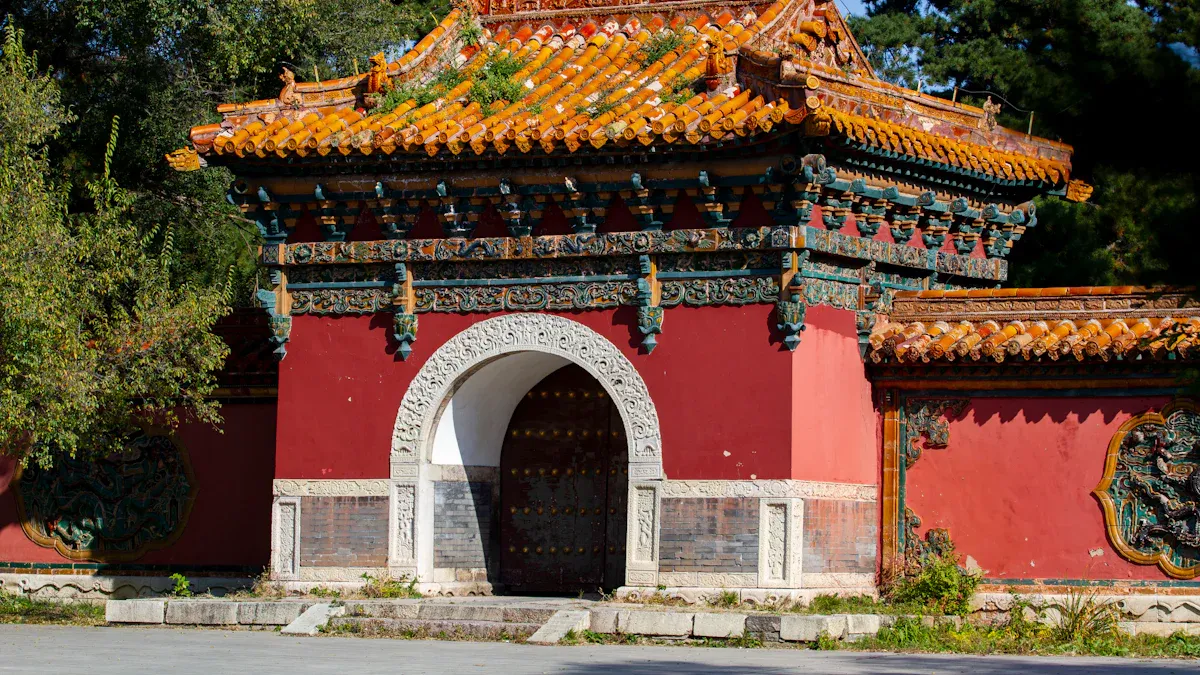
The architecture at the Ming Tombs shows the skills of the Ming dynasty. Each tomb has a special key shape. The buildings are rectangles and face south. They connect to a round mound. The round mound stands for heaven. The square buildings stand for earth. The tombs fit well with the mountains. This follows Feng Shui ideas.
| Feature | Description |
|---|---|
| Design Pattern | Three parts: sacrificial building, Spirit Tower, and round burial mound. |
| Symbolism | Round mound = heaven; square buildings = earth. |
| Layout | Key-shaped, rectangular buildings linked to round mound, surrounded by stone wall. |
| Sacrificial Buildings | Burner for ancestor messages, red walls, yellow roofs for Imperial status. |
| Lingen Hall | Used for ceremonies, rebuilt smaller after fire, marble terrace, double roof, wooden pillars. |
| Burial Chamber | Underground, arched roof, Diamond wall, marble gateway to stop tomb raiding. |
The main buildings are the Lingen Hall, Spirit Tower, and burial chamber. The Lingen Hall sits on a marble platform. It has two roofs. The burial chamber is underground. It has strong walls to keep the tombs safe. The buildings have red walls and yellow roofs. These colors show the power of the Ming rulers.
The Ming Tombs layout follows strict rules. The Sacred Way is the main road. The tombs spread out from it like tree branches.
The Sacred Way
The Sacred Way is a long road for ceremonies. It leads people to the center of the Ming Tombs. The road is about 7 kilometers long. Statues stand on both sides. There are animals, officials, and magical creatures. These statues guard the tombs. They also show bravery and wisdom.
- The Sacred Way links the Memorial Stone Archway to Changling Tomb.
- The Marble Archway is the entrance and honors Ming rulers.
- The Great Palace Gate is the main entrance. It has special paths for the emperor and officials.
- The Tablet Tower tells about important events from the Ming dynasty.
- Stone statues along the road stand for protection and good values.
| Structure/Statue | Description |
|---|---|
| Stone Statues and Animals | Imperial guardians along the Sacred Way. |
| Stone Memorial Arch | Entrance to the Sacred Way. |
| Great Red Gate | Dismounting Steles on both sides. |
| Stele Pavilion of Divine Merits | Shows emperor’s virtues. |
| Dragon and Phoenix Gate | Symbolizes power and harmony. |
| Five-Arch Bridge | Connects sections of the Sacred Way. |
| Seven-Arch Bridge | Adds grandeur to the pathway. |
The Sacred Way shows what the Ming dynasty believed. It shows respect for ancestors. It also links people today to the past.
Changling, Dingling, Zhaoling Tombs
Three tombs are very important at the Ming Tombs. Changling, Dingling, and Zhaoling are open for visitors. Changling is the biggest and in the best shape. It holds Emperor Zhu Di’s body. The tomb has wooden buildings and a Blessing and Grace Palace. Dingling is known for its underground palace. People found treasures and royal items there. Zhaoling is simple and honors Emperor Longqing.
| Tomb Name | Features and Significance |
|---|---|
| Changling | Largest, best preserved, wooden architecture, Blessing and Grace Palace, rare portraits, Yongle Encyclopedia |
| Dingling | Underground palace, archaeological finds, royal treasures |
| Zhaoling | Simple design, honors Emperor Longqing |
Visitors can see these tombs and learn about the Ming dynasty. The Ming Tombs show the art, beliefs, and power of old China.
Touring the Ming Tombs
Ming Tombs Tour Tips
Touring the ming tombs gives visitors a chance to step into history. Many people want to make the most of their experience. Here are some travel tips to help everyone enjoy the site:
- Learn about the tombs before the visit. The ming tombs include 13 burial sites for 13 emperors from the Ming dynasty. Understanding this history makes the guided tour more meaningful.
- Choose which tomb to explore. The three main tombs—Changling, Dingling, and Zhaoling—stand far apart. Visitors should select one for a deeper experience. Dingling is best for those who can walk well.
- Plan the trip carefully. Many travelers combine a ming tombs tour with other famous sites, such as the Summer Palace or the Badaling Great Wall. This creates a full day of adventure.
- Avoid peak times. The best time to visit is on weekdays. Public holidays bring large crowds, so weekdays offer a quieter experience.
- Bring water, comfortable shoes, and a camera. The site covers a large area, and walking is part of the guided experience.
Tip: A guided tour or private tour helps visitors understand the history and architecture. Guides share stories and answer questions about the site.
What to See on a Ming Tombs Tour
A ming tombs tour offers many highlights. The site contains important structures and beautiful scenery. Visitors can see ancient buildings, statues, and peaceful landscapes. The table below shows the main attractions:
| Attraction | Description |
|---|---|
| The Sacred Way | A peaceful walk along a marble path, lined with ancient statues and willow trees. |
| Ming Tombs (Changling Tomb) | The largest and best-preserved tomb, serving as the burial ground for Ming dynasty emperors. |
| Badaling section of the Great Wall | The best-preserved part of the Great Wall, stretching for thousands of kilometers. |
Travelers often start with the Sacred Way. This path leads to the main tombs and sets the mood for the guided tour. Changling Tomb stands out for its size and history. The Badaling Great Wall is nearby, so many people add it to their itinerary.
A typical ming tombs tour lasts about one hour at the site. Many guided tours include a visit to the Badaling Great Wall, which takes about two hours. The full travel day usually starts at 7:30 AM and ends at 6:00 PM. This schedule includes transportation, lunch, and time for guided exploration.
Note: Guides help visitors find the best spots for photos and explain the meaning behind each structure. A private tour gives more time for questions and a deeper experience.
Access and Location
The ming tombs sit in Changping District, about 42 kilometers from Beijing’s city center. The site is easy to reach by car, bus, or guided tour bus. Many travel agencies offer guided tours and private tour options. These tours often include transportation, guides, and admission.
| Opening Hours | Ticket Inquiry |
|---|---|
| 6:30 AM–6:30 PM | +86-25-84437786 |
Travelers should check admission fees and ticket booking details before the visit. Admission fees may change by season. Booking tickets in advance helps avoid long lines, especially during the best time to visit. The best time to visit is in spring or autumn, when the weather is mild and the site is less crowded.
Travel tips: Bring a map or use a guide to avoid getting lost. The site covers a large area, and some tombs are far apart.
Guided tours and private tour options give visitors a richer experience. Guides explain the history, answer questions, and help with ticket booking and admission. Many travelers say that a guided tour makes the visit more enjoyable and educational.
Travelers can reach the site by public bus, taxi, or as part of a guided tour. The site has clear signs and helpful staff. Guides meet visitors at the entrance and lead them through the main attractions. Admission includes access to the main tombs, the Sacred Way, and museum displays.
A ming tombs tour gives everyone a chance to experience the art, history, and culture of the Ming dynasty. With good planning, travel tips, and a guided tour, visitors can enjoy a memorable experience at this world-famous site.
The ming tombs are a special part of Chinese history. They show the strength and culture of the ming dynasty. The tombs have big buildings and quiet surroundings. People can learn about old traditions here. Thirteen emperors are buried at this site. UNESCO says the site is important to the world.
| Feature | Description |
|---|---|
| Historical Importance | The Ming Tombs hold 13 Ming Dynasty emperors, showing their place in history. |
| Architectural Significance | The tombs display Ming Dynasty building styles, which interest many people. |
| UNESCO World Heritage Status | UNESCO calls the site important for culture around the world. |
Travelers and history fans should visit the ming tombs. A tour lets people enjoy China’s history and learn new things.
FAQ
What is the best time to visit the Ming Tombs?
Spring and autumn are the best times to go. The weather is nice and not too hot or cold. There are not as many people during these seasons. Weekdays are quieter than weekends.
How long does a typical tour of the Ming Tombs take?
Most tours last about one or two hours. Guided tours stop at Changling, Dingling, and the Sacred Way. Some people also visit the Great Wall on the same day.
Are the Ming Tombs accessible by public transportation?
Yes, you can get there by bus or taxi from Beijing. Many travel agencies have guided tours that include rides to the tombs.
Can visitors enter the underground palace at Dingling Tomb?
People can go inside the underground palace at Dingling. You can see royal treasures and the burial rooms. Guides talk about the history and show the artifacts.
Do the Ming Tombs have English-speaking guides?
There are guides who speak English. They help visitors learn about the history, buildings, and culture. It is best to book a guide before your visit.