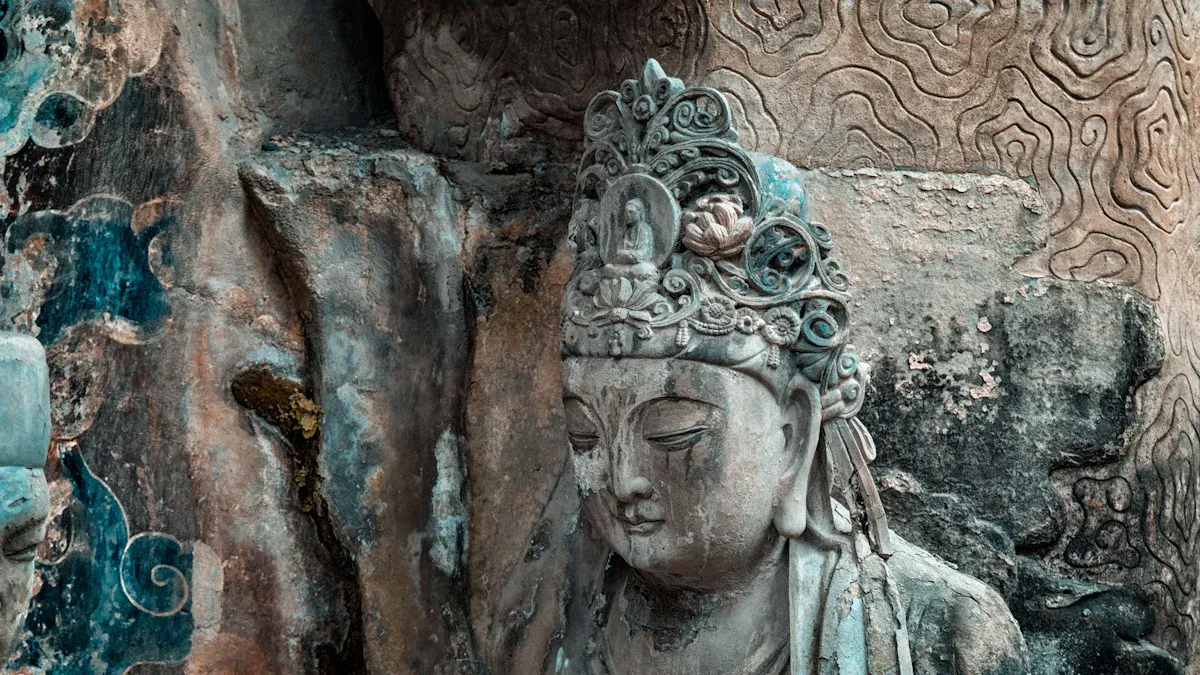
The Dazu Rock Carvings are a UNESCO World Heritage Site in Chongqing, China. They are famous for their big and well-kept groups of rock art. Artists started making these carvings in the Tang Dynasty. The site became even more important in the Song Dynasty. The carvings show Buddhist deities, Confucian ideas, and Taoist immortals. These carvings mix different spiritual beliefs together. The carvings have many small details and deep meanings. This makes Dazu different from other heritage sites. Why are the Dazu Rock Carvings so special in world history?
Key Takeaways
- The Dazu Rock Carvings are a UNESCO World Heritage Site. They show a mix of Buddhist, Taoist, and Confucian art.
- There are more than 50,000 statues and 100,000 inscriptions. These tell stories about old Chinese life and beliefs. This makes the site a valuable cultural place.
- The carvings started in the 9th century. They changed during the Tang and Song Dynasties. This shows how art and religion changed over time.
- It is best to visit in spring or fall. The weather is nice and there are fewer people. This makes the visit better.
- Conservation is very important to protect the carvings. It keeps them safe from environmental harm. This helps their beauty and history last for future generations.
Dazu Rock Carvings Facts
UNESCO World Heritage Site
The Dazu Rock Carvings became a UNESCO World Heritage Site in 1999. This shows they are important to the world. The carvings are special because they mix Buddhist, Taoist, and Confucian ideas. You can see both religious and daily life scenes in the carvings. These pictures help us learn about old Chinese life. UNESCO picked this site for its beauty and how it joins different beliefs. The carvings also show the great art skills of late ancient China.
Did you know?
The Dazu Rock Carvings are called the last great monument in the history of world grotto art.
Number of Statues and Sites
The Dazu Rock Carvings cover a big area. There are 75 places with carvings on cliffs. Artists made over 50,000 statues at these places. The carvings also have more than 100,000 Chinese words in inscriptions and epigraphs. Each statue and inscription tells its own story. Some show Buddhist figures, and some show daily life scenes. The size and details make these carvings stand out among world heritage sites.
Here is a quick look at the numbers:
| Feature | Number |
|---|---|
| Carving Sites | 75 |
| Statues | 50,000+ |
| Inscriptions/Epigraphs | 100,000+ |
Time Period and Location
The Dazu Rock Carvings have a long past. Artists started making them in the Tang Dynasty, around the 9th century. Most carvings were made from the 9th to the 13th centuries. This time covers both the Tang and Song Dynasties. The site is in the Dazu District, part of Chongqing Municipality in China. The location helped keep the carvings safe from weather and harm. Today, people visit Dazu to see the art and learn about old Chinese culture. The carvings show how artists used both real and imagined things. They also show how different beliefs could exist together.
The facts about the Dazu Rock Carvings show why this place matters. The carvings show the rich culture and history of the area. They also help people learn about the spiritual life of ancient China.
History and Development of Dazu
Origins in the 9th Century
The Dazu rock carvings started in the 9th century. Artists carved figures into cliffs during the Tang Dynasty. Wei Junjing was a local leader. He began the first project at Beishan in 892 CE. He wanted a place for spiritual learning. The first carvings showed Buddhist figures and scenes. This began a tradition that lasted many years. The Dazu location kept the carvings safe from bad weather. The caves and cliffs protected the art from harm.
During the Tang Dynasty, Buddhist art grew in China. The Dazu caves became a main place for carving statues and words. Artists used local stone to make strong images. The carvings showed what people in Dazu believed and hoped for.
Evolution Through Dynasties
The Dazu rock carvings changed with each new dynasty. In the Song Dynasty, the carvings grew and had more details. Regular people, not just the court, paid for Buddhist images. This let more people help make the art. The carvings started to show Buddhist, Confucian, and Taoist ideas together. New groups like Ch’an and Pure Land Buddhism changed the style and subjects.
| Year | Event Description |
|---|---|
| 892 CE | Wei Junjing started Beishan cliff carvings during the Tang Dynasty. |
| 1082-1096 | Yan Xun made carvings in the Song Dynasty, including the Three Buddhas and Confucius. |
| 1131-1162 | Carvings in the Southern Song Shaoxing era mixed Confucian, Buddhist, and Daoist themes. |
| N/A | Art moved from imperial to local support, showing more religious images. |
The Dazu carvings got more complex as artists added new figures. They showed daily life, spiritual lessons, and local ways. The mix of styles made the site special. The caves and cliffs held thousands of statues and words. The carvings showed how beliefs changed in Dazu.
- Artists mixed Buddhist, Taoist, and Confucian ideas in the Song Dynasty.
- Local people, not just rulers, helped make the art.
- New religious groups like Ch’an and Pure Land Buddhism shaped the carvings.
Beishan Cluster Highlights
The Beishan cluster is a very important part of the Dazu carvings. Artists started here in 892 and finished by 1162. These are the oldest works in Dazu. There are over 5000 statues in the caves and small spaces. Most statues show Avalokitesvara, the Goddess of Mercy. Artists made both gentle and scary images of her. The cluster has a 4.5-meter-high prayer wheel. There are many small spaces showing different forms of the goddess.
| Feature | Description |
|---|---|
| Historical Origin | Carvings began in 892 and ended in 1162, making them the oldest in Dazu. |
| Number of Statues | The Beishan cluster has over 5000 statues. |
| Main Subject | Most sculptures show Avalokitesvara, the Goddess of Mercy. |
| Artistic Representation | There are both gentle and fierce images of Avalokitesvara. |
| Notable Elements | The cluster has a 4.5-meter-high prayer wheel and many small spaces with different goddess forms. |
| Reputation | It is called “the exhibition hall of Avalokitesvaras in China.” |
The Beishan cluster shows the artists’ skill and ideas in Dazu. The carvings have many feelings and styles. Visitors can see the history of Buddhist art and mixed beliefs. The Beishan cluster is a key part of the Dazu caves. It is a top spot for people who like heritage and religious art. UNESCO has honored the site for its beauty and culture.
Religious and Artistic Significance
Buddhist, Confucian, Taoist Themes
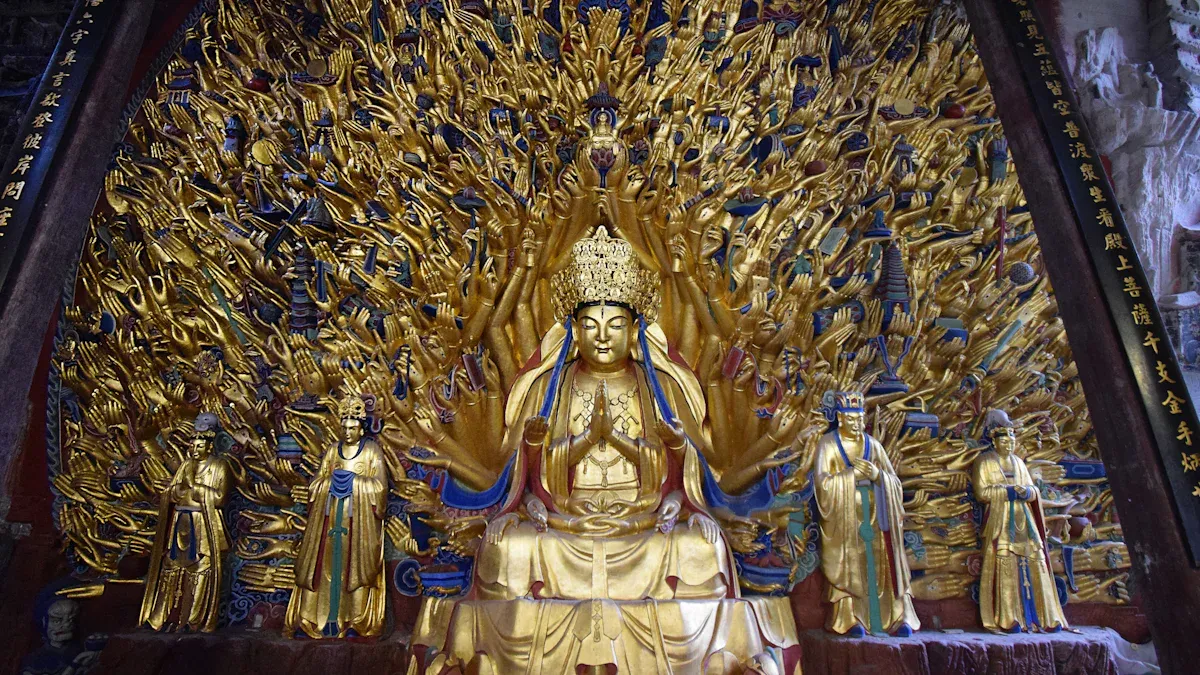
The Dazu rock carvings show a special mix of beliefs. Artists made over 60,000 statues and images. These were shaped by Buddhist, Confucian, and Taoist ideas. Beishan Hill and Baodingshan Hill are famous for their meaning and skill. These places teach moral lessons and deep thoughts. The carvings show:
- Scenes that tell people to do good and avoid bad, which fits Confucian values.
- Big Buddha statues that share Buddhist ideas and kindness.
- Nanshan Mountain carvings have the biggest group of Taoist images in China, showing all Taoist immortals.
The carvings help visitors learn about ancient Dazu beliefs and values. They show how different religions changed daily life and art.
Southern Song Dynasty Innovations
Artists in the Southern Song Dynasty brought new ways to the Dazu carvings. They changed how the statues looked and their details. The table below lists some of these new ideas:
| Artistic Characteristics | Description |
|---|---|
| Small Shape | Statues got smaller than before. |
| Changeable Shape | Artists used many shapes for the figures. |
| Complicated Dress | The clothes on the statues had more detail. |
| Blending of Traditions | Artists mixed Buddhist, Confucian, and Taoist parts. |
| Rich Content | Cave No.245 has 539 figures and many items, showing lots of detail. |
These changes made the carvings more detailed and beautiful. The artists showed skill and new ideas. They mixed traditions to make new art.
Comparison with Other Rock Art Sites
The Dazu rock carvings cover more than 41,000 acres and have over 5,000 statues. This is bigger than many other rock art sites in China and the world. The carvings started in the late Tang Dynasty and lasted through the Song Dynasty. They show Chinese history, Confucian ideas, and Buddhist and Taoist stories. The style and themes are rich and varied. The Dazu caves are special for their mix of beliefs and detailed art. UNESCO gave the site an award for its value and beauty. The Dazu rock carvings are a great example of religious and cultural art.
Dazu Rock Carvings Tour & Travel Tips
Getting to Dazu
You can get to the Dazu rock carvings from Chongqing in different ways. There are many choices for travel. Each way has its own cost and time. The table below shows the main ways to go:
| Transportation Option | Cost (CNY) | Duration | Notes |
|---|---|---|---|
| Taxi | 350-450 | Varies | You might wait a long time. Taxis may take longer routes. |
| Bus | 40-60 | ~2 hours | Buses have set times. If you miss one, you must wait. |
| Train | 80-100 | <2 hours | Trains can sell out fast during busy times. |
| Transfer | Varies | Varies | Book early for comfort. This helps avoid high taxi prices. |
Most people pick the bus or train because they are cheaper and easy. Buying tickets early is smart, especially when it is busy. Always check the times and plan before you go.
Visiting Beishan and Other Sites
The Dazu rock carvings tour has many important places to see. Each place is special and has its own story. The table below tells what you will find:
| Site | Description | Notable Features |
|---|---|---|
| Dazu Rock Carvings | This is a UNESCO World Heritage site with over 50,000 statues. The carvings started in the Tang Dynasty. | The site is real, beautiful, and full of stories. It is the best example of grotto art from the 9th to 13th centuries. |
| Baodingshan | This is the most famous part. It shows daily life and changes in grotto art. | There are big statues showing Buddhist stories, daily life, and ideas from Taoism and Confucianism. |
| Beishan | This place has Buddhist and Taoist stories. The statues look elegant and calm. | You will see figures like Oriental Venus and Charming Guanyin. You need to climb for 15-20 minutes. |
Beishan is known for its beautiful statues and stories. Many people spend more time looking at the figures and words. The climb to Beishan takes about 15 to 20 minutes. Wear shoes that are good for walking.
Dazu Rock Carvings Travel Tips
The best time to visit the Dazu rock carvings is in spring or fall. These seasons have nice weather and fewer people. You can enjoy the site more when it is not crowded. The list below shows the best months:
- March, April, May: The weather is nice and there are not many people.
- September, October: The weather is good and it is less busy.
- April: The weather is not too hot or cold, great for being outside.
- October: The weather is cooler and feels nice.
Check ticket prices before you go and plan your money. The chart below shows how ticket prices change in busy and quiet seasons:
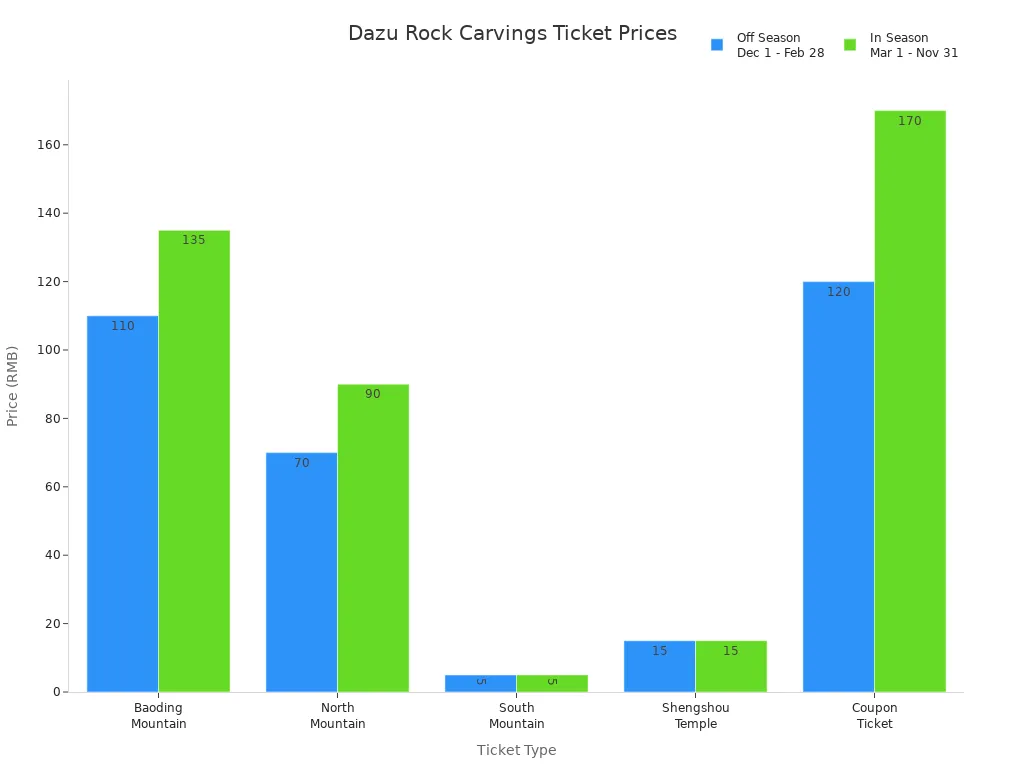
The Dazu rock carvings open every day at 8:30 AM. You can buy tickets for each place or get a coupon ticket for more than one. Guides can help you learn more about the carvings. If you come early, you will avoid crowds and have more time to look around.
Tip: Bring water, wear comfy shoes, and get ready to climb. The Dazu rock carvings tour lets you see amazing heritage and Buddhist art.
Preservation and Recognition
Conservation Efforts
Dazu has had many big projects to protect its rock carvings. Experts and groups work together to stop damage from people and nature. Some important actions are:
- The first International Forum on Cave Temple Conservation talked about climate change and how it hurts the carvings.
- The Academy of Dazu Rock Carvings made an agreement with the Museum of the Government of Khyber Pakhtunkhwa Peshawar. This helps both sides do better work to save heritage.
- Groups like the Stone Cultural Relics Protection Research Center and the Dazu Rock Carvings Cultural Relics Hospital were started to keep the carvings safe.
- China held the 2nd General Assembly of the Alliance for Cultural Heritage in Asia. This meeting helped with fixing and studying old sites.
- People from other countries still help with fixing the Dazu rock carvings.
Conservationists have many problems to solve. The table below lists some main threats:
| Challenge Type | Description |
|---|---|
| Environmental Factors | Humidity makes it hard to protect the carvings. |
| Weathering Reinforcement | It is tough to fix parts that have worn away. |
| Damage Repair Materials | It is hard to find the right things to fix the carvings. |
| Soluble Salt Treatment | Treating salts that hurt the carvings is a challenge. |
| Biological Diseases | Some diseases can harm the carvings. |
| Pollution | Pollution in the air can damage the carvings. |
Water, living things, and people can also hurt the carvings. Teams work hard to fix these problems and keep the site safe.
UNESCO Designation
UNESCO made the Dazu rock carvings a World Heritage Site in 1999. This brought more attention and help from around the world. The site became a place where many tourists visit. People come from many countries to see the carvings and learn about Buddhist, Confucian, and Taoist ideas.
UNESCO status helps people share culture. Music events at the carvings show friendship between France and China. Art inspired by the carvings has been shown in France, which shows people from other countries like the site.
The UNESCO award brings more money and support to protect the carvings. It also leads to new projects and teamwork.
Global Appreciation
People from all over the world care about the Dazu rock carvings. Scholars and visitors say the carvings are beautiful and have deep meaning. The carvings make people feel calm and happy. The special art style helps visitors feel close to history and culture.
| Evidence Type | Description |
|---|---|
| Multidimensional Engagement | The carvings help people remember history and give a strong experience for tourists. |
| Sensory Experiences | The carvings and nature together make people feel good and happy. |
| Historical Memory | The carvings link art, design, and experience, helping people understand culture better. |
| Well-being Enhancement | The site helps people feel better in body and mind because of its art and nature. |
A big meeting for the 25th year of the UNESCO award showed how important Dazu is to the world. Leaders asked for more teamwork and more people to help save culture. Professor Mohammad Nasim Khan said the carvings belong to everyone and are a language all people can understand.
The Dazu Rock Carvings are a strong sign of China’s long history. They show beautiful Buddhist, Taoist, and Confucian art from many years ago. These carvings were made between the 9th and 13th centuries. UNESCO helps keep them safe for people in the future. Artists and scholars still study these carvings today. People can help by joining events and sharing their thoughts. It is important to follow rules to protect this special place. Everyone should help keep the spirit and story of Dazu alive.
FAQ
What makes the Dazu Rock Carvings unique?
The Dazu Rock Carvings show Buddhist, Taoist, and Confucian ideas together. Artists carved over 50,000 statues and many inscriptions. The site stands out for its mix of beliefs and detailed art.
How old are the Dazu Rock Carvings?
Artists began carving in the 9th century during the Tang Dynasty. Most carvings appeared between the 9th and 13th centuries. The site has a history of over 1,000 years.
Can visitors see all the carvings in one day?
Visitors can see the main clusters in one day. Beishan and Baodingshan are the most famous. Some areas require climbing. Guides help visitors learn more during the tour.
Tip: Wear comfortable shoes and bring water for the visit.
What languages do guides speak at the site?
Guides speak Chinese and English. Some guides use other languages for special tours. Visitors can ask for language options when booking tickets.
Is photography allowed at the Dazu Rock Carvings?
Photography is allowed in most areas. Some spots may have restrictions to protect the carvings. Visitors should follow signs and ask staff before taking photos.