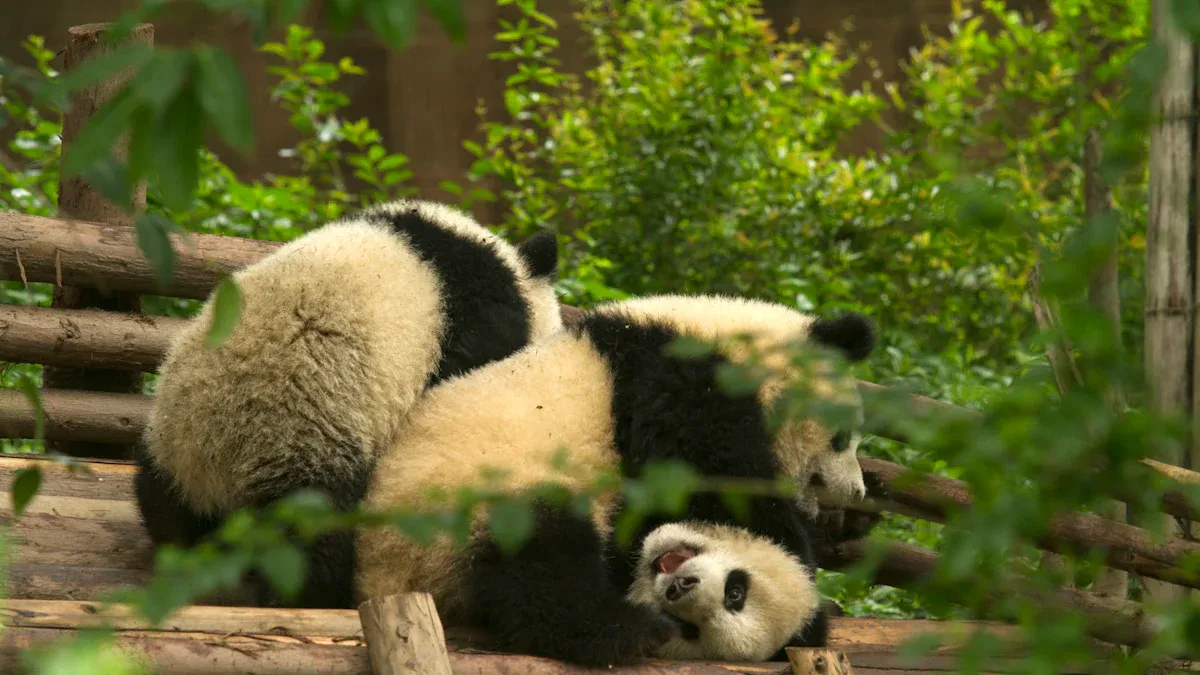
You can find the main area for giant panda breeding at the Chengdu Research Base. This place is the best in the world for taking care of giant pandas. Here, you watch how experts use artificial insemination to help pandas have babies. Natural habitats let these animals grow and play. Panda caretakers, also called “panda nannies,” work daily to keep each panda healthy and happy.
Key Takeaways
- The Chengdu Research Base is a top place for giant panda breeding. They use special methods like artificial insemination to help pandas have babies.
- Panda nannies are very important. They take care of pandas every day. They make sure pandas are healthy and happy. They watch pandas closely.
- The base teaches people about giant pandas and their homes. They help visitors learn about pandas from all over the world.
- Breeding pandas is hard because pandas do not have many babies. Scientists are trying to find ways to help pandas have more babies and stay healthy.
- The base has let pandas go back into the wild. This shows their work helps pandas live in nature.
Chengdu Research Base Overview
Mission and Structure
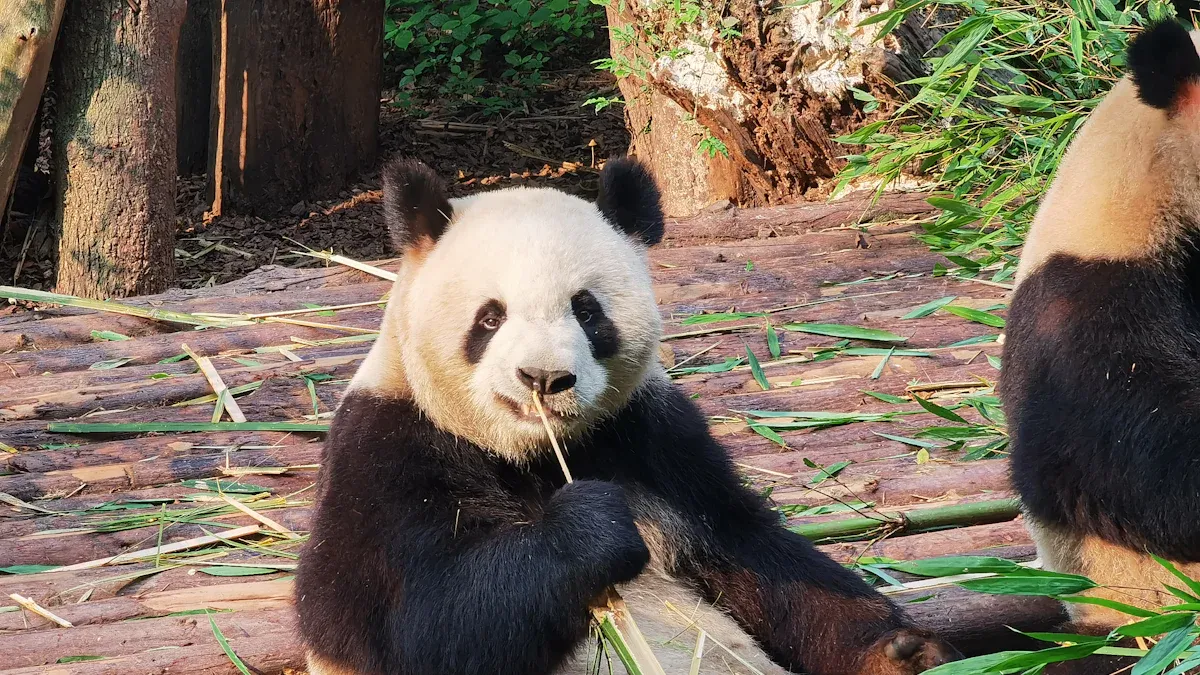
You can see that the Chengdu Research Base works as a government-funded, non-profit organization. The main goal is to protect and breed the giant panda. The base also focuses on research and education. You learn that the team wants to help pandas live in the wild again.
“We have spent 50 years on ex situ conservation, and we are committed to developing a sustainable relationship between humans and the giant panda,” said Dr. Zhang Zhihe, Director of the Chengdu Panda Base. “Rather than keeping them in their enclosures, we will spend the next 50 years helping them return to their natural habitat. This is the ultimate goal of the Chengdu Panda Base, and is Chengdu’s historic mission as the hometown of the Giant Panda.”
You notice that the base works with scientists from around the world. They share ideas and learn new ways to help pandas. The research base also publishes studies about panda health and care.
Panda Habitat and Care
When you visit the Chengdu Research Base, you see a place that looks like a real forest. The base covers over 100 hectares with bamboo groves, lakes, and misty hills. The enclosures have indoor resting spots and outdoor play areas. You find wooden ladders, pools, and toys for the pandas. These features let the giant panda climb, play, and explore, just like in the wild. The peaceful setting helps the animals feel safe and happy.
Panda nannies play a big role in daily care. They make sure each panda stays healthy and comfortable. Their jobs include:
- Cleaning the panda’s house and garden
- Preparing food and weighing bamboo
- Carrying bamboo, fruits, and leaves
- Watching the pandas and recording their behavior
- Helping with medical care and research
“The daily routine is to clean up more than 50 kilograms of excrement, and to carry fresh bamboos of about the same weight. It is absolutely a manual labor of long hours.”
You can see that panda nannies work hard every day. Their care helps the pandas grow strong and healthy.
Giant Panda Breeding Methods
Artificial Insemination
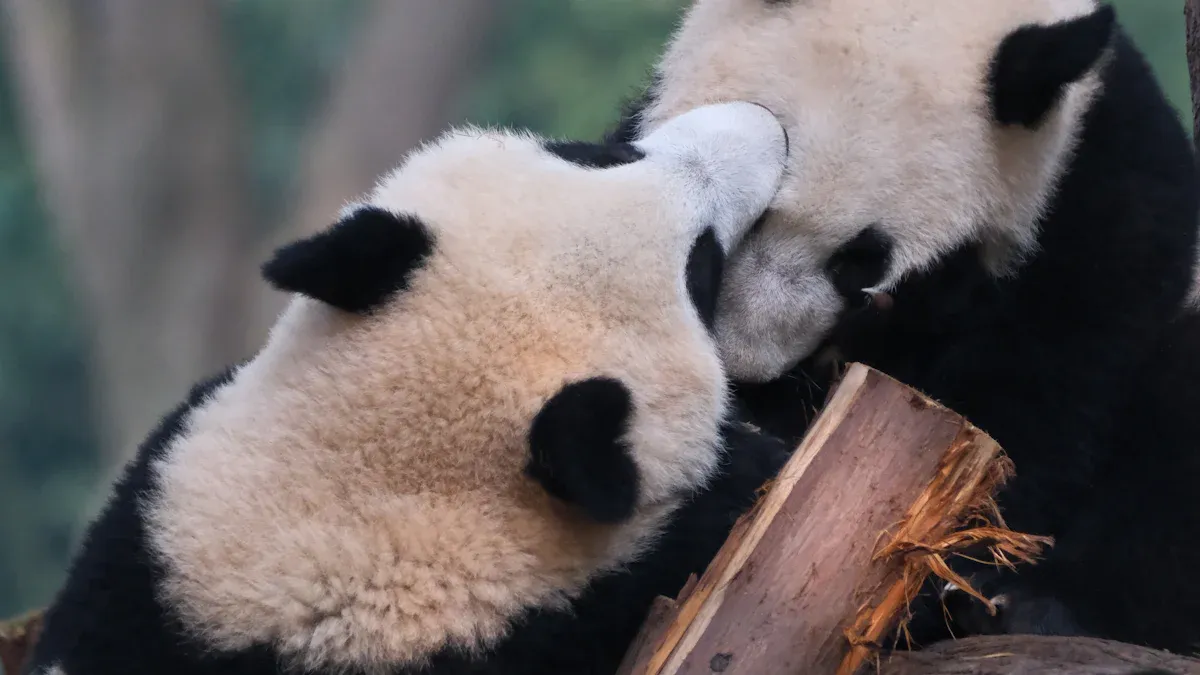
You might wonder how experts help pandas have babies here. The answer is artificial insemination. This method is very important for breeding pandas. Pandas in captivity do not mate often.
- Less than one third of captive pandas mate naturally.
- Most baby pandas at the base are born from artificial insemination.
Scientists use a careful process to collect and use semen. Here are the main steps:
- Staff lay the panda on its back.
- They take out feces from the rectum.
- They wash the penis and area with warm water.
- They get a special probe ready with electrodes.
- They put the probe into the rectum.
- They use gentle electric pulses to cause ejaculation.
- They collect semen in a plastic container and freeze it.
- They send the samples to a lab within two hours.
This process helps make pregnancy more likely. Scientists also care about genetic diversity. They pick pandas from different families. This keeps the population strong and healthy. Careful planning helps protect the future of giant pandas.
Artificial insemination gives hope for giant pandas. It helps even when natural mating does not work.
Monitoring and Panda Nannies
You play a part in learning how the base cares for pandas during breeding. Panda nannies and scientists watch the animals every day. They look for signs that show a female is ready to breed. These signs include:
- More restless and alert during breeding season
- Pacing back and forth
- Eating less food
- Urinating more and marking scent
- Staying near males and showing mating postures
Caretakers use special tools to check panda health and hormones. For example, they train pandas to give their forelimb for blood samples. This keeps the pandas calm and safe. Scientists also test urine every day for hormone levels. They use a test called ELISA to check estrogen changes. This tells them when a female is ready for insemination.
Panda nannies do more than just watch. They clean enclosures, prepare food, and help with medical care. Their work keeps each panda healthy and comfortable. Their close attention helps find problems early and helps baby pandas stay healthy.
| Aspect | Findings |
|---|---|
| Management Practices | Visitors say management is good, especially for limiting animal contact. |
| Animal Welfare | Most visitors think animal welfare is good, but more awareness is needed. |
| Conservation | The base is praised for its conservation work. |
You learn that the base follows strict rules to protect the animals. Staff work hard to balance visitor interest and panda well-being. This careful approach helps giant panda breeding succeed for a long time.
Challenges in Giant Panda Breeding
Low Fertility Issues
It is hard to breed giant pandas. Many pandas at the Chengdu Research Base cannot have babies. Scientists found that bacteria changes inside female pandas can cause problems. Too many Escherichia-Shigella bacteria make it hard for pandas to get pregnant or keep their babies. This stops the panda population from growing.
Here is a table that lists the main reasons for low fertility in giant pandas:
| Evidence Description | Details |
|---|---|
| Main Cause of Low Fertility | Changes in vaginal microbiota, mostly more Escherichia-Shigella species. |
| Impact on Reproductive Outcomes | Causes miscarriage, abortion, and stillbirth. |
| Statistical Findings | 80.88% of adult pandas cannot get pregnant and give birth. |
| Microbial Diversity | Higher in pandas that have babies than those that do not. |
| Pathogen Identification | Escherichia-Shigella is linked to bad pregnancy results. |
Scientists use special ways to help with these problems. They try group housing for young pandas. This lets pandas pick their own mates. They also use odor tricks, like letting pandas smell urine during mating season. This can change how pandas act and help them mate. Caretakers watch the pandas closely to learn about their behavior.
| Strategy | Description |
|---|---|
| Group Housing Management | Group housing when pandas are young can affect mate choice. |
| Odor Stimulation | Smelling urine during estrus can change courtship actions. |
| Behavioral Observation | Watching male courtship helps improve breeding success. |
Behavioral and Environmental Factors
Some giant pandas do not want to mate. The reason is often their environment. Living in captivity can stress male pandas. This stress makes it hard for them to pick a mate or want to breed. Scientists found that changes in body chemicals, like tryptophan and androgen, lower a panda’s interest in mating.
Here is a table that shows how the environment affects giant panda breeding:
| Finding | Description |
|---|---|
| Psychological Stress | Male pandas in captivity feel stress, which hurts mating. |
| Metabolomics Analysis | Changes in urine show less natural mating. |
| Tryptophan Metabolism | Problems with this pathway link to less mating in captive males. |
| Androgen Levels | Less androgen means less interest in mating and poor mate choice. |
Giant panda breeding has many problems. Scientists and caretakers work together to fix these issues. They want every giant panda to have the best chance to have healthy babies.
Successes and Conservation Impact
Breeding Achievements
You can see how the Chengdu Research Base has changed the future for the giant panda. Since its founding, the base has recorded 110 successful giant panda births by 2007. This number shows how much progress you can make with careful planning and science. The team uses advanced methods like the “twin-swapping” technique. This method helps both cubs survive when a mother gives birth to twins. The survival rate for panda cubs at the base now reaches over 90%, and in recent years, it has even reached 100%. Before the 1990s, only about one-third of cubs survived. You can thank new breeding techniques for this big improvement.
The Chengdu Research Base leads the world in giant panda breeding success.
Education and Awareness
You can join programs at the base that teach you about giant panda care and conservation. The Panda Loving Care program lets you learn how to help take care of a giant panda. You can also adopt a panda or donate to support research. The base welcomes visitors from around the world. You get to see giant pandas up close and learn why protecting them matters. The base also promotes public awareness for wildlife and the environment. Educational tourism gives you a chance to connect with nature and understand the importance of conservation.
Contribution to Wild Populations
You can follow the journey of giant pandas as they return to the wild. The release program started with a panda named Xiang Xiang. Since 2006, the base has released seven giant pandas into their natural habitat. Some pandas have faced challenges, but most show strong survival skills. These pandas adapt by changing their diet with the seasons. In winter and spring, they eat bamboo stems and leaves. In summer and autumn, they eat mostly leaves. Their bodies adjust to these changes, which helps them survive in the wild. The work at the Chengdu Research Base gives hope for the future of the giant panda.
You learn that the Chengdu Research Base has a special way to help giant pandas breed.
- The base started with only 6 giant pandas and now has over 150.
- There are programs with other countries and lessons that show why saving animals is important.
In the future, you will see more teamwork with other countries, sharing knowledge, and safe paths for wildlife. These actions help giant pandas have a better future.
FAQ
How can you visit the Chengdu Research Base?
You can get tickets online or at the gate. The base is open every day from morning to afternoon. It is best to come early. Pandas are most active in the morning.
Why do giant pandas need artificial insemination?
Pandas do not often mate by themselves in captivity. Artificial insemination helps make more baby pandas. This way, scientists can help pandas have babies and keep them safe.
What do panda nannies do each day?
Panda nannies clean where pandas live and make their food. They watch the pandas and help with health care. Their work keeps pandas happy and healthy.
Can you adopt a panda at the Chengdu Research Base?
You can join the adoption program. Your help pays for panda food, care, and research. You get news and pictures of your adopted panda. 🐼