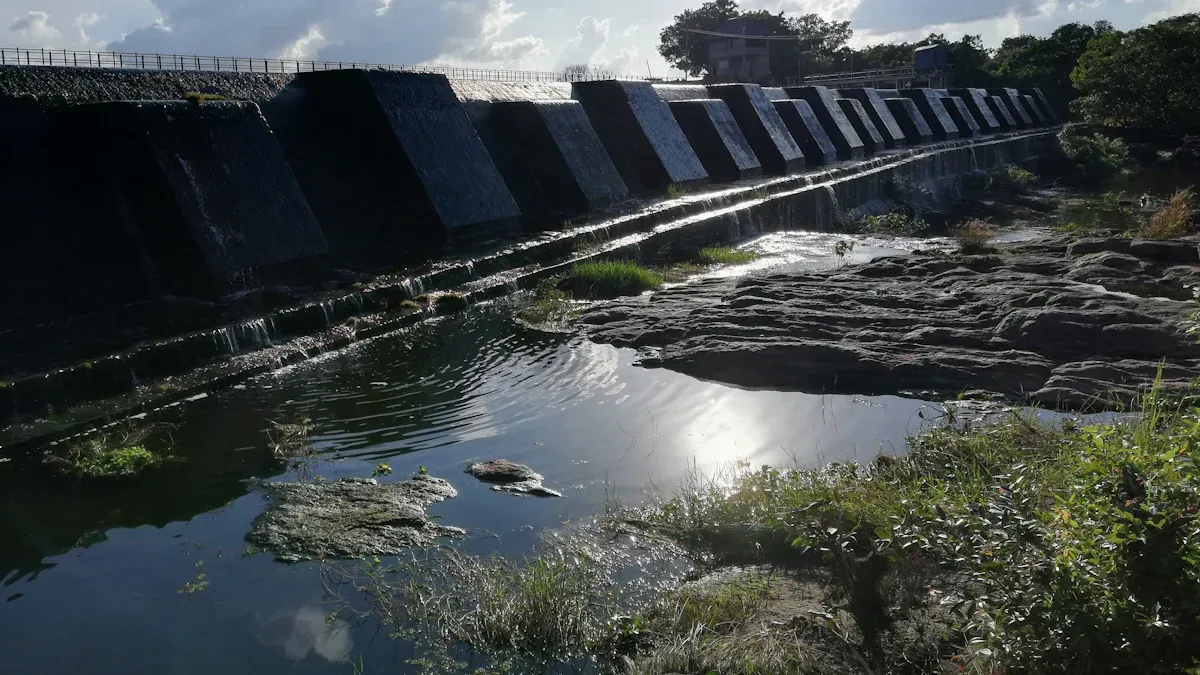
Dujiangyan is a very old irrigation system in Sichuan, China. This amazing system has made the Chengdu Plain rich and good for farming for over 2,000 years. People use its smart design to control water, stop floods, and help crops grow. Today, Dujiangyan still waters more than 668,700 hectares of land and gives water to over 50 cities. Its green design helps protect local plants, animals, and fish.
| Historical Significance | Current Significance |
|---|---|
| Built more than 2,000 years ago, it changed the Chengdu Plain into rich farmland, so people call the area the ‘Land of Abundance’. | Still working today, it waters over 668,700 hectares of farmland and gives water to more than 50 cities, showing it is still very important. |
| The system has survived many natural disasters, showing it is strong and well-built. | Its green design lets water flow naturally, which helps keep local plants, animals, and fish safe. |
Dujiangyan is a UNESCO World Heritage site and brings visitors from all over the world.
Key Takeaways
- Dujiangyan is a very old irrigation system in China. It has helped farmers for more than 2,000 years. Li Bing was a famous engineer. He made Dujiangyan to stop floods and help farming in the Chengdu Plain. The system uses clever engineering ideas, like the Yuzui Weir. It controls water flow but does not block rivers. Dujiangyan is a UNESCO World Heritage site. It shows human creativity and care for nature. Visitors can learn about the long history and culture of Dujiangyan. There are festivals that honor how important it is.
Dujiangyan Irrigation History
Origins and Li Bing
The story of the dujiangyan irrigation system started over two thousand years ago. People on the Chengdu Plain had many floods from the Min River. These floods ruined crops and made life hard. Archaeologists found old water systems at the Hongqiaocun Site from 4,000 years ago. This shows people knew about irrigation long before the famous project.
Li Bing was very important in building the dujiangyan irrigation system. He worked as an administrator and engineer for the state of Qin. This was during the Warring States period. Li Bing led the building of the system to stop the Min River from flooding. He studied the river and made a plan to control the water. His work helped farmers grow more food and made life better. Today, people can see statues and memorials for Li Bing in dujiangyan old town.
Did you know?
Li Bing was a great leader and engineer. He is still remembered for his work with irrigation and flood control.
- Li Bing was a Chinese administrator and engineer in the Warring States period.
- He worked for the state of Qin and led the building of the dujiangyan irrigation system.
- Li Bing’s work fixed the Min River floods that hurt local people.
- He studied the Min River to control its water and help farming.
- The dujiangyan irrigation system helped Sichuan grow and is a UNESCO World Heritage Site.
Ancient Construction Techniques
The builders of the dujiangyan irrigation system used smart methods. They did not use dams to block the river. Instead, they made a system that worked with the river’s flow. Each main part of the system had a special job.
| Component | Function |
|---|---|
| Fish Mouth | Diverts flow to the intake stem channel |
| Flying Sand Sluice | Manages flood and sediment |
| Baopingkou | Controls water intake and flood management |
Workers shaped the riverbanks and built stone walls by hand. They used bamboo cages filled with stones to make the banks strong and guide water. These ways helped the dujiangyan irrigation system last a long time. The design let people control floods, manage sand, and send water to fields without hurting nature. People in dujiangyan old town still respect these old building skills.
Legacy in Sichuan
The dujiangyan irrigation system changed Sichuan forever. After it was finished, the Chengdu Plain became a top farming area in China. The system watered about 6,700 square kilometers of land. This helped farmers grow rice, wheat, and other crops. More people moved to the area because farming was good. Towns and cities grew bigger.
| Evidence | Description |
|---|---|
| Agricultural Prosperity | The dujiangyan irrigation system has helped farming in the Chengdu Plain for over 2,000 years, watering about 6,700 km². |
| Attraction of Settlers | Building the dujiangyan irrigation system around 256 BCE made the Chengdu Plain better for farming, so more people moved there. |
Today, the dujiangyan irrigation works still help farming and give water to millions. The system shows how people can work together and be creative. Visitors can see the old irrigation works and learn how they changed Sichuan’s history and culture.
How Dujiangyan Irrigation Works
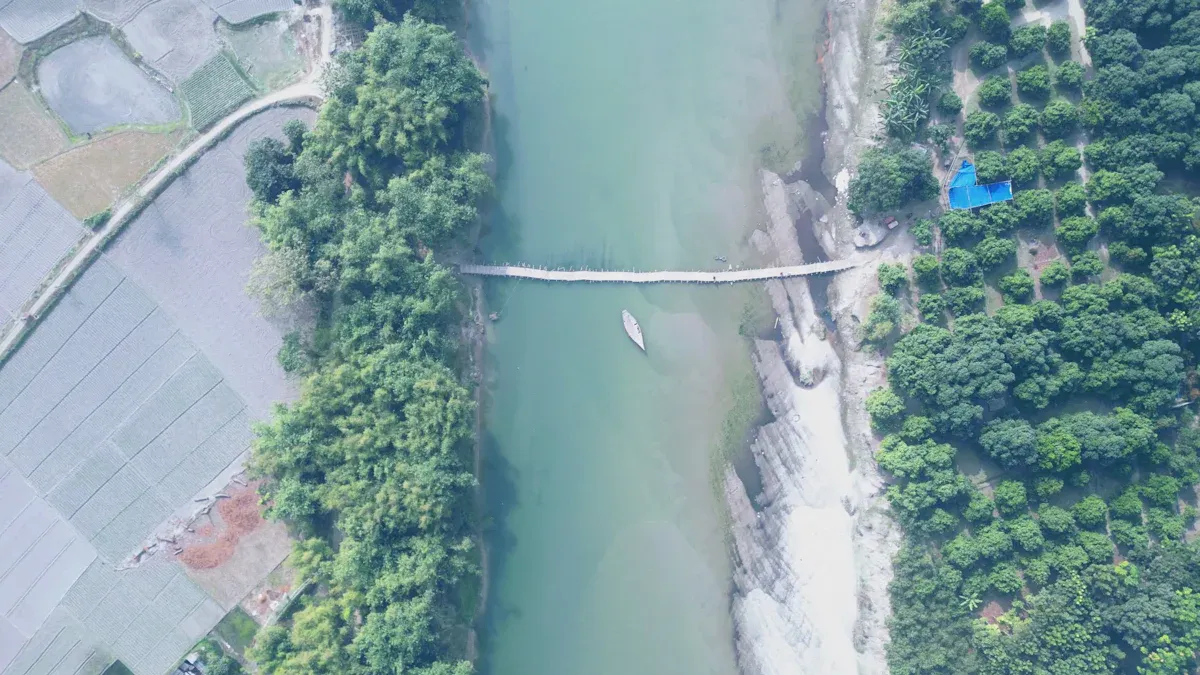
The dujiangyan irrigation system has three main parts. Each part does a special job. They work together to stop floods and help farming in Sichuan.
Yuzui Water-Dividing Weir
The Yuzui Water-Dividing Weir is in the middle of the system. Engineers made it look like a fish mouth. This weir splits the Minjiang River into two streams. One stream is called the inner stream. The other is the outer stream. The inner stream is deep and narrow. It carries most water when it is dry. The outer stream is wide and shallow. It takes the rest of the water. It also washes away silt and dirt.
| Feature | Inner Stream | Outer Stream |
|---|---|---|
| Depth | Deep and narrow | Shallow but wide |
| Flow Distribution | Carries about 60% of water in dry times; drops to 40% in floods | Takes the rest, cleaning out silt and dirt |
The Yuzui Weir keeps water clean and steady. Farmers need this steady water for their crops. The design uses the river’s shape to move water. It does not block the river.
Tip:
The Yuzui Weir splits water by season. This keeps fields wet and stops floods.
The Yuzui Weir uses smart ideas. It splits the river, controls water, and manages dirt. The Feisha Dike helps keep silt out of the inner river. The bottle-neck channel controls how much water goes to farms.
| Component | Function |
|---|---|
| Fish Mouth (Yuzui) | Splits the river into two streams to manage water in different seasons. |
| Feisha Dike | Keeps silt out of the inner river using science. |
| Bottle-neck channel | Controls water to farms through a narrow channel. |
Feishayan Flood Diversion
The Feishayan Flood Diversion is like a safety switch. It sits next to the Yuzui Weir. When water gets high, Feishayan lets out extra water and dirt. This stops the inner river from flooding. The structure keeps the Chengdu Plain safe from floods.
When there is too much water, Feishayan sends it to the outer river. This helps stop floods. It also removes silt and keeps the system working. Farmers count on this flood diversion to keep their fields safe.
Note:
Feishayan lets out extra water and dirt by itself. This keeps farms safe and the system working well.
Baopingkou Water Inlet
The Baopingkou Water Inlet is a narrow channel. It controls how much water goes into the system. When it is dry, Baopingkou lets about 60% of the river’s water into the inner river. When there are floods, it changes the flow to protect the Chengdu Plain.
Baopingkou balances water for farming and stops floods. It acts like a gate. When water gets too high, Baopingkou keeps floodwater out. This gives farmers steady water and keeps the area safe.
The Baopingkou Water Inlet shows how old engineers managed water well. They made sure farmers had enough water for crops. They also kept towns safe from floods.
Impact on Flood Control and Agriculture
The dujiangyan irrigation system helps stop floods and supports farming. The three main parts work together. They guide water, remove silt, and stop floods. Farmers get steady water for their fields. Towns stay safe from high water.
- Yuzui Weir splits water and keeps it steady.
- Feishayan Flood Diversion lets out extra water and dirt.
- Baopingkou Water Inlet controls water and stops floods.
This system helped Sichuan become a great farming place. It shows how smart ideas can fix big problems. People still use dujiangyan for farming and flood control today.
Dujiangyan in Chinese Culture and UNESCO Status
Symbolism and Heritage
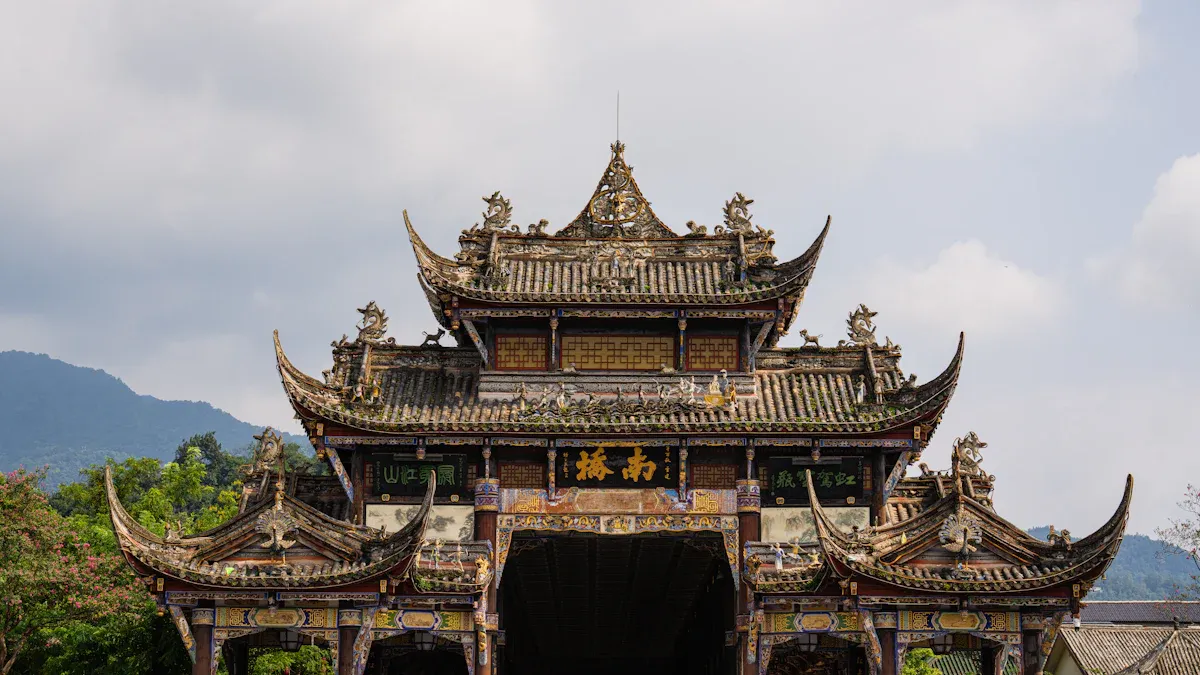
Dujiangyan is a sign of human creativity. It also shows how people can work with nature. Ancient Chinese engineers built this irrigation system to help the river, not fight it. The system shows that Chinese ancestors were wise and cared about nature. Many people think Dujiangyan is a cultural treasure. It stands for smart ways to solve problems and live well. In Chinese stories and art, Dujiangyan means hope and good times.
Economic and Social Impact
People in Sichuan have festivals for Dujiangyan. These events honor Li Bing and water management.
- The Water Releasing Festival happens every year. It remembers Li Bing’s work with the Min River.
- The Qingming Drainage Festival is over 1,800 years old. It is the oldest and most special festival in Dujiangyan. It takes place from April 4th to 7th.
- During the Qingming Drainage Festival, people follow old customs and learn about local culture.
These festivals bring people together. They help everyone remember teamwork and caring for nature. The irrigation system also helps farming and trade. This makes the local economy stronger.
UNESCO World Heritage Site
UNESCO made Dujiangyan a World Heritage Site in 2000. This made more people notice its history and culture. Teams now work to protect the site from new problems.
- Big events like weddings can change the quiet feeling of the place.
- Local businesses must work together, so managers have more to do.
- Keeping business and the real feel of the site balanced is hard.
Cities are growing and the weather is changing. New plans help protect Dujiangyan. These efforts keep the site important for the future.
Dujiangyan Travel Guide
Things to Do in Dujiangyan
There are many fun things to do at Dujiangyan. You can learn about history, nature, and culture here. Many people visit to see the famous irrigation system. They walk by old water channels and learn how water is managed. Mount Qingcheng is close to Dujiangyan. Hikers and people who like Taoism visit this mountain. Jiezi Ancient Town shows what old streets and local life look like. Most visitors spend a day seeing these places.
| Attraction | Type | Recommended Length of Visit |
|---|---|---|
| Dujiangyan Irrigation System | Historical Site | 1-2 hours |
| Mount Qingcheng | Natural & Religion Sites | about half day |
| Dujiangyan Panda Base | Nature & Wildlife Areas | half day to 1 day |
| Jiezi Ancient Town | Ancient Town, Historical Sites | about 2 hours |
Tip: You can visit more than one place for a full trip.
Visiting the Panda Base
The dujiangyan panda base is a quiet place to see giant pandas. Guides show you around and talk about panda life and how to protect them. You can ride a golf cart, so it is easy for everyone. People watch pandas in a natural home, not in a crowded zoo. The dujiangyan panda base is also part of the UNESCO World Heritage site, which makes it special.
The dujiangyan panda base helps save pandas.
- Workers take care of rescued and old pandas in safe places.
- Scientists study panda sickness and how to help them have babies.
- The base is like a nursing home for pandas that need extra help.
- It is the only place in the world for panda disease control.
Visitors learn about panda health and how people protect them. The dujiangyan panda base gives a special chance to see wildlife.
Getting There from Chengdu
It is easy to get to Dujiangyan from Chengdu. You have a few choices.
- Fast trains go from Chengdu North Station to Qingchengshan Station. Bus 102 takes you to Xiongmao Jikong Zhongxin Stop. Then you walk a short way to the dujiangyan panda base.
- Long-distance buses go straight to Dujiangyan. Bus 102 also goes to the panda base.
| Mode of Transportation | Travel Time |
|---|---|
| High-Speed Rail | approx. 20 minutes |
| Bus | approx. 1.5 hours |
| Car | Not specified |
Note: The fast train is the quickest and easiest way for a day trip.
This dujiangyan travel guide helps you plan your visit. You can enjoy history, nature, and animals all in one trip.
Dujiangyan is an amazing engineering project from long ago. It still matters today. The site uses gravity and smart ideas to move water. This helps farming and keeps nature safe.
| Achievement Type | Description |
|---|---|
| Historical | Dujiangyan is very old and became a UNESCO World Heritage Site in 2000. |
| Engineering | The system works without pumps. It uses gravity to water fields. This shows how clever the design is. |
| Cultural | It stands for old Chinese wisdom. It shows people understood nature well. |
| Agricultural Impact | It turned the Chengdu Plain into good farmland. This helped people grow rice and made the area rich. |
Visitors say the air is fresh and the sky is clear. At night, the views are beautiful. When people visit Dujiangyan, they learn about old inventions and how people cared for the land. The site brings people who want to know more about history, culture, and nature.
FAQ
What makes Dujiangyan different from other irrigation systems?
Dujiangyan uses the river’s flow, not dams. Engineers made it to control water and stop floods. It also helps nature stay safe. The system still works after 2,000 years.
Can visitors see the water-releasing festival at Dujiangyan?
People can watch the water-releasing festival each year. Locals honor Li Bing’s work at this event. The festival shows old water skills and brings people together.
How does Dujiangyan help farmers today?
Dujiangyan gives steady water to farms. Farmers grow rice, wheat, and more crops. The system stops floods and helps local farming.
Is Dujiangyan easy to reach from Chengdu?
Travelers can ride a fast train or bus from Chengdu. The train trip takes about 20 minutes. Many people visit Dujiangyan for one day.
What animals can people see at Dujiangyan Panda Base?
People see giant pandas at the panda base. Workers help rescued and sick pandas. Visitors learn how to keep pandas healthy and safe.