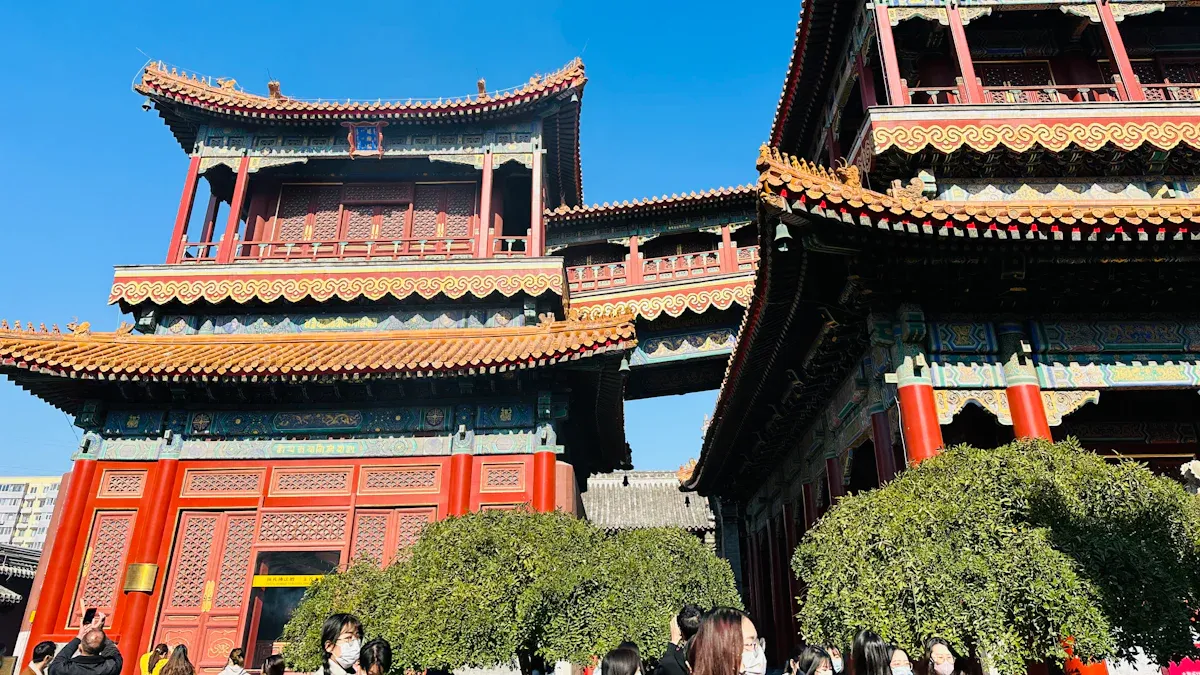
Yonghe Lamasery is also known as Yonghegong or Lama Temple. It is in the center of Beijing. This temple is an important place for Tibetan Buddhism. People can see both Han and Tibetan styles in how it looks. Yonghe brings people from all over China. They come to see its art, history, and spiritual ways.
The temple’s building style and religious use make it one of Beijing’s most valued places.
Key Takeaways
- Yonghe Lamasery is also called Lama Temple. It is an important place for Tibetan Buddhism in Beijing. The temple mixes Han and Tibetan building styles.
- People can watch daily rituals at the temple. Monks chant and burn incense every day. These things make the place feel calm and peaceful.
- The temple has big festivals like Losar. Visitors can join and learn about Tibetan culture and traditions.
- Yonghe Lamasery is a center for culture. It welcomes both tourists and local people. Everyone can learn about Buddhism and history here.
- To get there, use Subway Line 2 or 5. Get off at Yonghegong Station. This makes it easy to visit this special place.
What Is Yonghe Lamasery
Location and Names
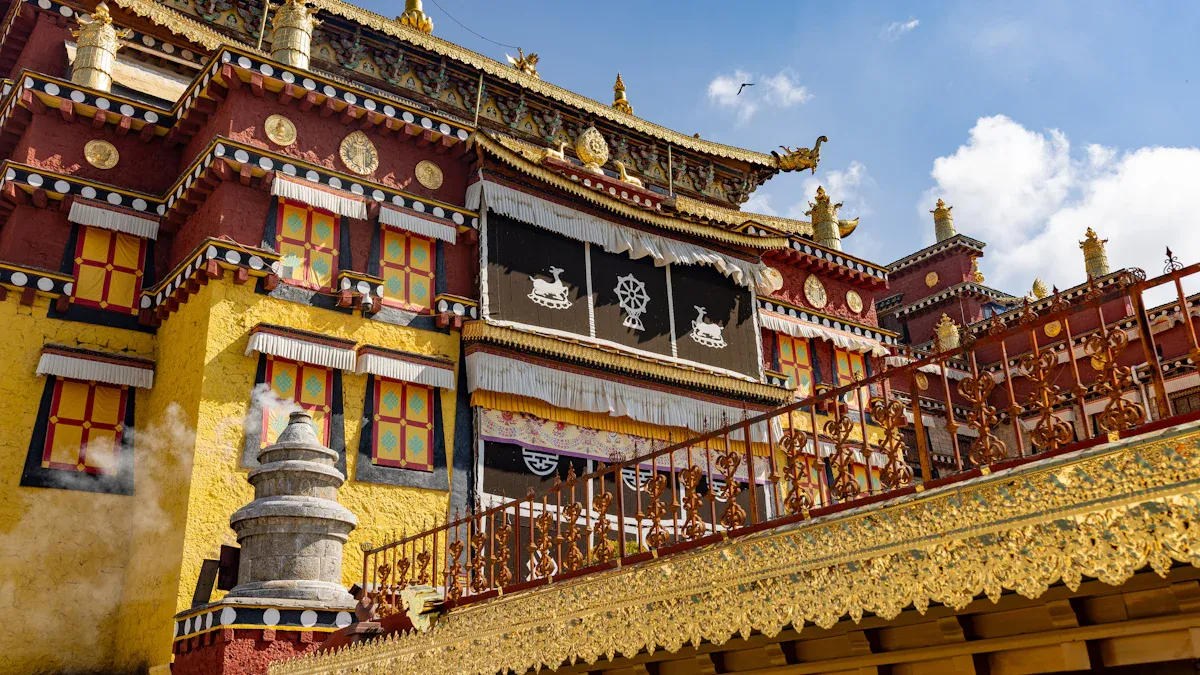
Yonghe Lamasery is in the north part of DongCheng District, Beijing. The temple sits with wooden halls, pavilions, and quiet gardens. A red wall goes around the whole area. YongHeGong Dajie is a busy road on the west side. The Confucius Temple and the Imperial Academy are just east of Yonghe Lamasery. These places are important in Beijing’s history. People can walk to them easily.
The beijing lama temple has many names. The table below shows the most common names and where they come from:
| Alternative Name | Origin Description |
|---|---|
| Yonghe Temple | Translates to ‘Palace of Harmony and Peace’ |
| Yonghe Lamasery | Refers to its function as a lamasery for Tibetan Buddhism |
| Lama Temple | Common name reflecting its association with Lamaist practices |
People often say “Yonghegong” for the temple. This is the pinyin way to write its Chinese name. Each name tells about its history or what it is used for.
Religious Importance
Yonghe Lamasery is a main place for Tibetan Buddhism in China. It was first the home of Emperor Yongzheng. In 1744, it became a monastery for Tibetan Buddhist monks. This change made it a very important place for religion in Beijing.
The beijing lama temple is a center for Tibetan Buddhist events and lessons. Monks come here to chant, burn incense, and lead special ceremonies. The temple also helped the Qing dynasty connect with Tibetan and Mongolian people. The lamas took care of daily work and religious events. The imperial government watched over the temple.
Today, visitors can feel the strong spiritual feeling at the temple. You can hear monks chanting and smell incense in the air. Yonghe Lamasery is a symbol of Buddhism. It is still one of the most important religious places in Beijing.
History of Yonghegong
Imperial Origins
- Emperor Kangxi told workers to build the site in 1694 for his son, Prince Yin Zhen.
- People called the place the Prince Yong Mansion.
- The mansion was used for court meetings and big events during the Qing Dynasty.
- The main reason for the site was to be a royal home and a spot for leaders to meet.
Yonghe Lamasery started as a palace for Prince Yong. He later became the Yongzheng Emperor. The site showed how powerful the imperial family was in Beijing. The large halls and gardens showed the wealth and high rank of the people who lived there.
Conversion to Lamasery
In 1723, Prince Yin Zhen became Emperor Yongzheng. The palace became even more important after that. In 1744, Emperor Qianlong changed the palace into a lamasery. This was a big change for the temple. It became a place for Buddhism and a home for monks from Tibet and Mongolia. The temple’s new job helped the Qing Dynasty get closer to these areas. Monks led prayers and special events. The temple became a place for learning and growing in spirit.
Key Historical Events
The temple was very important for religion in the city. It became the main place for Lama leaders. The temple made it through many changes in politics, like the Cultural Revolution. Its value in culture and religion kept it safe from being destroyed. In 1949, the government said the temple was a national monument. The temple opened again for visitors in 1981. Today, people can see the famous Buddha statue and learn about the temple’s long history. Yonghe Lamasery is a sign of strength and the lasting power of old traditions in Beijing.
Architecture and Art of Beijing Lama Temple
Han and Tibetan Styles
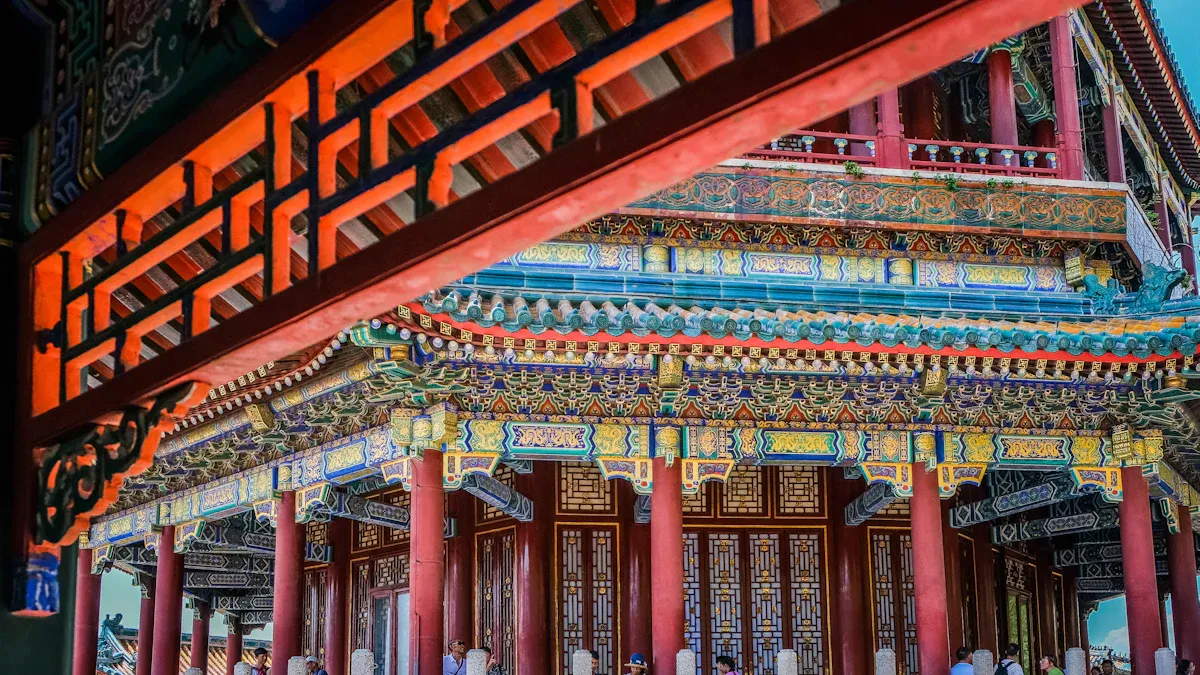
The Beijing Lama Temple mixes Han and Tibetan styles. The temple sits on a long path that goes north to south. This path is 480 meters long. The main buildings stand in a row. Each hall has its own courtyard. This design shows both Han and Tibetan ways. The buildings get taller from south to north. This means a spiritual journey. Visitors see bright roofs and wooden beams. There are many detailed carvings. Manchu styles are also part of the temple. This makes the temple special in Beijing.
- The temple is built on a north-south line, 480 meters long.
- There are five main halls along this line, each with a courtyard.
- The buildings get taller as you go north, showing a spiritual path.
Main Halls and Layout
Each main hall has its own meaning and use. The table below lists the main halls, what they look like, and why they matter:
| Hall Name | Description | Significance |
|---|---|---|
| Gate Hall of Harmony and Peace | This is the main entrance. It has a statue of Maitreya Buddha and the Four Heavenly Kings. | It is an important entrance and holds key statues. |
| Hall of Harmony and Peace | This is the main building. It has bronze Buddhas of the Three Ages and 18 Arhats. | It is the center for worship and Buddhist figures. |
| Hall of Everlasting Protection | This was Emperor Yongzheng’s home. Now it holds Bhaisajya-guru. | It is the emperor’s old room and a place of respect. |
| Hall of the Wheel of the Law | People read scriptures here. There is a statue of Je Tsongkhapa and Arhat Hill carving. | It is used for ceremonies and Buddhist lessons. |
| Pavilion of Ten Thousand Happinesses | This hall has an 18-meter tall statue of Maitreya Buddha. The seventh Dalai Lama gave this statue as a gift. | It shows the temple’s tie to Tibetan Buddhism and holds a major religious item. |
Each hall helps people practice Buddhism. The halls also show the temple’s past as a palace and a holy place.
Maitreya Buddha Statue
The Pavilion of Ten Thousand Happinesses has the famous Maitreya Buddha statue. The statue stands in the middle of the pavilion on a white marble base. It is 18 meters tall and made from one piece of sandalwood. The pavilion has thousands of small Buddhas on every level. This makes a strong scene for visitors. The statue was a gift from the seventh Dalai Lama. This shows the temple’s close link to Tibetan Buddhism. Many people come to see the statue and feel its calm mood.
Culture and Rituals at Yonghe Lamasery
Daily Practices
Monks at Yonghe Lamasery have a routine every day. They wake up early and go to the main halls. The monks start chanting prayers together. Visitors can hear the chanting as they walk around. Monks light incense sticks and put them in big burners. The smell of incense spreads through the courtyards. This makes the temple feel calm and peaceful. Monks sweep the courtyards and clean the statues. They read Buddhist texts and teach visitors about Buddhism. Lamas lead the prayers and help younger monks. These daily actions keep the lamasery’s spirit strong.
Festivals and Events
Yonghe Lamasery celebrates many festivals each year. The biggest festival is the Tibetan New Year, called Losar. Tibetan monks do special dances and rituals during Losar. The temple gets crowded with people watching the ceremonies. Visitors bring incense and join the events. Another important festival is Buddha’s birthday. Monks and visitors chant and pray together. The temple also has smaller events for local people. These festivals show how the temple connects with the community. They help keep the traditions of the largest buddhist temple in Beijing alive.
Visitor Experience
Visitors see culture and faith at this temple. Many people come to watch monks chanting in the halls. The smell of incense meets them at the entrance. Some visitors light incense and make wishes. Guides tell about the rituals and the temple’s history. People see monks in red robes and hear soft chanting. The temple welcomes everyone who wants to learn or find peace. Yonghe Lamasery lets people see Buddhist life in Beijing up close.
Yonghe Lamasery in Modern Beijing
Community Role
Yonghe Lamasery is very important to people in Beijing. Many people visit for different reasons. Some want to learn about Tibetan Buddhism. Others join in religious activities. Monks lead prayers and rituals every day. Their work makes the area feel calm. Local people often come to burn incense or ask for blessings. The temple’s events help keep old spiritual ways alive.
- The temple is a place for culture for everyone.
- People light incense as part of their worship.
- Monks and ceremonies make the neighborhood more spiritual.
Yonghe Lamasery also teaches people about culture. Schools and families come to learn about religion and history. The temple lets everyone visit, no matter who they are. This helps people in Beijing understand and respect each other.
Tourist Attraction
Yonghe Lamasery brings many tourists each year. People come to see the mix of Han and Tibetan building styles. The temple’s bright colors and carvings are great for photos. Visitors walk around the halls and gardens to learn about its story.
The table below shows how Yonghe Lamasery keeps culture alive and teaches people:
| Aspect | Details |
|---|---|
| Historical Significance | It was first a royal home, then became a monastery for Tibetan monks. |
| Architectural Style | It mixes Tibetan and Han Chinese looks, showing both cultures together. |
| Role in Tibetan Buddhism | It is a national center for Lama Administration and keeps Tibetan culture safe. |
| Survival through History | It made it through the Cultural Revolution because officials helped protect it. |
| Current Function | It welcomes tourists and teaches about Tibetan Buddhism. |
Yonghe Lamasery is like a museum that is still alive. It links old times with today and shows why tradition matters in modern Beijing.
Yonghe Lamasery shows Beijing’s long history and spiritual life. Many people say the temple is interesting and special. It lets visitors see Tibetan Buddhism and its culture. People feel amazed and calm when they look at the big statues. They also hear monks chanting in the halls.
- The temple mixes Han and Tibetan styles, so it stands out.
- Tourists like the quiet feeling and learn about Buddhist life.
- The low ticket price and friendly staff make visits simple.
Yonghe Lamasery is a great place for those who like history, buildings, or spiritual things.
FAQ
How do visitors get to Yonghe Lamasery?
You can ride Subway Line 2 or Line 5. Get off at Yonghegong Station. The temple is close to the station exit. Many city buses also stop near the temple.
What is the best time to visit the temple?
The morning is calm and quiet. Fewer people come early in the day. Spring and autumn have nice weather and pretty views.
Can people take photos inside Yonghe Lamasery?
You can take pictures in the gardens and courtyards. You cannot use cameras inside the main halls. There are signs that show where you cannot take photos.
Is there a dress code for visitors?
Visitors need to wear proper clothes. Do not wear shorts or sleeveless shirts. The temple is a holy place, so dress with respect.
What can people see at Yonghe Lamasery?
| Highlight | Description |
|---|---|
| Maitreya Buddha Statue | A huge Buddha made from sandalwood |
| Han-Tibetan Architecture | A special mix of two building styles |
| Monks Chanting | Daily prayers and rituals |
| Incense Offerings | Visitors burn incense for good luck |