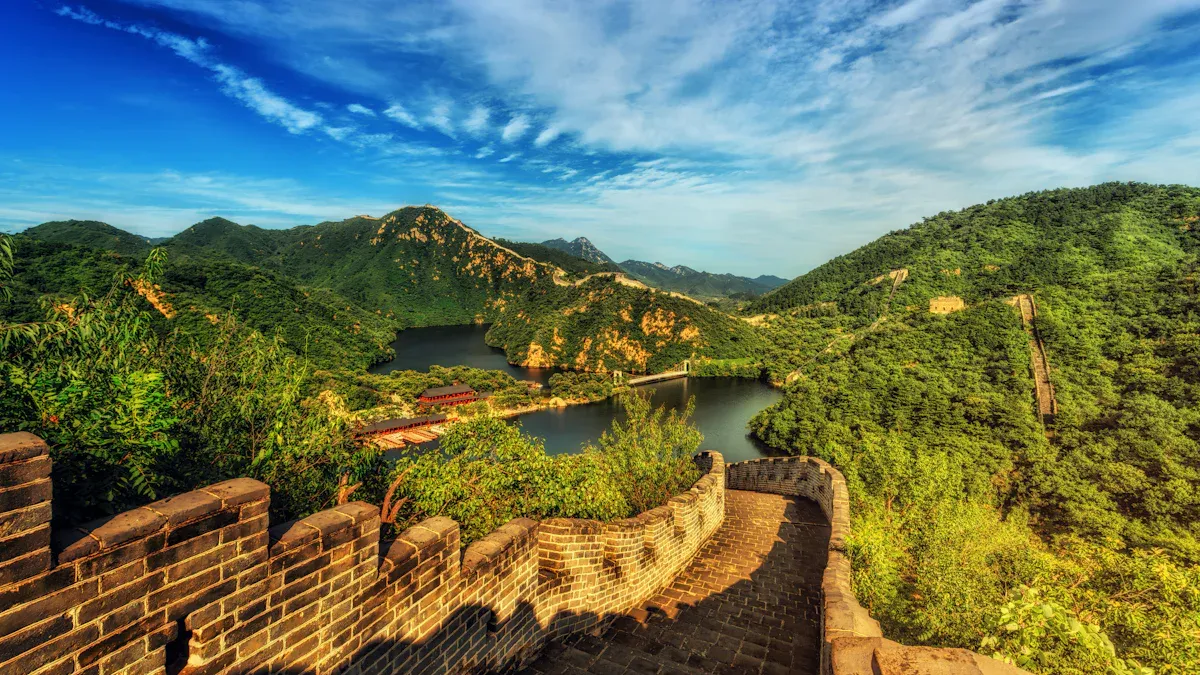
The Great Wall is in northern China. It is a huge structure made for defense. Its main job was to keep ancient Chinese states safe from attacks.
- The wall is very long. It stretches 21,196.18 kilometers, as recent archaeological surveys show.
Key Takeaways
- The Great Wall of China is a huge wall. It was built to protect people. The wall is over 21,196 kilometers long.
- Many dynasties helped build the wall. They used different materials and ways to make it strong.
- Going to the Great Wall lets you see China’s past. Badaling and Mutianyu are famous parts. These places give tourists special things to see.
Great Wall Origins
Purpose and Defense
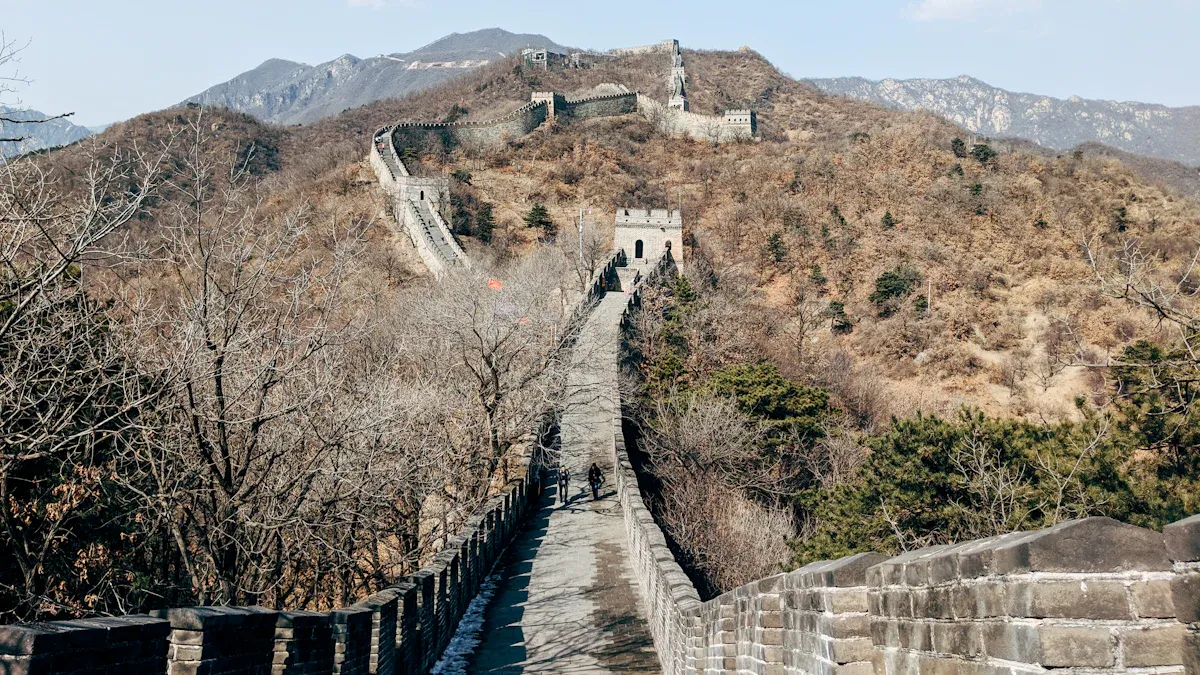
The Great Wall was a strong barrier. It stopped invasions from the north. Ancient Chinese rulers built it to keep their land safe. They wanted to protect against northern nomadic tribes. The wall blocked enemies from coming in. Soldiers could move fast during battles because of the wall. Beacon towers sent signals and watched for danger. Passes had troops and guarded important places.
At first, the wall was just separate parts in the Zhou Dynasty. Later, Emperor Qin Shi Huang joined these parts together. This made one big defense system. The Han Dynasty made the wall longer to protect trade routes like the Silk Road. The Ming Dynasty rebuilt the wall. They made it stronger and better.
Groups like the Huns, Xianbei, Rouran, Turk, and Khitan were the main threats. These tribes moved quickly and had strong weapons. They raided the Chinese borders often. The Great Wall made it hard for them to get Chinese goods. This caused problems between the Chinese and the nomads.
- The wall had:
- Walls to block enemies and help soldiers move.
- Beacon towers to send signals and watch for invaders.
- Passes to hold troops and protect important spots.
The wall also helped rulers control their land. Qin Shi Huang used the wall to bring the states together. He wanted to protect his empire. The Ming Dynasty made the wall bigger to keep northern China safe. They wanted to stop Mongol attacks.
Builders and Timeline
Many dynasties helped build and expand the Great Wall. Each dynasty used different ways and materials. Soldiers, peasants, and convicts all worked on the wall. There were many workers, especially in the Qin Dynasty. About 800,000 people helped build it then.
| Dynasty | Major Building Years |
|---|---|
| Qin | 221–206 BC |
| Han | 202 BC – 220 AD |
| Northern Qi | 550–574 |
| Jurchen Jin | 1115–1234 |
| Ming | 1368–1644 |
The Qin Dynasty joined smaller walls and used rammed earth. The Han Dynasty made the wall longer to the west. They added beacon towers for signals. The Ming Dynasty rebuilt parts with bricks. They made strong passes and better drainage.
| Evidence Type | Details |
|---|---|
| Materials Used | Bricks were used most in the Ming Dynasty. This made the wall stronger and look the same. |
| Construction Techniques | Builders packed soil for rammed earth walls. They put bricks and stones in rows. |
| Labor Force | Soldiers, peasants, and convicts worked by force. |
| Challenges | Workers had trouble moving materials and building on steep land. |
The Great Wall changed how Chinese armies built defenses. It led to more walls, towers, and passes in other places. The wall also kept trade routes safe. People and goods could travel more safely along the Silk Road.
Historical and Cultural Impact
Role in Chinese History
The Great Wall changed Chinese history in many ways. Leaders used it to keep their land and people safe. The wall helped bring different areas together under one ruler. During the Qin Dynasty, rulers joined smaller walls into one big wall. This made people feel like they were part of one country. The wall showed that people shared the same hopes and goals. People worked as a team to protect their home.
- The Great Wall was a defense barrier that helped people unite.
- Building the wall in the Qin Dynasty made people feel like one nation.
- The Wall stood for shared hopes and fighting against outside threats, bringing people together to defend their home.
Big events in history show why the wall mattered. Genghis Khan broke through weak parts of the wall. This changed Chinese history. The Ming Dynasty built strong parts to stop attacks from the north. In 1644, General Wu Sangui let Qing forces through the Shanhaiguan Pass. This ended the Ming Dynasty and started the Qing Dynasty.
- Genghis Khan broke through weak parts of the wall, which was a big event because Mongolian forces were strong.
- The Ming Dynasty built the wall stronger to stop northern groups, especially when the army was weak or strong.
- In 1644, General Wu Sangui let Qing forces in at Shanhaiguan Pass, ending the Ming Dynasty and starting the Qing Dynasty.
The wall also helped with trade and border control. The Ming Dynasty fixed and made the wall longer. Leaders used it to control trade on the Silk Road and watch who came in or out. Artists and writers often showed the wall as a sign of power and culture. Many stories, poems, and paintings show the wall.
- The Great Wall is shown as a sign of power and culture in art.
- It is in many books and movies, making it a famous symbol.
The wall shaped how Chinese people see themselves today. It stands for national pride, defense, culture, and peace.
| Aspect | Description |
|---|---|
| National Sovereignty | The Great Wall stands for national pride in China. |
| Defense | It shows how people protected their land in the past. |
| Civilization | The Wall is a sign of Chinese culture and history. |
| Stability | It shows how important peace is for the country and people. |
Many festivals and traditions honor the wall’s history and beauty. People come together for events like the Great Wall Red Leaves Festival and the Dragon Dance at the wall. These festivals show how the wall is part of daily life and culture.
| Festival Name | Description | Timing |
|---|---|---|
| Great Wall Red Leaves Festival | People enjoy the red leaves along the Great Wall. | October – November |
| Dragon Dance at Great Wall | A big event with a dragon dance at the Great Wall. | June (since 2011) |
| Summer Resort Festival | People have fun and enjoy lights at night in summer. | June – September |
| International Mountaineering Fest | A winter event where people climb the Great Wall and celebrate the New Year. | Winter (since 1996) |
| Great Wall Apricot Festival | People see apricot flowers and other wildflowers near the wall. | March – April |
Symbolism and Global Recognition
The Great Wall is a sign of strength and never giving up. People everywhere know it is important. Artists and writers use the wall to show the power and will of the Chinese people. The wall is in books, movies, and art. For example, the movie “The Great Wall” made more people notice it, but some said the movie got history wrong.
- The Great Wall stands for Chinese strength and never giving up in many kinds of media.
- It is shown in books, movies, and art, showing how strong the Chinese people are.
- Some people say it is not always shown right and is used for national pride.
- The movie “The Great Wall” (2016) was famous but got some facts wrong and had fantasy parts.
- The Great Wall is in books and art, making it even more famous around the world.
There are many myths about the wall. Some think you can see it from the moon, but experts say this is false. Others think it was built in one year, but it took over 2,500 years. The wall is not just one long wall. It has many walls, towers, gates, and storage rooms.
- Myth #1: You can see the Great Wall from the moon. Experts say this is not true.
- Myth #2: The Great Wall was built in a year. It really took over 2,500 years.
- Myth #3: The Great Wall is one long wall. It is actually many walls, forts, and towers that go about 20,000 kilometers.
- The Great Wall was built by many dynasties, starting in the 7th century and ending in 1878.
- It has gates, moats, and storage rooms, not just walls.
People everywhere respect the Great Wall for its history and culture. In 1987, UNESCO made it a World Heritage Site. This shows how important the wall is to the world.
The Great Wall of China became a UNESCO World Heritage Site in 1987, showing how special it is for history and culture everywhere.
The Great Wall still inspires people today. It reminds us of the past and stands for unity and strength.
Visiting the Great Wall
Popular Sections
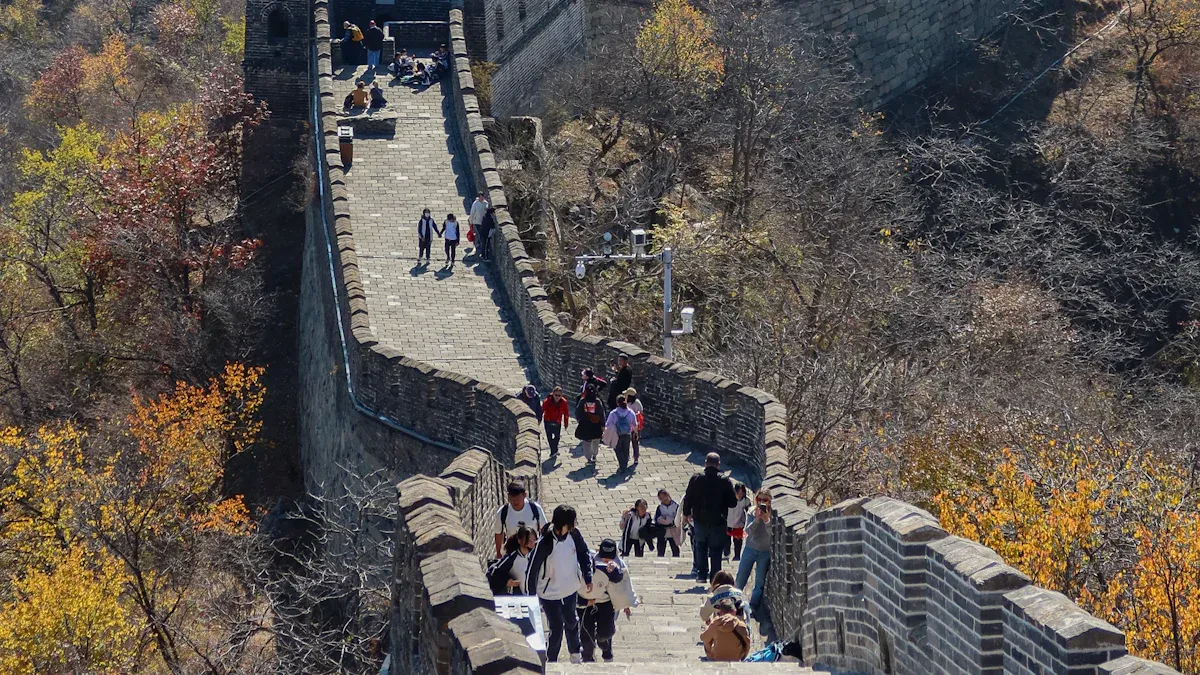
More than 10 million people visit the Great Wall each year. Badaling is the busiest part. Sometimes, 100,000 people go there in one day. Many world leaders have visited Badaling. This makes it an important place for culture. Other parts near Beijing also get many visitors. The table below lists the most popular sections and what makes them special:
| Section | Distance from Beijing | Unique Features | Pros |
|---|---|---|---|
| Badaling | 43 miles (70 km) | Well-restored, scenic views, cable cars | Close to Beijing, affordable, cable cars |
| Mutianyu | 50 miles (80 km) | Toboggan slide, dining options | Family-friendly, easy hike |
| Simatai | 75 miles (120 km) | Night access, Gubei Water Town | Night tours, cable car |
| Huanghuacheng | 40 miles (65 km) | Lake views, boating, camping | Beautiful scenery, activities |
Travel Tips
Only about 9.4% of the Great Wall is still standing. Many parts are gone because of weather and people. Some parts were damaged by building work. Spring and autumn are the best times to visit. The weather is nice and there are fewer people. The table below shows what each season is like for visitors:
| Season | Weather Conditions | Crowd Levels | Highlights |
|---|---|---|---|
| Spring | Mild, lush greenery | Less crowded | Great for photos |
| Summer | Hot, lively atmosphere | Very crowded | Vibrant nature |
| Autumn | Comfortable, fall colors | Moderately crowded | Ideal for hiking |
| Winter | Cold, snow-covered beauty | Least crowded | Serene experience |
Tip: Some parts like Badaling and Mutianyu have ramps and elevators. These help people who have trouble walking. Big cities have easy paths and restrooms. Small towns may not have these things.
Tourism helps local people by giving them jobs. More visitors mean more restaurants and shops. Small businesses do well when tourists come. The government works to fix and protect the wall. This helps keep it safe for the future.
The Great Wall shows China’s power and people working together. It has special watchtowers, gates, and ways to defend itself. These things make it different from other old walls.
| Feature Type | Description |
|---|---|
| Watchtowers | Two floors for living, storage, and defense. |
| Gates and Windows | Fancy designs that show great skill. |
| Defense Mechanisms | Extra walls inside for more safety. |
The wall’s story is as important as the pyramids. People all over the world know about it and what it means:
- The Great Wall is in movies and books, helping people learn about China.
- It shows how strong people can be and how they planned in the past.
Many people who visit feel amazed by its size and long history.
FAQ
How long is the Great Wall of China?
Experts checked the length of the Great Wall. It is about 21,196 kilometers long. This number counts walls, trenches, and natural barriers.
Can you see the Great Wall from space?
- Astronauts say you cannot see the Great Wall from the moon.
- You can only see it from low Earth orbit with special tools.
Which section is best for first-time visitors?
| Section | Features |
|---|---|
| Badaling | Easy to get to, cable car |
| Mutianyu | Good for families, pretty |
Badaling and Mutianyu have safe walkways and nice views.