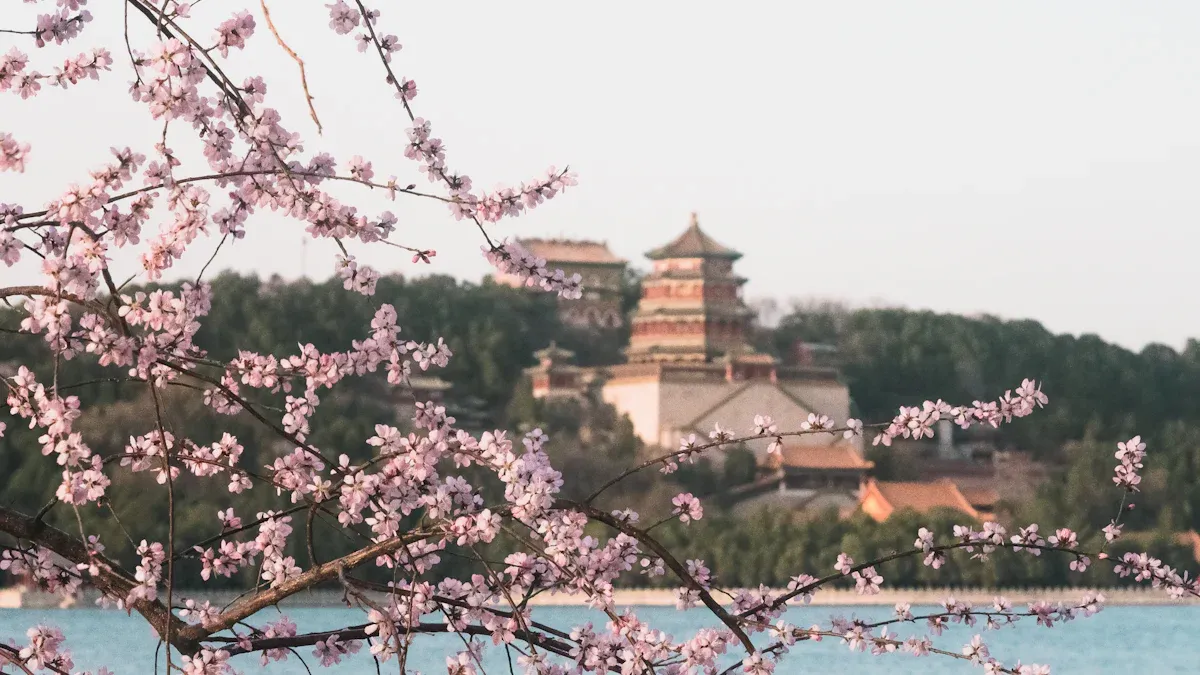
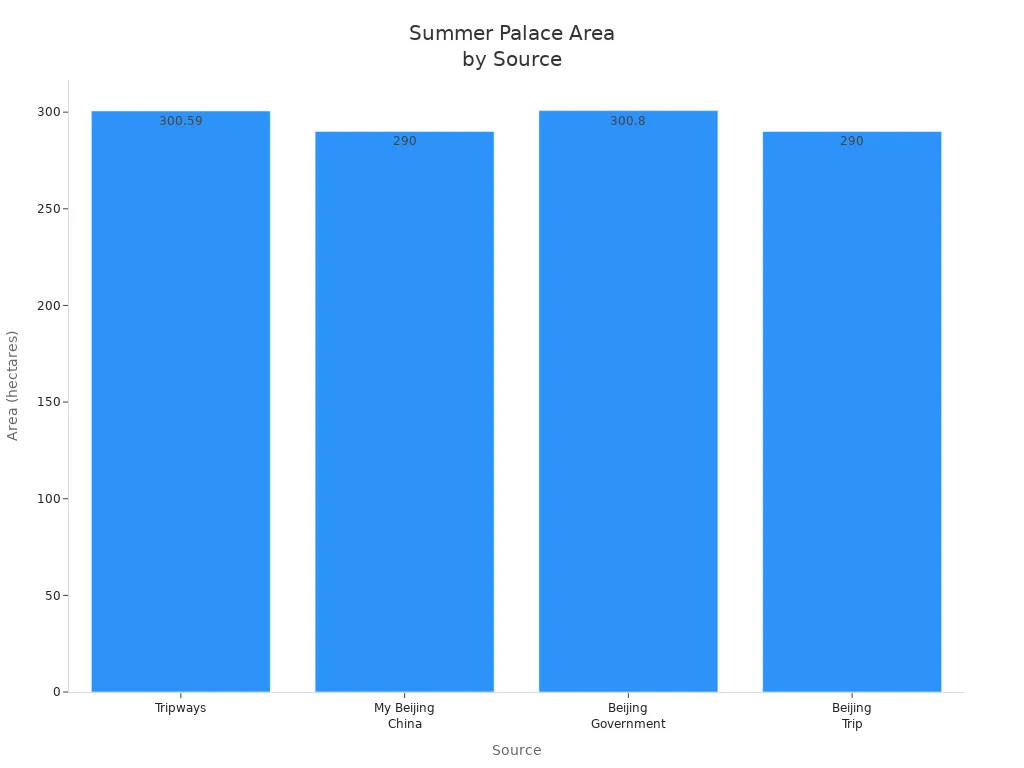
You find the Summer Palace in northwest Beijing. This imperial garden covers about 290 to 300 hectares, with most of the area made up of water like Kunming Lake.
| Source | Area (hectares) | Notes |
|---|---|---|
| Tripways | 300.59 | Composed mainly of Longevity Hill and Kunming Lake |
| My Beijing China | 290 | Lake occupies three-quarters of total area |
| Beijing Government | 300.8 | Three-fourths is water, mainly Kunming Lake |
| Beijing Trip | 290 | Three-quarters is water |
You see China’s largest and best-preserved royal garden here. The site holds deep meaning in Chinese history and culture. Each year, over 15 million people visit.
- During holidays, more than 100,000 people come in one day.
This place stands out as a must-see for its beauty and heritage.
Key Takeaways
- The Summer Palace is a vast imperial garden in Beijing, covering about 290 to 300 hectares, with most of the area being water, primarily Kunming Lake.
- This UNESCO World Heritage Site attracts over 15 million visitors each year, showcasing its significance in Chinese history and culture.
- Visitors can enjoy various attractions, including Longevity Hill, Kunming Lake, and the Long Corridor, each offering unique views and experiences.
- The best times to visit are spring and autumn, when the weather is mild and the gardens are at their most beautiful.
- To enhance your visit, wear comfortable shoes, bring water and sunscreen, and follow the site’s etiquette to help preserve its beauty.
What Is the Summer Palace
Location in Beijing
You find the Summer Palace in the northwest part of Beijing. The garden sits in Haidian District, which is known for its cultural sites and universities. If you want to visit, you can use the official address below:
| Official Address |
|---|
| No.19, Xinjiangongmen Road, Haidian District, Beijing |
The Summer Palace covers a large area with lakes, hills, and historic buildings. You see it as a peaceful escape from the busy city. Many people come here to enjoy nature and learn about history.
Imperial Garden Overview
You discover that the Summer Palace is a classic example of an imperial garden. These gardens show the power and taste of China’s emperors. The Summer Palace blends natural scenery with human-made structures. You notice how the design creates harmony between water, hills, and buildings.
- The garden combines natural landscapes with manmade structures, showing balance in design.
- You see many types of architecture, with styles from both northern and southern China.
- The Summer Palace served as a place for the imperial family to relax and manage affairs.
- You walk through the Long Corridor, which has over 8,000 traditional Chinese paintings. These paintings tell stories from history and literature.
In November 1998, UNESCO named the Summer Palace a World Heritage Site. This honor recognizes its beauty, history, and importance in Chinese culture. When you visit, you explore a place that has shaped art, architecture, and daily life for centuries.
Summer Palace History
Qing Dynasty Origins
You learn that the Summer Palace began during the Qing Dynasty. The original construction finished in 1764. The site started as a royal garden and retreat for emperors. Several rulers played important roles in its development:
- Emperor Kangxi started building palace and garden complexes at Chengde, which influenced the design.
- Emperor Yongzheng added structures that later became part of the Summer Palace.
- Emperor Qianlong commissioned the expansion and made the garden a symbol of imperial power.
You see how each emperor shaped the garden’s layout and style. The Summer Palace became a place where the royal family relaxed and enjoyed nature.
Key Events and Restoration
You discover that the Summer Palace faced many challenges. In 1860, during the Second Opium War, Anglo-French forces captured the site. They looted and destroyed many imperial treasures. On October 18, 1860, the British High Commissioner ordered the complete destruction of the palace. This event marked a turning point in its history.
Restoration started in 1873 under the Tongzhi Emperor. Financial problems stopped the work in 1874. Later, in the 1880s, Empress Dowager Cixi led a major restoration. She used funds meant for the imperial navy to rebuild the gardens and halls.
- The Summer Palace was restored after the Second Opium War.
- Empress Dowager Cixi’s restoration in 1888 gave the site new life.
You notice that the Summer Palace stands today because of these efforts. The history shows how the garden survived war and change, remaining a symbol of Chinese culture.
Highlights
Longevity Hill
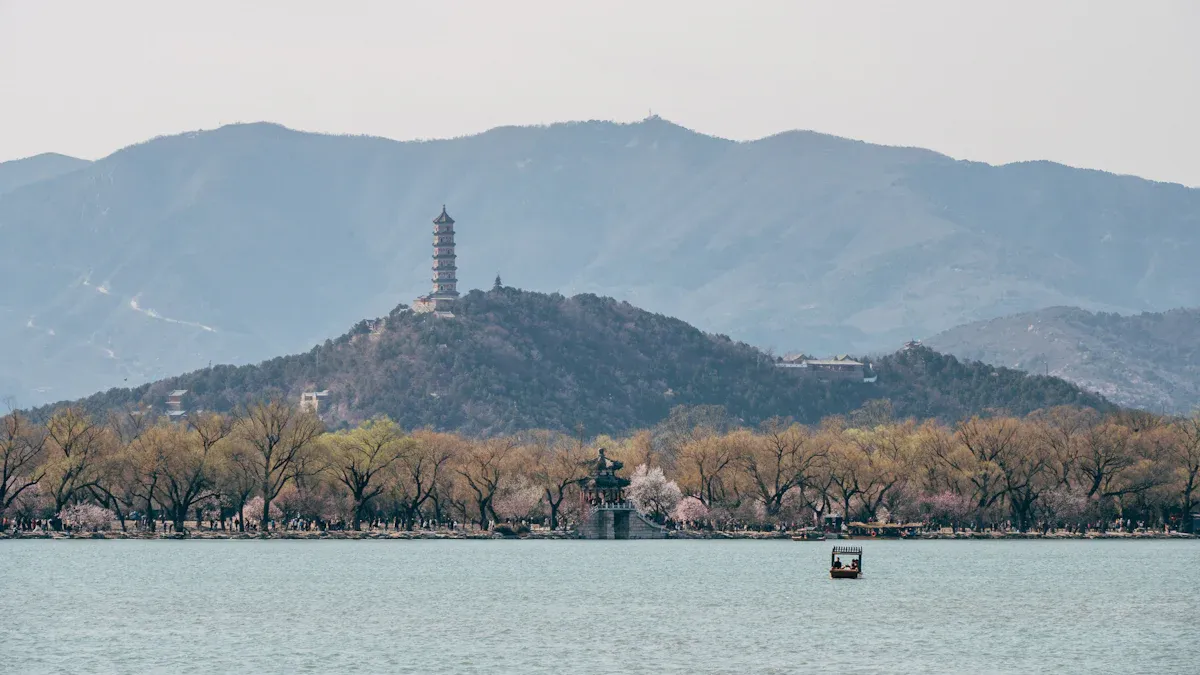
You see Longevity Hill rise above the gardens, reaching an elevation of 58.59 meters (192 feet). This hill forms the centerpiece of the Summer Palace landscape. It stands as a symbol of strength and harmony in Chinese garden design.
| Feature | Details |
|---|---|
| Elevation | 58.59 meters (192 feet) |
| Historical Significance | Part of the Summer Palace, a royal retreat and a masterpiece of Chinese landscape garden design. |
You find many famous structures on Longevity Hill. These buildings show the artistic skills of ancient Chinese craftsmen.
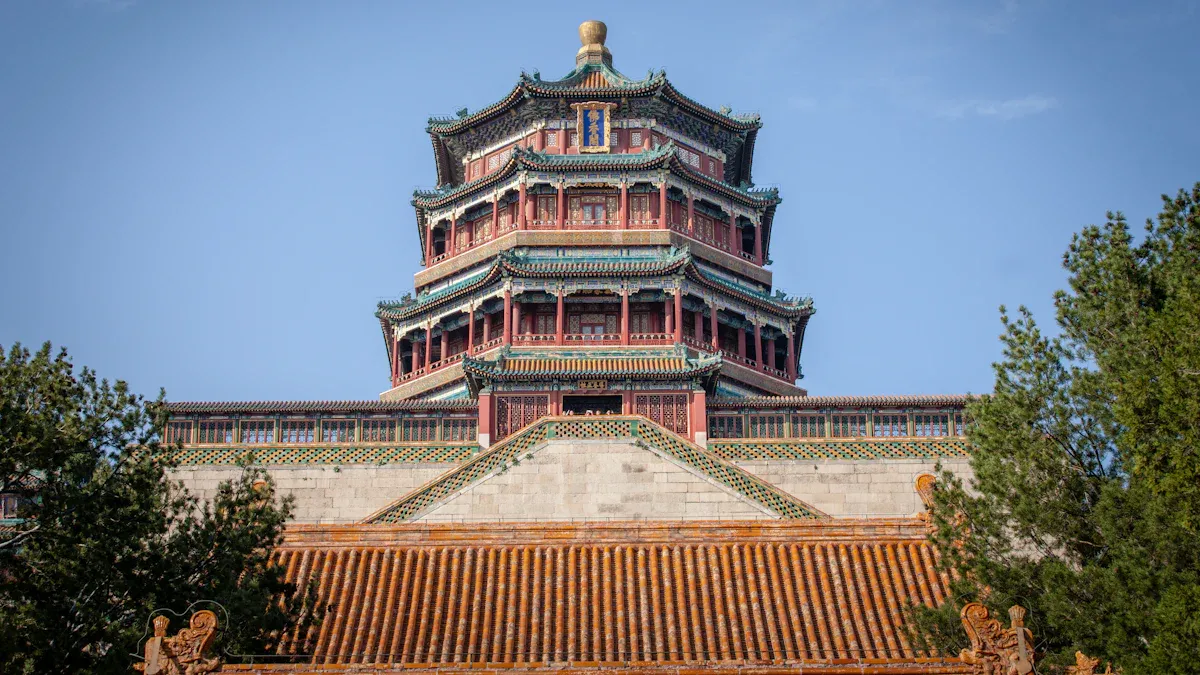
- Tower of Buddhist Incense: This tower features colorful wooden archives and offers wide views.
- Baoyun Bronze Pavilion: A large bronze structure with a Buddhist-style roof.
- Through the Wonderland: An octagonal hall with winding corridors and scenic views.
- Hall of the Sea of Wisdom: A two-floor building decorated with glazed tiles and Buddhist statues.
- Four Great Regions: A group of Tibetan Buddhist buildings with unique roofs.
Kunming Lake
Kunming Lake covers a surface area of 2.2 square kilometers (0.8 square miles) and has an average depth of 1.5 meters (5 feet). You see that this lake is manmade. Workers shaped it from old irrigation ponds. Guo Shoujing started the project in 1291 for the Yuan Dynasty. Later, the Qianlong Emperor turned it into a royal garden. Nearly 10,000 laborers worked on the lake from 1750 to 1764.
| Activity | Description |
|---|---|
| Boat Rentals | You can rent paddle boats or dragon boats to explore Kunming Lake and enjoy views of the palace grounds from the water. |
Ancient Buildings and Artifacts
You walk through the Long Corridor, a covered walkway stretching 728 meters. Over 14,000 paintings decorate its beams, showing scenes from Chinese history and legends. Guardian lion statues stand at key spots, symbolizing protection and power. You notice dragon and phoenix motifs on many decorations. These symbols represent the emperor and queen. The Summer Palace displays a blend of art, architecture, and culture that makes it unique.
Visitor Experience
Must-See Spots
When you visit the Summer Palace, you find several attractions that stand out. Travel experts and official guides highlight these must-see spots:
- Kunming Lake: You can enjoy boating here, especially at sunset. The lake offers beautiful reflections of the palace buildings.
- Longevity Hill: You climb this hill to see ancient-style buildings and get a panoramic view of Kunming Lake.
- Long Corridor: You walk along this covered walkway, which stretches 728 meters and features about 8,000 unique paintings.
These places show you the art, history, and natural beauty that make the Summer Palace special.
Recommended Routes
You can explore the main attractions in about 2 to 3 hours. The table below shows popular routes that help you see the highlights:
| Gate | Route Description |
|---|---|
| New Palace Gate | Walk north along East Dyke – the former Court Area – Long Corridor – Longevity Hill – Marble Boat – Ferry Boat and back to New Palace Gate (loop line). |
| East Palace Gate | Walk from East Palace Gate: the former Court Area – Long Corridor – Longevity Hill – Marble Boat – Ferry Boat – New Palace Gate. |
| North Palace Gate | Walking from North Palace Gate: Suzhou Street – Marble Boat – Longevity Hill – Long Corridor – the former court area – East Palace Gate. |
You choose a route based on your starting gate and interests. Each route lets you see the main sights and enjoy the scenery.
Seasonal Tips
You get a different experience in each season:
- Spring (April to May): You see blooming flowers and fresh trees. The weather feels mild and comfortable.
- Summer: You enjoy boating on Kunming Lake. Foggy days make the gardens look like a Chinese painting.
- Autumn (September to October): You walk under clear skies and see rich earthy colors. This is a great time for photos.
- Winter: You find the lake frozen. You can try skiing or sledging on the ice.
The best months to visit are spring and autumn. June and November also offer pleasant weather and fewer crowds. July and August are the busiest and hottest months.
Tip: You can plan your visit in the morning or late afternoon to avoid crowds and enjoy cooler temperatures.
Visitor Info
Hours and Tickets
You can visit the Summer Palace every day. The main gates open from 6:30 a.m. to 6:00 p.m. during peak season (April to October). In the off-season (November to March), the gates open from 7:00 a.m. to 5:00 p.m. The gardens close 30 minutes after the last ticket sale. You buy tickets at the entrance or online. The ticket price changes by season and by which areas you want to visit. Most visitors choose the combo ticket, which lets you see the main sights.
You may wonder about discounts. The Summer Palace offers free entry for seniors aged 60 to 90 with a valid passport. Students and groups do not have special discounts.
| Category | Eligibility Criteria |
|---|---|
| Seniors | Free entry for ages 60-90 with valid passport |
| Students | No specific discounts mentioned |
| Groups | No specific discounts mentioned |
Tip: Bring your passport or ID for age verification if you qualify for senior entry.
Getting There
You reach the Summer Palace easily from central Beijing. You can use the subway or bus. Many visitors choose the subway because it is fast and simple.
- Subway Options:
- Take Metro Line 4 or Line 16. Get off at North Palace Gate Station (Exit D) and walk 300 meters to the ticket office.
- You can also use Xiyuan Station (Exit C2) on Line 4. Walk about 15 minutes to the East Palace Gate.
- Bus Options:
- For the West Palace Gate, take Bus 469 or 539.
- For the North Palace Gate, use Buses 303, 332, 346, 384, 394, 563, 584, 601, or Night Bus 8.
- For the East Palace Gate, take Buses 332, 346, or 584.
- For the New Palace Gate, use Buses 74, 374, or 437.
- For the South Ruyi Gate, take Buses 74, 374, or 437.
You find clear signs at each gate. You can check a map before your trip to choose the best entrance.
Etiquette and Tips
You help protect the Summer Palace by following simple rules. You walk on marked paths and avoid touching ancient buildings or artifacts. You keep noise low to respect other visitors. You do not eat or drink inside the halls. You throw trash in bins.
Note: The Summer Palace is a UNESCO World Heritage Site. You help preserve its beauty for everyone by following these guidelines.
You wear comfortable shoes because you walk a lot. You bring water, sunscreen, and a hat in summer. You check the weather before your visit. You plan your trip early in the day to avoid crowds.
You discover the Summer Palace as a place where history and beauty meet. Visitors from around the world come to see its gardens and ancient buildings. The site holds UNESCO World Heritage status and stands out for its cultural value and scenic charm.
| Feature | Details |
|---|---|
| World Heritage Site | Recognized since 1998 for landscape garden design |
| Cultural Significance | Blends nature and architecture with outstanding aesthetics |
| Popularity | Remains one of Beijing’s top attractions |
You gain both knowledge and enjoyment when you explore the Summer Palace. Add it to your travel plans for a memorable experience.
FAQ
What is the best time to visit the Summer Palace?
You find spring and autumn offer mild weather and fewer crowds. You see blooming flowers in April and May. You enjoy clear skies and colorful leaves in September and October.
What should you bring for your visit?
You pack comfortable shoes, water, sunscreen, and a hat. You check the weather before you go. You bring your passport for ticket discounts if you qualify.
What activities can you do at the Summer Palace?
You walk through gardens, climb Longevity Hill, and rent boats on Kunming Lake. You explore ancient buildings and enjoy traditional art along the Long Corridor.
What are the main entrances to the Summer Palace?
You enter through East Palace Gate, North Palace Gate, New Palace Gate, West Palace Gate, or South Ruyi Gate. You choose the gate based on your route and transportation.
What rules should you follow inside the Summer Palace?
You stay on marked paths, avoid touching artifacts, and keep noise low. You do not eat or drink inside halls. You throw trash in bins to help preserve the site.